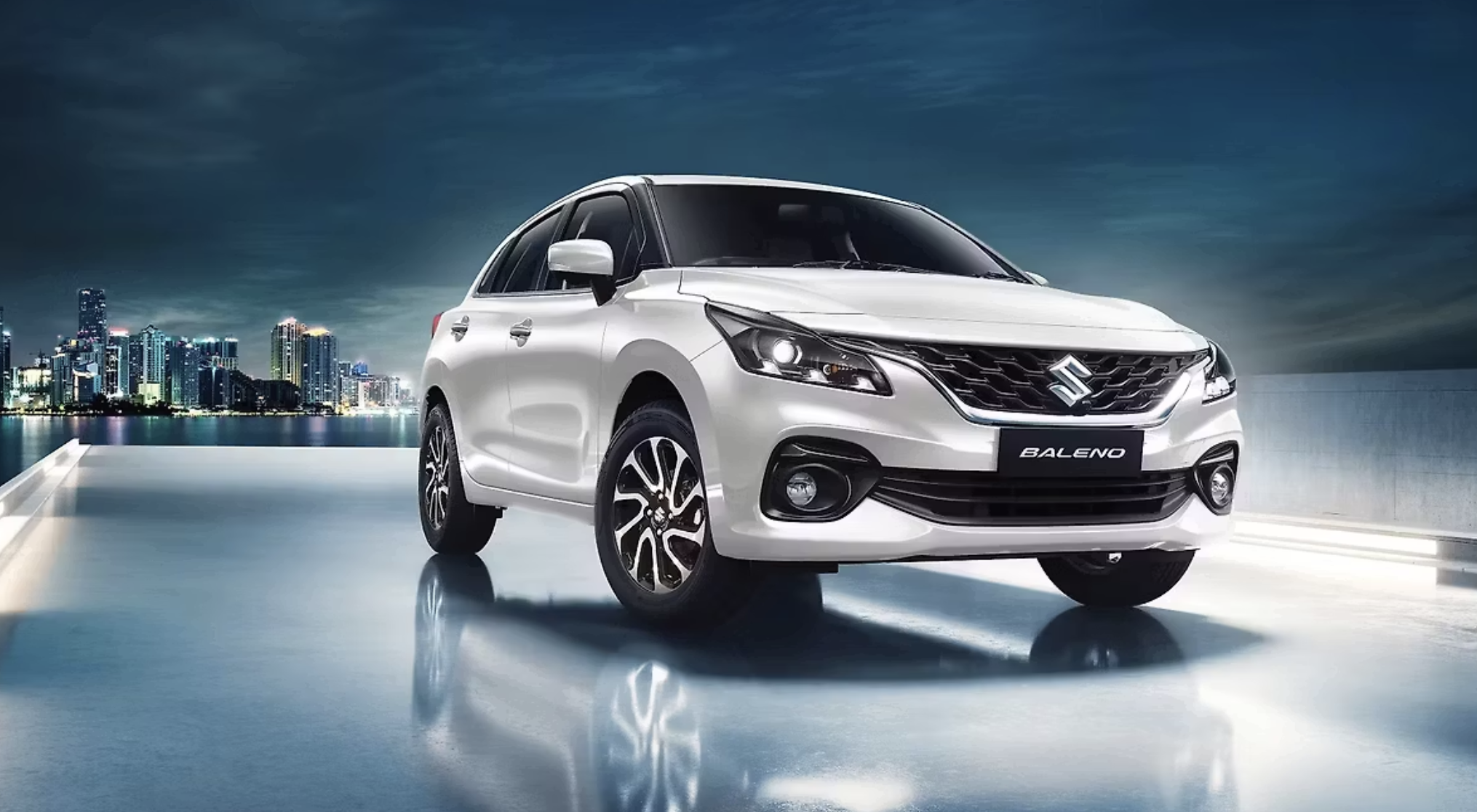
The India-manufactured Toyota Starlet, a rebadged version of the Maruti Suzuki Baleno and Toyota Glanza, has received a zero-star rating for adult occupant protection in the latest Global NCAP crash tests under the “Safer Cars for Africa” programme.
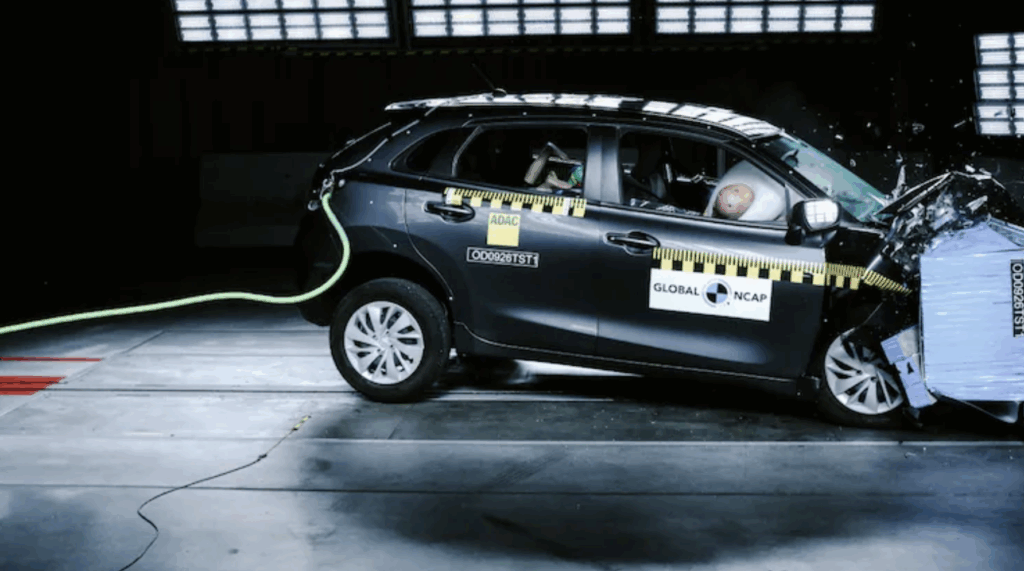
The hatchback, exported from Maruti Suzuki’s Gujarat plant to African markets including South Africa, managed:
- 0 stars for Adult Occupant Protection (AOP)
- 3 stars for Child Occupant Protection (COP)
The result has triggered fresh concerns over safety standards in affordable hatchbacks manufactured in India for export markets.
What Went Wrong In The Crash Test
According to Global NCAP findings:
- The bodyshell was rated “unstable”
- The footwell area deformed significantly during impact
- The structure was considered incapable of handling additional crash loads safely
In frontal impact testing:
- Driver head protection was rated adequate
- Passenger head protection was rated good
- Chest protection for front occupants was adequate
- Knee protection remained marginal due to dangerous structures behind the dashboard area
However, the biggest problem emerged during side-impact testing.
Global NCAP reported:
- Poor head protection
- Poor chest protection
- Weak side-impact performance overall
The side pole impact test was not conducted because:
- Side curtain airbags were not offered as standard equipment.
Child Safety Was Better — But Still Not Great
For child occupant protection:
- The Starlet scored 29.33 out of 49 points
- Resulting in a 3-star child safety rating.
Global NCAP noted:
- The three-year-old dummy’s head contacted interior surfaces during testing
- Side-impact protection for child occupants remained exposed in certain scenarios.
Why This Matters For India
The Toyota Starlet is essentially the export-market sibling of:
- Maruti Suzuki Baleno
- Toyota Glanza.
That has naturally raised questions among Indian consumers regarding:
- Platform safety
- Structural integrity
- Differences between export and India-spec models
However, it is important to note:
The India-spec Baleno previously received:
- 4 stars in Bharat NCAP for adult protection
- 3 stars for child safety under newer Indian testing protocols.
Safety ratings can differ significantly because:
- Crash-test protocols vary globally
- Equipment levels differ by market
- Airbag configurations change across variants
- Structural reinforcements may vary between export models.
India’s Safety Debate Is Intensifying
The latest result has once again intensified debate around automobile safety in India.
Over the past few years:
- Indian consumers have become far more safety-conscious
- Bharat NCAP has increased transparency
- Buyers increasingly prioritize crash ratings over only mileage and pricing
At the same time:
- Global NCAP has repeatedly criticized unstable bodyshell structures in some budget vehicles manufactured for emerging markets.
Maruti Suzuki’s Safety Perception Challenge Continues
Although Maruti Suzuki has improved safety significantly in recent years, the company still faces perception challenges because several older models historically performed poorly in crash tests.
Recent developments show improvement:
- Dzire secured a 5-star Bharat NCAP rating
- Baleno received 4 stars under Bharat NCAP.
However, results like the Toyota Starlet’s zero-star Global NCAP score risk reviving older criticism around:
- Structural safety
- Cost-cutting concerns
- Export-market specifications.
Bigger Question: Are Safety Standards Becoming A Major Buying Factor?
The incident reflects a major shift happening in India’s automobile market:
Crash-test ratings are increasingly becoming a key purchase factor alongside:
- Fuel efficiency
- Features
- Price
- Brand value
Consumers now closely track:
- Airbag counts
- Electronic Stability Control (ESC)
- Bodyshell integrity
- NCAP ratings
- ADAS and safety technologies
The bigger takeaway is clear:
Vehicle safety is no longer a niche concern in India. It is rapidly becoming mainstream — and poor crash-test performance now carries serious reputational consequences for automakers.