India’s electric passenger vehicle market maintained strong momentum in April 2026, signaling how rapidly consumer preferences are changing toward electric mobility.
New sales data released by industry trackers shows that electric car adoption is accelerating steadily across both mass-market and premium segments. Rising fuel prices, improving charging infrastructure, government incentives, and growing model availability are all contributing to the EV boom.
The latest numbers reveal that Indian consumers are no longer viewing electric cars as experimental technology — but increasingly as practical mainstream vehicles for daily use.
Tata Motors Still Leads, But Competition Is Rising Fast
Tata Motors continued to remain India’s largest electric car manufacturer in April 2026, maintaining its dominant position through strong sales of models such as the Nexon EV, Punch EV, Tiago EV, and Curvv EV.
However, the market is becoming far more competitive than before.
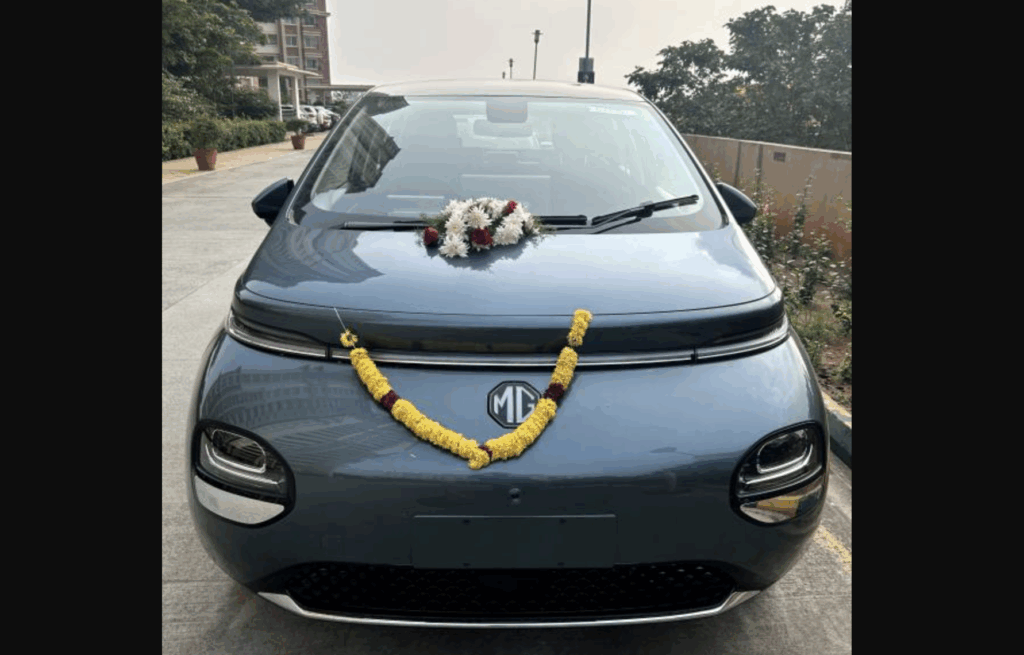
MG Motor India witnessed strong momentum driven by the growing popularity of the Windsor EV and Comet EV, while Mahindra & Mahindra continued expanding its electric SUV presence through newer-generation EV platforms.
Premium EV manufacturers such as BYD, Hyundai Motor India, and BMW also recorded increasing demand as higher-income buyers increasingly shift toward electric luxury mobility.
SUVs Are Driving India’s EV Revolution
One of the biggest trends visible in the latest data is the dominance of electric SUVs.
Indian consumers continue showing strong preference for larger vehicles offering:
- Higher driving range
- Better road presence
- Improved practicality
- Premium interiors
- Advanced technology features
As a result, manufacturers are increasingly prioritizing electric SUVs instead of smaller hatchbacks.
This mirrors broader trends already visible in global EV markets where SUVs have become the primary growth segment for electric mobility.
Industry experts believe upcoming launches from companies like Mahindra, Tata, Hyundai, Maruti Suzuki, Toyota, and VinFast could intensify this SUV-focused EV competition even further over the next two years.
The Backstory: How India’s EV Market Changed So Quickly
India’s EV story looked very different just a few years ago.
For a long time, electric cars struggled with:
- Limited charging infrastructure
- High prices
- Poor driving range
- Low consumer confidence
- Very few model options
Most consumers viewed EVs as niche urban vehicles suitable only for short-distance city usage.
However, several developments dramatically changed the market.
The Indian government introduced FAME subsidies and state-level EV incentives, while fuel prices continued rising steadily. At the same time, battery technology improved rapidly, allowing newer EVs to deliver significantly longer range.
Companies like Tata Motors played a major role by introducing relatively affordable EVs designed specifically for Indian conditions.
The COVID-era surge in environmental awareness and the global EV transition also accelerated consumer acceptance.
Today, EVs are increasingly seen as aspirational technology products rather than merely alternative fuel vehicles.
Charging Infrastructure Is Expanding Rapidly
Another major reason behind rising EV sales is the rapid expansion of India’s charging ecosystem.
Public charging stations are now growing across highways, malls, office complexes, airports, residential societies, and fuel stations. Private charging networks operated by Tata Power, Statiq, ChargeZone, and other companies are also expanding aggressively.
Several automakers are additionally bundling home charging solutions with vehicle purchases to improve convenience for buyers.
Experts believe charging infrastructure growth is gradually reducing “range anxiety,” which was previously one of the biggest barriers to EV adoption.
Premium EVs Are Becoming More Popular
Interestingly, premium electric vehicles are now witnessing faster growth than many analysts initially expected.
Companies like BYD, BMW, Mercedes-Benz, Kia, and Volvo are increasingly seeing strong demand from urban buyers willing to pay more for:
- Longer range
- Faster charging
- Better technology
- Luxury interiors
- Advanced autonomous features
This suggests India’s EV transition is no longer limited only to budget-conscious buyers.
What Happens Next
India’s EV market still represents a relatively small percentage of total passenger vehicle sales, but growth rates remain extremely strong.
Industry analysts expect the next phase of EV expansion to be driven by:
- More affordable battery prices
- Better charging infrastructure
- Wider product choices
- Government incentives
- Stronger domestic manufacturing
With companies preparing dozens of new launches over the next few years, India’s electric car market is now entering its most competitive and transformative phase yet.