Germany has taken another major step toward sustainable transportation by installing 18 new electric vehicle fast chargers powered entirely by renewable energy.
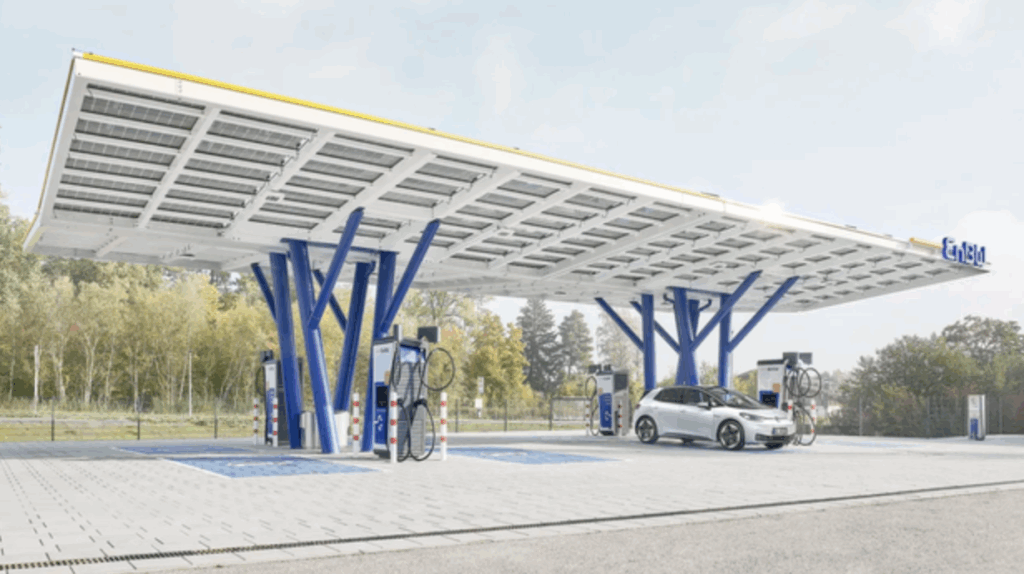
The charging stations were developed as part of the country’s broader push toward decarbonised mobility infrastructure and cleaner transportation systems. Unlike conventional charging networks that may still rely partially on fossil-fuel-powered electricity grids, these new chargers are designed to operate using 100% renewable electricity sources.
The project highlights how Europe is increasingly focusing not only on electric vehicles themselves, but also on ensuring the energy powering those EVs comes from clean sources.
Why Renewable-Powered Charging Matters
One of the biggest criticisms often directed at electric vehicles is that EVs are only as clean as the electricity grid charging them.
In countries heavily dependent on coal or gas-based power generation, EV charging may still indirectly contribute to emissions. Germany’s latest project attempts to solve that issue by ensuring the charging infrastructure itself runs fully on renewable energy.
The charging network reportedly integrates electricity generated from:
- Solar power
- Wind energy
- Renewable grid supply
- Smart energy management systems
This approach significantly lowers the overall carbon footprint of electric transportation.
Experts believe combining EV expansion with renewable energy integration is essential if countries want to achieve true long-term decarbonisation goals.
The Backstory: Germany’s Energy Transition Strategy
The project is deeply connected to Germany’s larger “Energiewende” strategy — the country’s long-running national transition toward renewable energy and low-carbon infrastructure.
For more than a decade, Germany has invested heavily in:
- Solar energy
- Wind farms
- Smart grids
- Battery storage
- Hydrogen technology
- EV infrastructure
The country also accelerated clean energy investments after Europe’s energy crisis exposed vulnerabilities linked to fossil fuel dependence and global energy supply disruptions.
Germany’s automotive industry is simultaneously undergoing massive transformation as companies such as Volkswagen Group, BMW, and Mercedes-Benz rapidly shift toward electric mobility.
As EV adoption grows, the need for cleaner charging ecosystems has become increasingly important.
Europe Is Racing To Build Better EV Networks
Germany’s latest charging project reflects a broader European trend.
Across Europe, governments and private companies are aggressively expanding fast-charging infrastructure to support rising EV adoption. Countries are competing to build:
- Ultra-fast highway chargers
- Renewable-powered charging hubs
- Smart charging systems
- Grid-connected energy storage networks
The European Union has also introduced stricter climate targets aimed at reducing transportation emissions significantly over the next decade.
As a result, charging infrastructure is becoming a strategic priority alongside vehicle manufacturing itself.
Why Fast Charging Is Critical For EV Growth
Fast charging remains one of the most important factors influencing EV adoption globally.
Many consumers still worry about:
- Charging time
- Long-distance travel convenience
- Charger availability
- Range anxiety
Ultra-fast chargers can dramatically reduce charging times, allowing EVs to recharge in minutes instead of hours depending on battery technology.
Industry experts believe widespread fast-charging infrastructure is essential if EVs are to fully replace conventional petrol and diesel vehicles at large scale.
Germany’s renewable-powered chargers attempt to solve both convenience and sustainability challenges simultaneously.
Could India Eventually Build Similar Networks?
Projects like this are also attracting attention in emerging EV markets such as India.
India is currently expanding its public EV charging infrastructure rapidly through both government initiatives and private companies. However, much of India’s electricity grid still depends significantly on coal-based generation.
Experts believe India may eventually need to combine renewable energy expansion with EV charging infrastructure to maximize environmental benefits.
Several Indian companies are already experimenting with solar-powered charging stations, battery storage integration, and green mobility ecosystems.
The Future Of EV Charging Is Changing
The latest German project signals that the future of electric mobility may no longer be limited to simply replacing fuel-powered cars with battery-powered vehicles.
Instead, the next phase of the EV revolution appears focused on creating entire clean energy ecosystems where:
- Vehicles
- Charging stations
- Electricity grids
- Renewable power generation
- Battery storage systems
all work together in an integrated sustainable network.
As countries worldwide accelerate climate goals and EV adoption, renewable-powered charging infrastructure could soon become a major benchmark for the next generation of transportation systems.