Your Retro AI Avatar Uses More Than Just Computing Power
The viral 1980s AI photo trend has taken social media by storm, with people using ChatGPT, Gemini and other AI tools to transform ordinary selfies into retro portraits.

The results may look like photographs from another era, but creating them requires modern computing infrastructure — and that comes with an environmental cost.
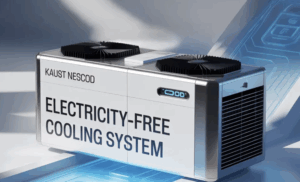
Every AI-generated image requires processors in data centres to perform calculations. Those processors consume electricity and generate heat, while data centres require cooling systems to keep the hardware operating safely.
How Much Electricity Does One AI Image Use?
There is no single fixed figure for the electricity required to create an AI image. Consumption depends on the model, hardware, image resolution, data-centre efficiency and how many times an image is generated.
Research from Carnegie Mellon University and Hugging Face has estimated that AI image generation can consume between 0.01 and 0.29 kilowatt-hours, depending on the system and generation process.
A separate 2025 study examining 17 image-generation models found that energy consumption could vary by as much as 46 times between models.
The United Nations University estimates that the electricity used to generate a typical AI image is roughly equivalent to running a 10-watt LED bulb for about 17 minutes.
The Problem Is Scale
Generating one retro portrait is unlikely to have a meaningful environmental impact by itself.
The bigger concern is the number of people participating in viral trends — and the repeated attempts many users make before getting an image they like.
A person might generate several versions, change the hairstyle, modify clothing, alter the background and regenerate the image repeatedly. Multiply that behaviour across millions of users and the resource demand becomes much larger.
The United Nations University estimates that AI inference — everyday use of AI models — accounts for roughly 80–90% of their total energy demand.
AI Images Also Have a Water Footprint
Electricity is only part of the equation.
AI data centres generate substantial heat and need cooling. Depending on the cooling system and location, this can involve significant water consumption. Water is also associated indirectly with electricity generation and semiconductor manufacturing.
A recent study published in Water Research estimates that AI’s global water footprint could reach 4.2–6.6 billion cubic metres annually by 2027.
For a typical AI-generated image, the United Nations University estimates the electricity-associated water footprint at around 29 millilitres, roughly two tablespoons.
That figure represents water associated with producing the electricity, rather than water directly consumed by the image-generation process.
AI Video Is Far More Resource-Intensive
The environmental impact becomes much larger when AI moves from still images to video.
The same UN analysis estimates that a complex AI-generated video can require enough electricity to power a 10-watt LED bulb for around 42 hours.
This illustrates why the rapid growth of AI-generated video could create a considerably larger resource challenge than today’s viral image trends.
Data Centres Are the Bigger Story
The 1980s photo trend is therefore only a small part of a much larger transformation.
Global data centres consumed around 448 TWh of electricity last year, with AI accounting for about one-fifth of that demand. By 2030, annual data-centre electricity consumption could approach 945 TWh, according to estimates cited in the report.
Water consumption and carbon emissions are also expected to rise as AI infrastructure expands.
Should You Stop Making AI Photos?
Probably not.
One AI-generated selfie represents a tiny fraction of the technology’s overall environmental footprint. The important issue is the cumulative effect of billions of AI interactions and the infrastructure being built to support them.
The challenge for the industry is therefore to make AI models and data centres increasingly energy- and water-efficient, even as demand continues to grow.
Summary: The viral 1980s AI photo trend has an environmental footprint because every generated image requires electricity and data-centre cooling. A typical AI image can consume enough electricity to power a 10-watt LED bulb for about 17 minutes, with an estimated electricity-associated water footprint of roughly 29 ml. One image is not the problem; the growing scale of AI use is.