India’s massive fighter jet modernization programme has entered a critical stage with the Indian Air Force (IAF) reportedly finalizing the Request for Proposal (RFP) for 114 Rafale fighter aircraft. The development comes ahead of Prime Minister Narendra Modi and Air Chief Marshal A. P. Singh visiting France next month.
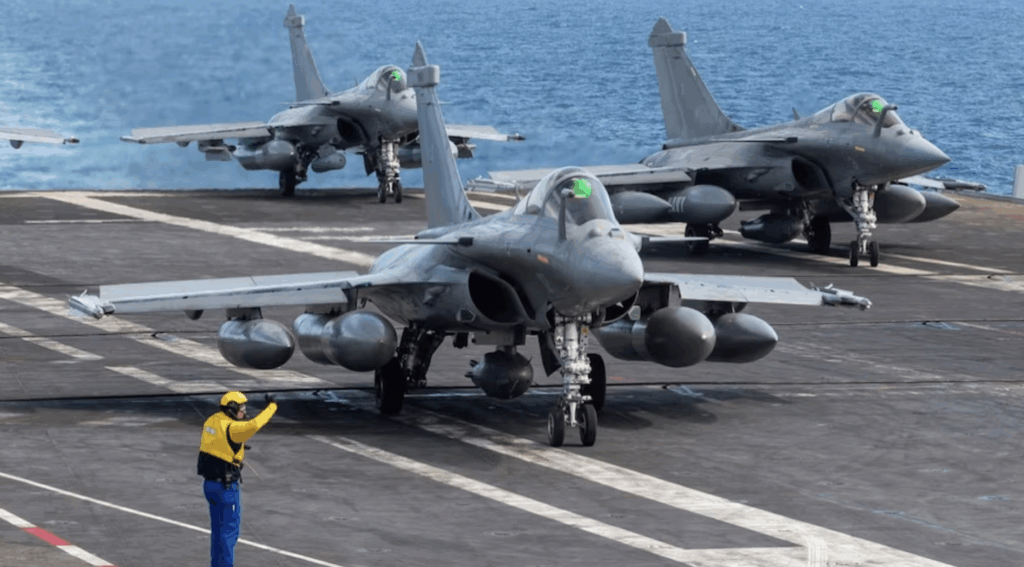
The proposed deal is expected to become:
- India’s largest fighter jet procurement programme
- One of the biggest combat aircraft deals globally
- The first Rafale manufacturing programme outside France
114 Rafales Planned, 92 To Be Made In India
According to reports:
- 22 Rafale jets will be delivered directly from France in fly-away condition
- The remaining 92 aircraft are expected to be manufactured in India through partnerships between Dassault Aviation and Indian private firms.
Potential Indian partners reportedly include:
- Tata Advanced Systems
- Mahindra
- Adani Group
If finalized, India would become the first country outside France to produce Rafale fighter aircraft domestically.
Why India Needs More Fighter Jets Urgently
The Indian Air Force has long faced concerns over declining squadron strength.
India ideally requires:
- Around 42 fighter squadrons for a potential two-front conflict scenario
- Current strength reportedly remains around 30-31 squadrons.
The Rafale expansion is seen as strategically important because:
- China is rapidly modernizing its air force
- Pakistan continues inducting advanced fighter aircraft
- Older MiG fleets are gradually retiring.
The IAF already operates 36 Rafale jets stationed at:
- Ambala
- Hasimara air bases.
India Wants Local Manufacturing & Technology Transfer
Unlike the earlier 36-aircraft Rafale purchase, this deal focuses heavily on domestic production and localization.
According to reports:
- India aims for 55-60% localization over time
- Indigenous weapons integration remains a major negotiation point
- Indian firms may receive fighter aircraft manufacturing licenses.
The proposed programme is expected to boost:
- Aerospace manufacturing
- Defence supply chains
- Private defence sector participation
- Skilled engineering jobs.
Hyderabad & Nagpur Emerging As Aerospace Hubs
Reports suggest multiple locations are being considered for Rafale assembly lines.
Key contenders include:
- Hyderabad
- Nagpur.
Hyderabad is increasingly emerging as a major aerospace manufacturing hub with:
- Missile production
- Drone manufacturing
- Defence electronics
- Aircraft component manufacturing already expanding rapidly.
Meanwhile, Tata Advanced Systems has already partnered with Dassault to manufacture Rafale fuselage sections in India.
Rafales May Receive Advanced F4 Upgrade
The deal may also include upgrading India’s current Rafale fleet to the newer F4 standard.
The Rafale F4 configuration includes:
- Enhanced network-centric warfare capabilities
- Better connectivity and data sharing
- Improved radar and sensor integration
- Advanced communication systems.
The aircraft is considered one of the world’s most advanced multirole fighters capable of:
- Air superiority missions
- Precision strikes
- Nuclear delivery roles
- Carrier operations.
Modi’s France Visit Could Become Major Defence Milestone
Reports suggest Modi’s France visit next month may include:
- Government-to-government framework announcements
- Strategic defence cooperation expansion
- Progress on Rafale manufacturing agreements.
However:
- Final price negotiations are still pending
- The full contract may only be signed later this fiscal year.
Why This Deal Matters
The Rafale programme is now much bigger than a fighter aircraft purchase.
It represents:
- India’s push for defence self-reliance
- Expansion of private-sector defence manufacturing
- Preparation for future air warfare
- Strategic balancing against China and Pakistan
- Development of a domestic aerospace ecosystem.
The bigger shift is clear:
India is no longer focusing only on importing advanced weapons. It is increasingly trying to become a global defence manufacturing hub capable of building some of the world’s most advanced combat systems domestically.