


2010 in someway can be called as the year of Education. Since Congress has come into power, and more specifically Kapil Sibal has become the HR minister, many new path breaking initiatives have been announced.
Infact, recently Kapil Sibal told British Media that it is seeking $400 billion from Government to pump in Indian Education System. He plans to build over 30,000 colleges and between 800 and 900 universities by 2020. Imagine that kind of numbers. Even if we are able to fulfill half of it, it would be a great achievement.
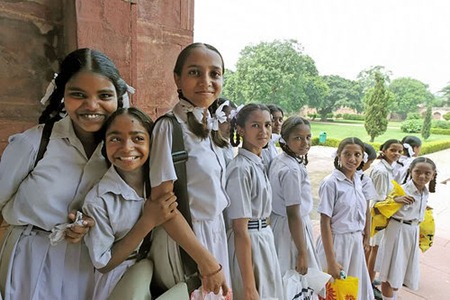
Yesterday, Annual status of Education was released by Mr. Kapil Sibal and although we are making progress on Education front, it is clear from the report that India still has a very long way to go before we can say that we are a good educated society.
Some of the findings of the report are quite startling, especially the standard of Education in Government schools. Just to give you an example – Only 36% of class V students can actually do division problems correctly. Also, there is no water availability in 25% of government primary schools and 19% of upper primary schools.
Here are some of the other highlights of the report:
- In 2009, 96% of children in the age group 6 to 14 in rural India are enrolled in school. 73% of these children are enrolled in government schools and 21.8 % are enrolled in private schools.
- The overall percentage of children (6-14) who are “out of school” has dropped from 4.3% in 2008 to 4% in 2009.
- “Out of school” girls in the age group 11 to 14 has dropped from 7.2% in 2008 to 6.8% in 2009.
- In 2009 as in 2008, well over 50% of 5 year olds are enrolled in school.
- Overall, the percentage of children in Std 1 who can recognize letters or more has increased from 65.1% in 2008 to 68.8% in 2009. Similarly there is an increase in number recognition, with percentage of children recognizing numbers or more increasing from 65.3% in 2008 to 69.3 in 2009.
- Around 40% of all rural children in Std 5 in India are at least three grade levels behind based on their level of learning.
- From 2007 to 2009, for children in government schools in Std 5, the ability to do division problems has actually declined from 41% to 36%.
- On any given day, the average attendance rate in rural India is around 75%. In states like Kerala, Karnataka, Himachal Pradesh, Maharashtra, Goa, Tamil Nadu and Nagaland, 90% or more children attend school on a given day. But in West Bengal, Jharkhand and Madhya Pradesh more than 30% children were absent
on the day of the visit. In Bihar and Uttar Pradesh enrolment is close to 95%, but more than 40% children were absent on day of the visit. - In Government Schools 17.1 % students take private tuitions, and percentage rises to 30.8 by the time they reach standard 8th. In private schools more than 25% students take private tuitions from standard 1 itself !
Following are the complete reports published under ASER:
Region-wise Data
National Report Card
Topic-wise Data
Enrollment | Reading | Math | District
Downloads
Full Report (PDF 27.5 MB)
National Findings (PDF 402 KB)
State-wise Reports (ZIP 12.4 MB)


Hi,
I’m not able to download all those files. It says “The page isn’t redirecting properly”. Can you please check and update all those links.
Dear sir
education me progress and human resource ke liye primary education se hi learning process ko khatm kariye.,,,,,,,,
profetoinal course 8 se hi start ho.
Am accept your reports because in government school kids don’t have all facility so government will take some decision to govenment school kids.
happy janmashtami bhai
happy janmashtami bhai
happy janmashtami bhai
happy janmashtami bhai
I m wid kapil sibble.
happy janmashtami bhai
r u online ?
[email protected]
A key feature of this report is that its contributors are all independent experts who present a critical but purposeful analysis of the scale and complexity of the issues involved. The reviews serve as useful and objective benchmarks on the status of Education For All.
It is a really good report on education so thanks for sharing this with us and keep it doing this kind of work.
Respected Sir,
This is Kuldeep Gupta From Bhopal (M.P). sir I completed my masters program from Aegis School of business and telecom management (mumbai) four months ago sir problem is this in the admission time my school told (CEO) after ten months school will provide you two months internship which is the part of your course.
but right now school is cheating with me and my batch mates. I did not get any internship yet. and school is still saying just wait one week or one month from last four months.
please sir I am in big trouble please help me.
thanks
Kuldeep Gupta
Contact No. – +919702228740
Thats a great number, this will not only improve our literacy rate, but also our entire economy. But the thing is how many of these kids get quality education, the type of education which could help them make a middle class living. I’ve been to many government schools, and I was shocked to see conditions there. The main reason these kids go to study there is because of the free food program. That is why I feel that its of no use if the government runs its own schools, instead they should arrange to pay fees for poor in private schools.