India is preparing for one of the world’s largest high-speed rail expansions, with the government moving ahead on seven new bullet train corridors involving a massive investment of nearly ₹16 lakh crore. Railway Minister Ashwini Vaishnaw confirmed that the mega high-speed rail programme is “on track” and will dramatically reduce travel times between major Indian cities.
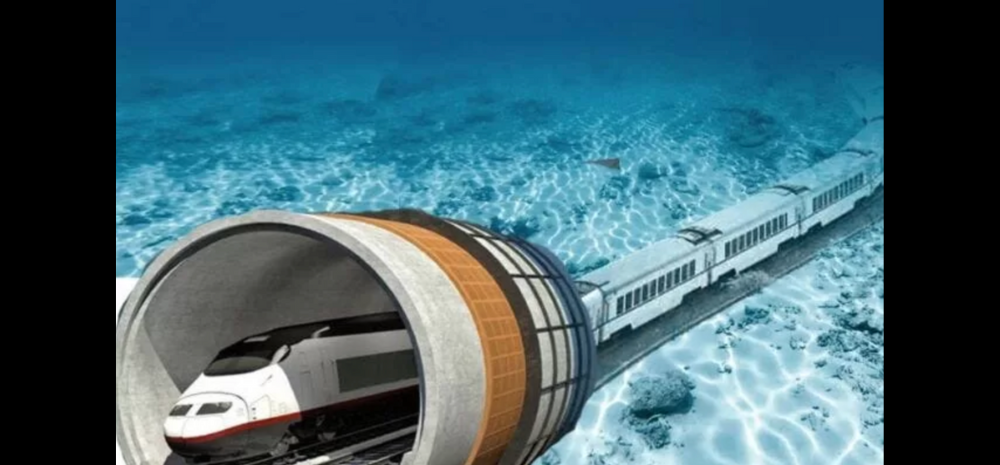
The proposed network is expected to become a transformational infrastructure project comparable to India’s highway, metro, and airport revolutions over the last two decades.
Mumbai-Pune In 48 Minutes, Pune-Hyderabad In Under 2 Hours
The government revealed several ambitious travel-time targets under the new high-speed network:
- Mumbai to Ahmedabad: 1 hour 57 minutes
- Mumbai to Pune: 48 minutes
- Pune to Hyderabad: 1 hour 55 minutes
Currently:
- Mumbai-Pune rail journeys take around 3-4 hours
- Pune-Hyderabad trains often require 8-10 hours or more
The drastic reduction could reshape business travel, tourism, logistics, and even real estate development patterns across India.
According to the Railways Ministry, the connected cities are expected to increasingly function as “integrated economic zones” instead of isolated urban centers.
Seven Bullet Train Corridors Planned Across India
The seven proposed high-speed corridors are expected to cover nearly 4,000 km and form the backbone of India’s future rapid rail network.
While detailed corridor alignments are still being finalized, the government has indicated that the expansion will focus on:
- High-density economic routes
- Industrial corridors
- Business travel hubs
- Major urban clusters
The first project — the Mumbai-Ahmedabad High Speed Rail corridor — is already under construction and serves as the technology and execution template for future projects.
Massive Push For ‘Made In India’ Bullet Trains
One of the biggest shifts in the new expansion is localization.
According to Vaishnaw, most of the ₹16 lakh crore investment is expected to benefit Indian manufacturers and domestic construction firms because design and construction systems have now been standardized locally.
India is also developing indigenous high-speed trainsets under the B-28 project. The first prototype bullet train manufactured in India is expected by March 2027.
This marks a major strategic shift from dependence on imported railway technologies toward domestic manufacturing capabilities.
Railways Wants To Compete Directly With Airlines
In a bold statement, Vaishnaw recently said bullet trains could eventually “wipe out short-haul flights” on several busy domestic routes.
Globally, high-speed rail has already transformed aviation markets:
- Japan’s Shinkansen reduced domestic air dominance
- China built the world’s largest bullet train network
- Europe’s high-speed corridors compete strongly with airlines
Experts believe routes below 700-800 km are especially vulnerable to high-speed rail disruption because trains offer:
- Faster city-center connectivity
- Lower waiting times
- Higher frequency
- Better comfort for short-medium travel
Railways Infrastructure Spending Hits Record Levels
India’s railway transformation is happening alongside record infrastructure spending.
According to the minister:
- Annual railway capex has risen from ₹66,000 crore earlier to nearly ₹2.72 lakh crore
- Around 49,000 km of tracks have already been electrified
- 36,000 km of new rail tracks have been added in recent years
The government also recently completed the Dedicated Freight Corridor project, which has significantly improved cargo movement efficiency across the country.
Why This Matters For India
The ₹16 lakh crore bullet train push is not just about faster travel.
The government sees high-speed rail as:
- A manufacturing growth engine
- A logistics revolution
- A clean transportation alternative
- A boost for regional economic integration
- A driver of urban expansion and job creation
If executed successfully, India could emerge as one of the world’s largest high-speed rail markets over the next decade — fundamentally changing how Indians travel between major cities.