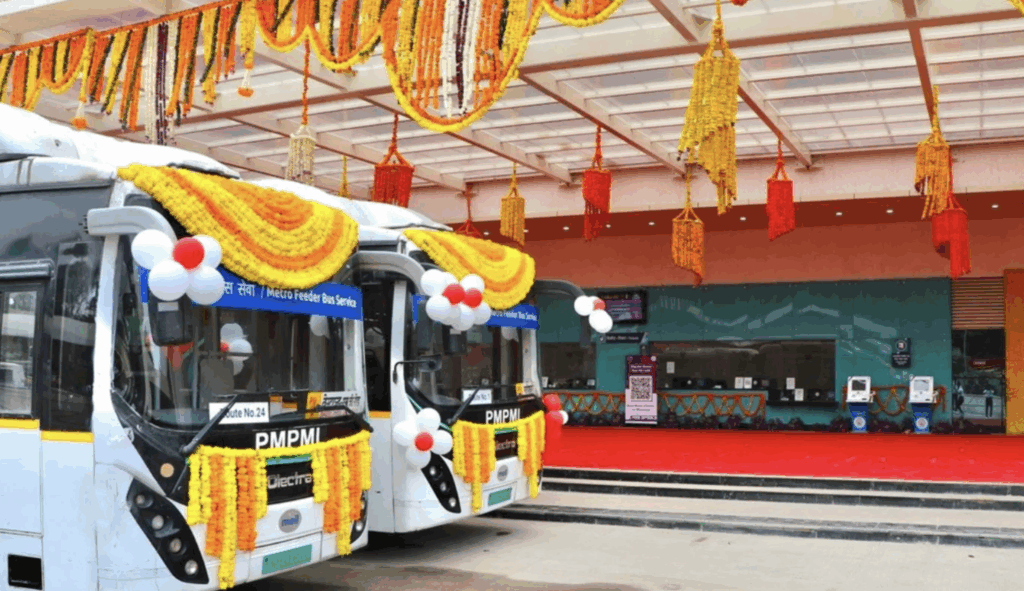
Pune Metro is planning a major upgrade to its commuter experience by launching its own dedicated feeder bus service, aimed at solving one of the biggest problems in urban transit—last-mile connectivity.
Why Pune Metro Is Launching Feeder Buses
Despite expanding metro routes, Pune Metro has struggled to reach its expected ridership numbers. The core issue is simple:
- People can reach metro stations
- But getting from the station to their final destination is still difficult
To fix this, Maha Metro plans to introduce a dedicated bus network that connects metro stations to nearby residential and commercial areas.
What The Feeder Bus Plan Looks Like
The proposed system is designed to be efficient and commuter-friendly:
- Mini buses or 8-seater vehicles likely to be used
- Services to run every 5–10 minutes
- Stops located within short walking distance (~25 metres) of key points
- Initial rollout as a pilot at select stations
The number of buses and routes will be finalized after a detailed commuter study and demand analysis.
Existing Feeder Services Already In Place
Pune Metro is not starting from scratch. Some feeder connectivity already exists:
- 11 metro stations covered
- 23 feeder routes operational
- Around 85 PMPML buses in service
- Example: Ramwadi Metro Station to Pune Airport route
However, these services are limited and inconsistent, which is why a dedicated metro-operated network is now being planned.
Integration With Other Transport Modes
The broader strategy includes:
- Collaboration with PMPML buses
- Partnerships with auto-rickshaw unions
- Tie-ups with bike rental services
- Private company shuttle services for employees
This multi-modal approach aims to create a seamless end-to-end journey for commuters.
Why Last-Mile Connectivity Matters
Last-mile connectivity is the difference between:
- A metro system that exists
- And a metro system that people actually use
Without easy access to and from stations:
- Commuters prefer private vehicles
- Metro adoption remains low
- Traffic congestion stays high
Pune Metro is now focusing on this critical gap to boost daily ridership from ~1.88 lakh to over 2.75 lakh in the future.
Bigger Picture: Fixing Pune’s Urban Mobility
This move signals a shift in Pune’s transport strategy:
- From rail-only thinking → integrated mobility
- From infrastructure focus → user experience focus
With upcoming metro expansions and Line 3 expected soon, improving last-mile connectivity will be key to making Pune Metro a default mode of transport.