The Gujarat High Court has ruled that registration of a marriage alone is not sufficient to establish a valid Hindu marriage if the essential religious ceremonies required under the Hindu Marriage Act have not been performed. The judgment came while deciding a dispute in which the court declared a registered marriage null and void, holding that no lawful Hindu marriage had taken place.
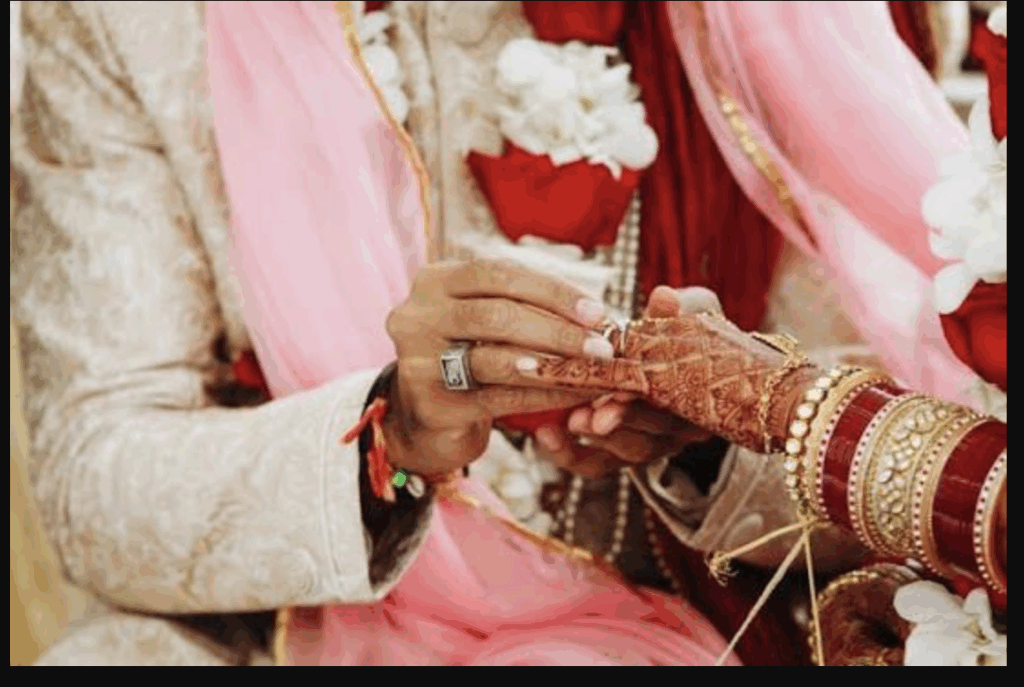
The ruling reiterates that compliance with the legal requirements of the Hindu Marriage Act is necessary, even if a marriage has been officially registered.
Case That Led To The Verdict
The case involved a man who claimed that his signatures had been obtained on marriage-related documents without his knowledge or consent while he was working in his wife’s father’s company. He also stated that he was living in the United Kingdom, had never participated in any marriage ceremony and had never lived with the woman as husband and wife.
Although the Family Court had earlier dismissed his petition, he challenged the decision before the Gujarat High Court.
Court Highlights Importance Of Marriage Ceremonies
The High Court observed that Section 7 of the Hindu Marriage Act requires a Hindu marriage to be solemnised according to the customary rites and ceremonies followed by either party.
Where those customs include Saptapadi, or the seven sacred steps taken around the holy fire, the marriage becomes legally complete only after the seventh step is performed. The court clarified that registration under Section 8 cannot replace these mandatory ceremonies.
Marriage Certificate Cannot Override Legal Requirements
A key factor in the case was the woman’s admission before the court that no Hindu marriage rituals or ceremonies had actually taken place.
Based on this admission, the High Court held that a marriage certificate by itself cannot create a legal marital relationship if the marriage was never solemnised in accordance with the law. The judges noted that registration only records an existing valid marriage and does not validate one that never legally came into existence.
Marriage Declared Null And Void
The High Court set aside the earlier Family Court order and declared the alleged marriage null and void from the beginning. It also granted the husband the liberty to approach the competent authority for cancellation of the marriage registration and certificate.
The court observed that since both parties admitted that no valid Hindu marriage had been solemnised, conducting a full-fledged trial would serve no useful purpose.
Why The Judgment Matters
The ruling serves as an important clarification on the legal distinction between marriage registration and marriage solemnisation. It reinforces that while registration is important for maintaining official records, it cannot substitute the essential religious or customary ceremonies required for a valid Hindu marriage under Indian law.
The judgment is expected to be cited in future matrimonial disputes involving questions about the validity of registered marriages.
Summary
The Gujarat High Court has ruled that registering a marriage alone does not make it legally valid under the Hindu Marriage Act. The court held that essential marriage ceremonies, including Saptapadi where applicable, must be performed for a Hindu marriage to be recognised in law, and declared the disputed marriage null and void after finding that no such ceremonies had taken place.