A controversy over H-1B and J-1 visa holders has erupted around a New York hospital after a social media claim alleged that 80 of 82 newly hired resident doctors were foreign workers, while only two were Americans.
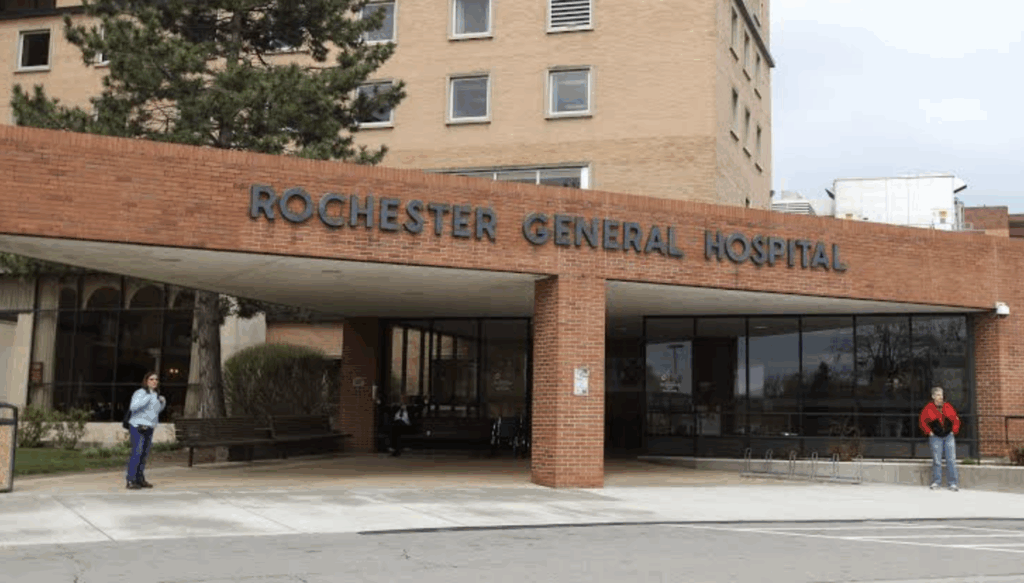
The claim concerns Rochester General Hospital in Rochester, New York, and has now attracted the attention of a US Labor Department watchdog.
Labor Department Inspector General Demands Answers
US Labor Department Inspector General Anthony D’Esposito has asked Rochester Regional Health, which operates Rochester General Hospital, to provide data on the residency hiring.
The request follows a social media post claiming that 80 of 82 residency positions went to doctors holding H-1B or J-1 visas.
D’Esposito asked the hospital to provide figures showing how many residency positions went to H-1B and J-1 visa holders and how many American applicants were considered.
80 Of 82 Claim Has Not Been Verified
The widely circulated figure has not been independently verified.
The original social media post did not provide supporting records establishing that exactly 80 of the 82 positions went to foreign workers or explaining how the visa breakdown was calculated.
Publicly available information from Rochester Regional Health does show that its residency programmes include graduates of medical schools in several countries, alongside graduates of US institutions. However, those listings do not independently establish the claimed 80-of-82 figure.
The Labor Department’s request for information is therefore significant because it could provide official data to verify or challenge the claim.
Why H-1B And J-1 Visas Matter
International medical graduates are an established part of the US medical residency system.
Doctors who graduate from medical schools outside the United States can enter American residency programmes through different immigration pathways. J-1 visas are commonly used for international medical graduates undergoing graduate medical education, while some physicians use H-1B visas.
The presence of international graduates in a residency programme therefore does not by itself indicate a violation of immigration or employment rules.
The current scrutiny is focused on the specific hiring numbers and whether the residency recruitment process complied with applicable requirements.
H-1B Scrutiny Expands Beyond Technology
The Rochester controversy comes amid a broader US government focus on the H-1B programme.
The Trump administration has increased scrutiny of companies and organisations using foreign-worker visas and has taken measures affecting H-1B workers and employers.
The latest dispute shows how that scrutiny is now extending beyond the technology and outsourcing sectors into healthcare and medical training.
What Happens Next
The key question is whether the hospital’s records support the viral claim.
The Labor Department’s inspector general is seeking information from Rochester Regional Health, which could clarify the number of residents on H-1B and J-1 visas and the background of the remaining hires.
Until those figures are released or independently verified, the claim that 80 out of 82 positions went to foreign workers should be treated as an allegation rather than an established fact.
Summary
A social media claim alleging that 80 of 82 resident doctors hired at Rochester General Hospital were foreign workers on H-1B or J-1 visas has triggered scrutiny from the US Labor Department’s inspector general. The 80-of-82 figure has not been independently verified. Authorities are seeking hiring data from the hospital to determine the actual breakdown of residency appointments.