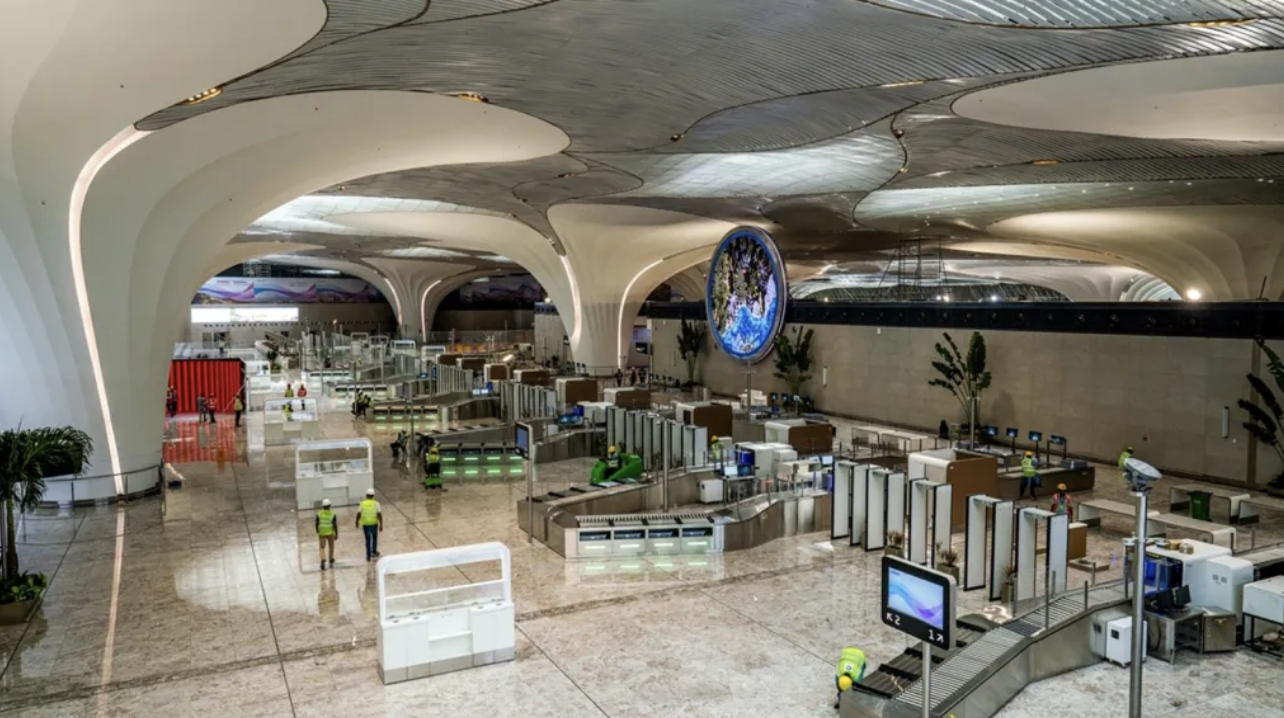


Airlines have asked the Union Civil Aviation Ministry to intervene in a dispute with Adani-owned Mumbai International Airport Limited (MIAL) over plans to shift some international flights from Mumbai’s Chhatrapati Shivaji Maharaj International Airport to Navi Mumbai International Airport.

The Airline Operators’ Committee (AOC) has objected to MIAL’s proposal to reduce Terminal 1’s capacity by five million passengers a year, calling it a unilateral decision made without adequate justification. The committee also says the airport operator has not disclosed enough information about the airport’s actual available capacity.
Disagreement Over Capacity and Flight Slots
MIAL’s proposal is linked to the redevelopment of the northern section of Terminal 1B. The work was initially scheduled to begin in January 2027, but airlines opposed the proposed reduction in international flights and raised concerns about the impact on existing operations.
The airport operator had proposed cutting weekly international operations at Mumbai airport by 33% to accommodate passengers displaced by the redevelopment. After airlines pushed back, the Ministry of Civil Aviation asked stakeholders to work towards a mutually agreeable transition plan.
The latest disagreement concerns the Summer 2027 schedule, which begins in late March. Airlines have asked the ministry to direct MIAL and the airport’s slot coordinator to approve and confirm their historical slots for that schedule.
Airlines Question Terminal Capacity
The AOC says Terminal 1’s projected annual capacity is 15 million passengers, but its actual operational capacity is below 10 million. It has sought clarity on the capacity figures and the basis for the proposed changes.
Airlines have also asked that slot allocation follow the International Air Transport Association’s slot calendar and the Civil Aviation Ministry’s 2013 guidelines. They want decisions to be taken by November 5, the deadline for the Slot Allocation List.
Navi Mumbai Transition Remains Unsettled
Adani Airports operates both Mumbai and Navi Mumbai airports and has maintained that some flight operations need to move during the redevelopment. Airlines, however, have sought more details on the work schedule, capacity at both airports and the operational implications of shifting flights between facilities.
The disagreement has not stopped every airline from planning a move. Some Indian carriers have announced phased transfers of selected services to Navi Mumbai, while several international airlines continue to seek more time and clarity.
The ministry’s intervention is now being sought as stakeholders work towards a transition plan. The key questions remain how much capacity must be shifted, when the changes should take effect and how airlines’ existing operations and passenger connections will be protected.