Banda district in Uttar Pradesh is witnessing unprecedented heat conditions, with temperatures touching 48.2 degrees Celsius and turning the region into one of the hottest places in the country. The unbearable heat has disrupted normal life so severely that roads empty out, markets shut down, and residents stay indoors after 10 AM.
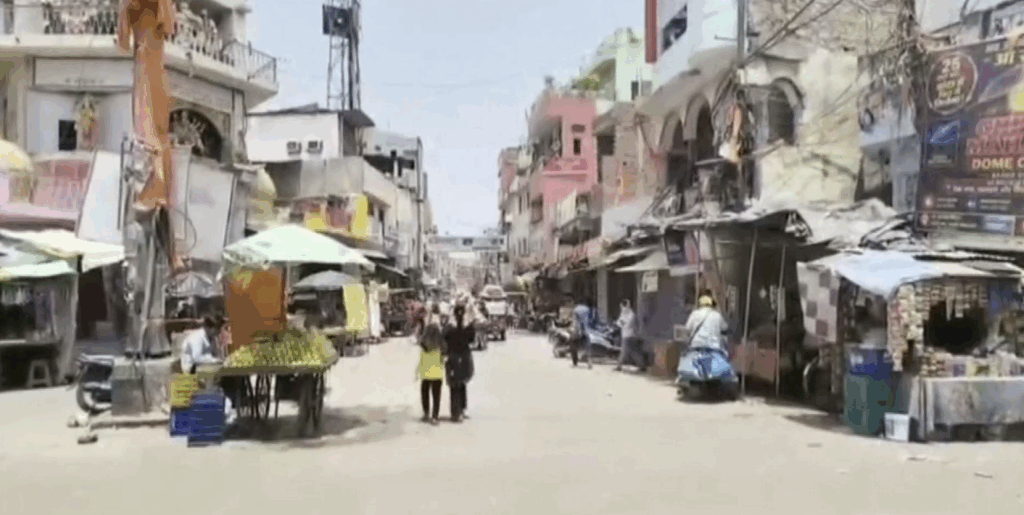
For locals, surviving the day has become more important than business or work. Shopkeepers are opening stores before sunrise and shutting operations before noon as daytime temperatures become nearly impossible to endure. Streets that once remained crowded throughout the day now resemble deserted lanes under the scorching sun.
The India Meteorological Department (IMD) has issued a severe heatwave warning for several districts in Uttar Pradesh, predicting temperatures to remain significantly above normal levels for the next few days.
Workers And Farmers Forced To Change Their Lifestyle
The heatwave is not only affecting businesses but also changing the daily routines of workers and farmers across Banda. Construction labourers are reportedly refusing daytime work despite losing a major portion of their wages. Many workers now prefer to remain unemployed during peak afternoon hours rather than risk heatstroke.
Farmers have also altered their schedules dramatically. In several villages, agricultural activities are being carried out at night under LED floodlights because daytime farming has become physically unbearable.
Small food vendors and tea stalls that usually operate during the afternoon are now reopening only after sunset when temperatures slightly reduce. Residents say the district effectively “wakes up” only in the evening.
Environmental Damage Making Banda Hotter
Experts believe Banda’s worsening heat crisis is not just because of seasonal weather but also due to years of environmental degradation. Researchers and environmentalists have pointed toward large-scale deforestation, mining, and excessive sand extraction as major reasons behind the rising temperatures.
Studies indicate that Banda has lost a significant portion of its forest cover over the past two decades. The reduction in dense forests and open green areas has weakened the natural cooling system of the region.
Mining operations across the Vindhyan range are also believed to be worsening the situation. Environmental experts say continuous excavation and blasting have damaged groundwater recharge systems and accelerated water scarcity across Bundelkhand.
The Ken river, which plays a vital role in the region’s ecology, has also been heavily affected by sand mining. Activists claim excessive extraction has reduced the river’s ability to retain water, contributing to rising ground temperatures and declining moisture levels.
Power Infrastructure Under Massive Pressure
The heatwave has placed enormous pressure on Banda’s electricity infrastructure as power consumption surges across the district. Reports suggest that transformers are repeatedly failing because of excessive load and extreme temperatures.
Electricity department workers are reportedly pouring water over transformers continuously to prevent overheating and technical breakdowns. The rising use of coolers, fans, and air conditioners has further increased stress on the already strained power system.
Residents in several areas are also facing power cuts at a time when uninterrupted electricity has become critical for survival.
Experts Warn Of A Dangerous Future
Environmental researchers are warning that Banda could face an even more dangerous future if ecological destruction continues unchecked. Experts believe the district is gradually transforming into a “heat island” where land surfaces absorb and trap excessive heat throughout the day.
Scientists say rising temperatures are also preventing the region from cooling properly at night, creating continuous heat stress for residents. Several researchers have warned that parts of Banda could become barren over the next two decades if forest loss and environmental damage continue at the current pace.
As the heatwave tightens its grip, Banda’s situation is becoming a stark reminder of how climate change and environmental neglect are rapidly reshaping life across several parts of India.