India Takes Another Step Toward Cleaner Fuels
India has officially introduced E85 fuel, marking a significant milestone in the country’s push toward cleaner and more sustainable transportation. E85 is a fuel blend containing up to 85% ethanol and 15% petrol, substantially higher than the E20 blend currently being rolled out across the country.
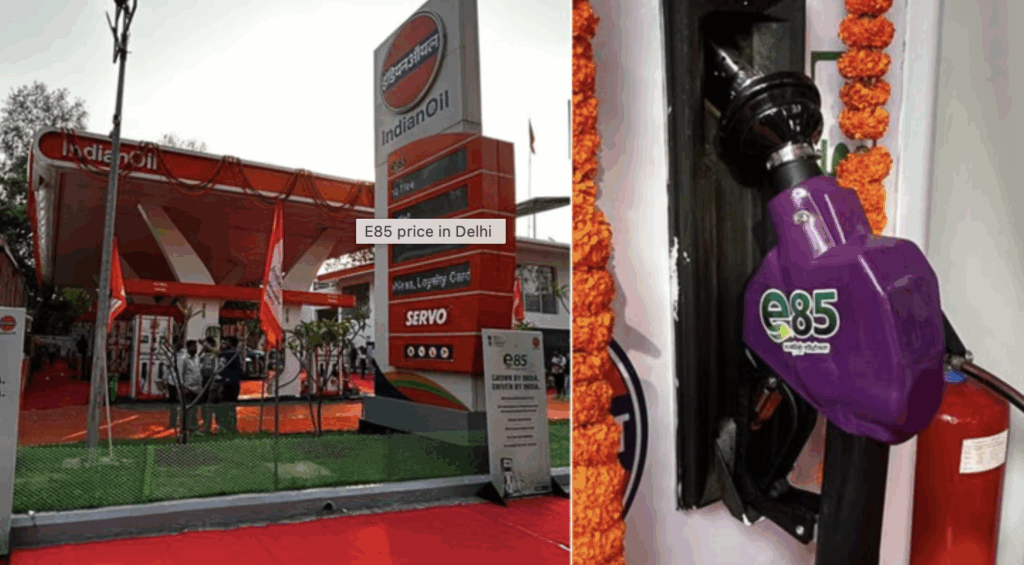
The move aligns with the government’s objective of reducing crude oil imports, lowering carbon emissions, and promoting the use of domestically produced biofuels. However, the arrival of E85 has also raised questions among vehicle owners about compatibility and whether existing E20 vehicles can use the new fuel.
What Exactly Is E85 Fuel?
E85 is a high-ethanol fuel blend designed specifically for flex-fuel vehicles. Ethanol is typically produced from sugarcane, corn, and other agricultural sources. Compared to conventional petrol, ethanol burns cleaner and helps reduce dependence on imported fossil fuels.
However, because ethanol has different chemical properties than petrol, vehicles require specially designed engines and fuel systems to safely and efficiently use high ethanol blends.
Who Can Use E85 Fuel?
Only flex-fuel vehicles approved for E85 operation can use the new fuel. These vehicles are equipped with modified fuel lines, injectors, engine components, and software capable of handling varying ethanol concentrations.
Most vehicles currently sold in India are designed for E20 fuel compatibility and are not engineered to run on E85. Vehicle manufacturers will need to introduce dedicated flex-fuel models before E85 can be adopted on a large scale.
Several automakers have already showcased flex-fuel prototypes and are expected to expand their offerings in the coming years.
Can E20 Cars Run on E85?
The simple answer is no.
Vehicles certified for E20 fuel are designed to safely operate with a maximum ethanol content of 20%. Using E85 in an E20-compatible vehicle could potentially damage engine components, fuel pumps, seals, and other parts not designed for high ethanol concentrations.
Experts recommend that owners strictly follow the fuel specifications provided by manufacturers and avoid experimenting with higher ethanol blends.
Why Is India Promoting Higher Ethanol Blends?
India imports a large portion of its crude oil requirements, making fuel imports a significant burden on the economy. Increasing ethanol usage can help reduce import dependence while creating additional demand for agricultural products.
The government believes higher ethanol blending will support energy security, reduce emissions, and provide economic benefits to farmers through increased biofuel production.
The Road Ahead
While E85 represents an important development, widespread adoption will depend on the availability of flex-fuel vehicles and supporting fuel infrastructure. For now, most Indian motorists will continue using E20-compatible fuels, while E85 is likely to remain limited to specially designed flex-fuel models.
Summary: India has introduced E85 fuel, a blend containing up to 85% ethanol, as part of its clean energy and biofuel strategy. However, only dedicated flex-fuel vehicles can use E85 safely. Existing E20-compatible vehicles should not use the new fuel, as high ethanol concentrations may damage engines and fuel systems. The move aims to reduce oil imports, lower emissions, and strengthen India’s energy security.