AI Set to Become a Digital Coworker at Scale
Artificial intelligence is expected to become deeply embedded in the workplace over the next few years, according to Tata Sons Chairman N. Chandrasekaran. Speaking about the future of enterprise technology, Chandrasekaran said Tata Consultancy Services (TCS) could have as many AI agents as human employees within the next three years, highlighting the transformative impact AI is expected to have on the global technology industry.
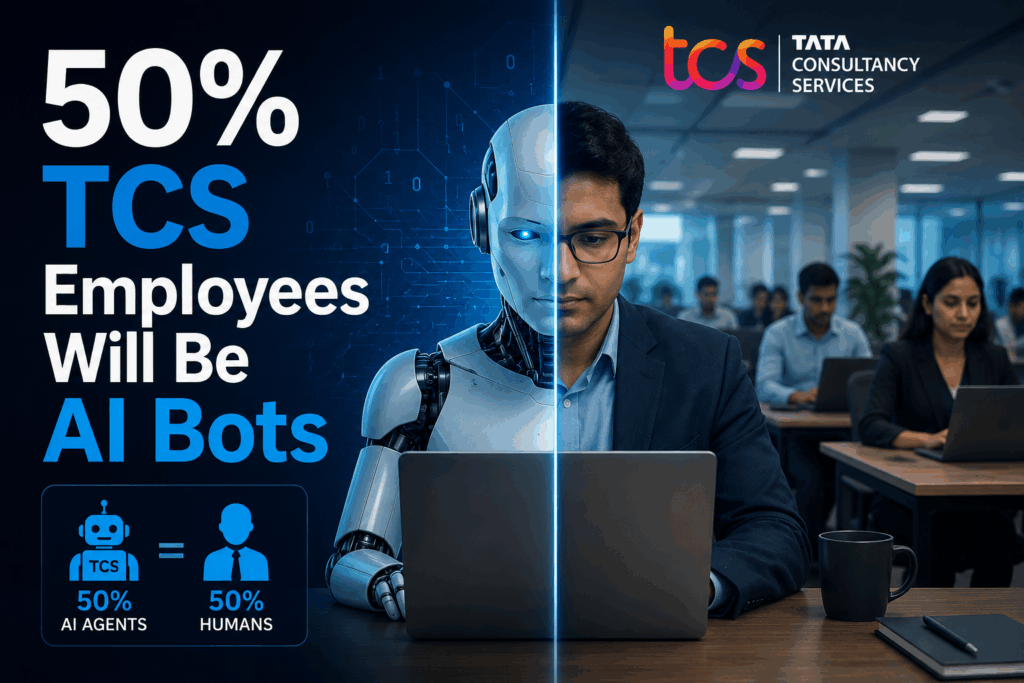
The statement reflects how rapidly businesses are integrating AI into operations, software development, customer service, and decision-making processes.
What Are AI Agents?
Unlike traditional automation tools, AI agents are designed to perform complex tasks with minimal human intervention. They can analyze information, execute workflows, interact with software systems, generate content, write code, and assist employees across various business functions.
Technology companies increasingly view AI agents as digital coworkers capable of handling repetitive and time-consuming activities, allowing human employees to focus on higher-value responsibilities.
TCS Preparing for an AI-Driven Future
With more than 600,000 employees globally, TCS is among the world’s largest IT services companies. Chandrasekaran’s comments suggest that the company is preparing for a future in which AI agents become an integral part of its workforce model.
Rather than replacing employees outright, TCS envisions AI augmenting human capabilities, improving productivity, accelerating project delivery, and enabling teams to manage larger workloads more efficiently.
The company has already been investing heavily in AI platforms, generative AI solutions, automation tools, and enterprise transformation services to help clients adopt emerging technologies.
Software Development Could Change Dramatically
One of the areas expected to witness the biggest impact is software engineering. AI systems are increasingly capable of generating code, testing applications, identifying bugs, and automating routine development tasks.
Industry leaders, including executives from major AI companies, have recently reported that AI now contributes a substantial share of production code. This trend is expected to reshape the role of software developers, shifting their focus toward architecture, validation, problem-solving, and innovation.
New Opportunities and New Challenges
While AI agents offer significant productivity gains, they also raise important questions about workforce transformation, skill development, and governance. Organizations will need to retrain employees, redesign workflows, and establish safeguards to ensure AI systems operate responsibly and securely.
Experts believe future workplaces will be defined not by humans versus AI, but by how effectively humans and AI collaborate.
The Next Phase of Digital Transformation
TCS’s vision underscores a broader shift taking place across industries worldwide. As AI agents become more capable and accessible, businesses are moving from simple automation toward intelligent, autonomous systems that can support nearly every aspect of operations.
The next three years could determine how quickly enterprises embrace this new workforce model and how profoundly AI reshapes the future of work.
Summary: Tata Sons Chairman N. Chandrasekaran says TCS could have as many AI agents as human employees within the next three years. The prediction highlights the growing role of AI in software development, business operations, and enterprise productivity. While AI agents are expected to enhance efficiency and automate routine work, companies will also need to address workforce transformation, governance, and reskilling challenges.