India has become one of the worst-performing major stock markets in recent weeks as rising geopolitical tensions, surging crude oil prices, and foreign investor outflows continue to pressure financial markets.
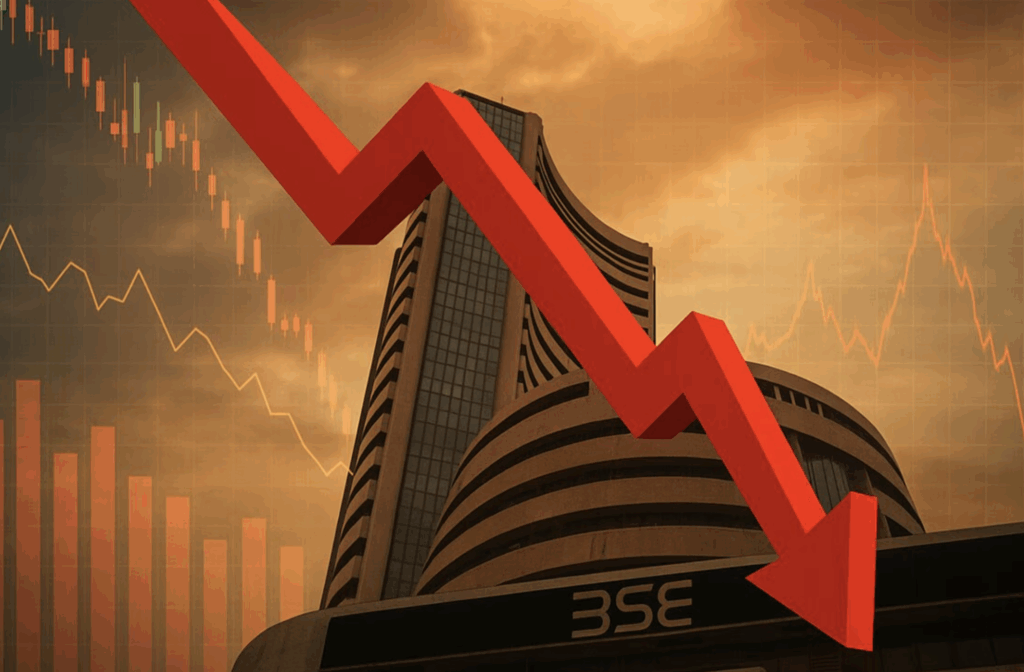
Indian benchmark indices, including the Sensex and Nifty 50, have witnessed sharp declines amid fears that prolonged conflict in the Middle East could increase inflation, weaken economic growth, and widen India’s trade deficit.
Rising Oil Prices Trigger Market Pressure
India imports a large share of its crude oil requirements, making the economy highly sensitive to global energy price movements. Brent crude prices have surged above $110 per barrel in recent sessions following escalating tensions involving Iran and concerns around the Strait of Hormuz.
Higher crude oil prices are expected to increase fuel costs, raise inflationary pressure, and impact India’s import bill. Investors are also monitoring the impact on the Indian rupee and government finances.
Foreign Investors Pull Out Funds
Foreign institutional investors have continued selling Indian equities and bonds amid global uncertainty. Reports said foreign investors have withdrawn billions of dollars from Indian markets since the beginning of the conflict-driven market volatility.
The sustained outflows have contributed to pressure on both stock markets and the Indian rupee, which recently touched record lows against the US dollar.
IT Stocks Among Biggest Losers
Indian IT stocks have emerged among the worst-performing sectors this year. Concerns around artificial intelligence disrupting traditional outsourcing businesses, weak global demand, and cautious earnings outlooks have weighed heavily on technology companies.
The Nifty IT Index has recorded sharp losses during 2026, with several major companies witnessing significant declines in market valuation.
Rupee Hits Record Lows
The Indian rupee has weakened sharply amid rising oil prices and foreign fund outflows. Analysts said the currency has become one of Asia’s weakest performers this year due to pressure from elevated import costs and global market uncertainty.
The Reserve Bank of India has reportedly intervened in currency markets to manage volatility and limit excessive depreciation.
Government Introduces Import Curbs
In recent weeks, the government has announced multiple measures aimed at reducing pressure on foreign exchange reserves. These include higher import duties on gold and silver and restrictions on certain silver imports.
Prime Minister Narendra Modi also appealed to citizens to reduce non-essential gold purchases in order to conserve foreign exchange reserves.
Broader Economic Concerns Grow
Analysts said prolonged geopolitical instability and elevated energy prices could impact inflation, consumption, and corporate earnings across multiple sectors. Banking, automobile, aviation, and manufacturing companies are closely monitoring fuel costs and currency movements.
At the same time, some energy companies and oil producers have benefited from rising crude prices amid the broader market decline.
Summary
India has emerged as one of the worst-performing major stock markets amid rising crude oil prices, Middle East tensions, and heavy foreign investor outflows. Indian benchmark indices, the rupee, and IT stocks have come under significant pressure in 2026. Analysts say higher energy costs, inflation concerns, and global uncertainty are impacting investor sentiment and economic outlook expectations.