India’s push towards cleaner fuels through ethanol blending has been widely praised for reducing dependence on imported crude oil and supporting environmental goals. However, a recent survey has highlighted growing concerns among owners of older petrol vehicles, many of whom believe that the transition to E20 fuel has negatively impacted their vehicles. The survey found that nearly half of respondents would prefer the return of E0 or E10 petrol options.
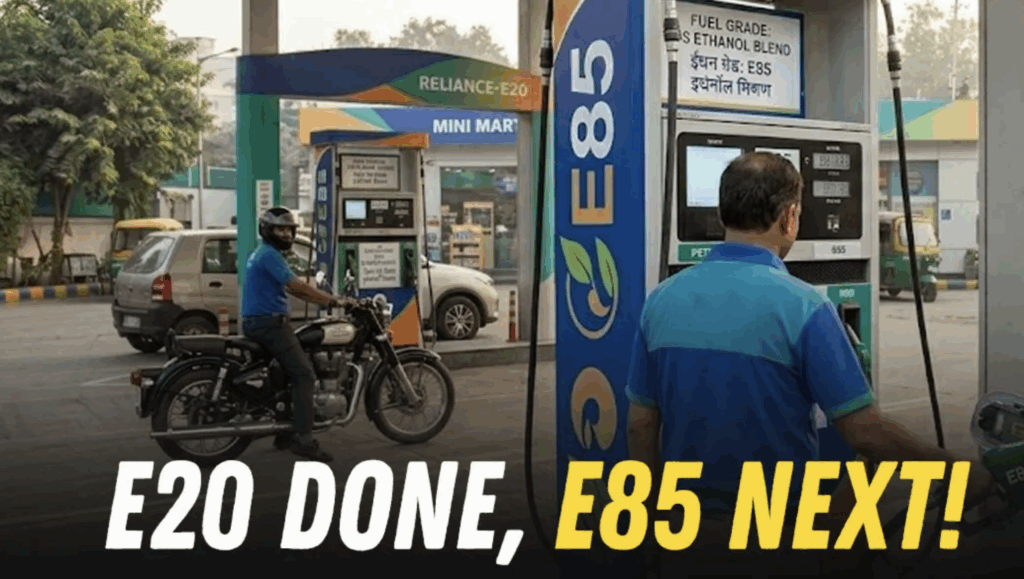
What Is E20 Fuel?
E20 fuel is a blend containing 20% ethanol and 80% petrol. The Indian government has been promoting ethanol blending as part of its broader strategy to reduce oil imports, cut carbon emissions, and support the domestic agriculture sector.
While newer vehicles are increasingly being designed to operate efficiently on E20 fuel, many older vehicles were originally engineered for lower ethanol blends such as E0 (pure petrol) or E10 (10% ethanol).
Survey Highlights Concerns Among Vehicle Owners
The survey focused primarily on owners of petrol vehicles manufactured before E20-compatible models became widely available. According to the findings, around half of respondents expressed a preference for E0 or E10 fuel options.
Many participants reported concerns about reduced fuel efficiency, engine performance issues, and long-term wear and tear after switching to higher ethanol blends. Some owners also cited uncertainty regarding whether their vehicles are fully compatible with E20 fuel.
The findings suggest that while consumers generally support cleaner fuel initiatives, many would like greater flexibility in choosing fuel types that match their vehicle specifications.
Why Ethanol Blending Matters
India imports a significant portion of its crude oil requirements, making fuel imports a major economic challenge. Ethanol blending helps reduce this dependence while also creating additional income opportunities for farmers through the production of ethanol from sugarcane, maize, and other agricultural feedstocks.
Government data has shown that ethanol blending has already resulted in substantial foreign exchange savings and reduced greenhouse gas emissions. As a result, policymakers remain committed to increasing ethanol usage across the country.
Balancing Sustainability and Consumer Needs
Industry experts believe that the concerns raised by owners of older vehicles deserve attention. While E20-compatible vehicles are expected to dominate the market in the coming years, millions of older petrol vehicles remain on Indian roads.
Some experts have suggested that fuel retailers could continue offering lower-ethanol options in select regions or create clearer awareness campaigns regarding vehicle compatibility and maintenance requirements.
The Road Ahead
As India continues its transition toward cleaner fuels, balancing environmental objectives with consumer convenience will remain important. The survey highlights the need for ongoing dialogue between policymakers, automakers, fuel companies, and consumers to ensure a smooth and inclusive transition.
Summary
A recent survey found that nearly half of owners of older petrol vehicles would prefer the return of E0 or E10 fuel options instead of E20 petrol. Many respondents cited concerns about fuel efficiency, engine performance, and long-term vehicle health. While ethanol blending remains a key government initiative, the findings underscore the challenges faced by owners of older vehicles during the transition.