Vietnam Emerges as an Export Powerhouse
Vietnam, a country of around 100 million people, has achieved a remarkable position in global trade by building an export-oriented manufacturing economy that is increasingly competing with much larger economies such as China and India.
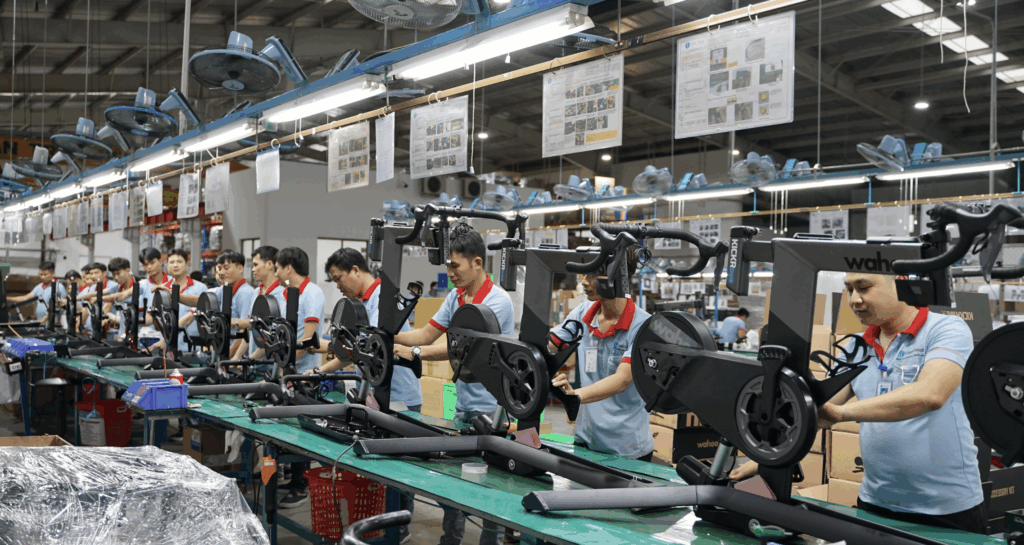
In the first half of 2026, Vietnam recorded a $114 billion trade surplus with the United States, the largest among all countries. American imports from Vietnam increased by around 40% compared with the previous year, while imports from China declined significantly.
The numbers highlight how dramatically Vietnam’s role in global supply chains has changed over the past few decades.
From Economic Reforms to Global Manufacturing
Vietnam’s transformation began with the Doi Moi economic reforms launched in the 1980s.
The country moved away from Soviet-style central planning and gradually opened its economy to global commerce. Relations with the United States were normalised in the 1990s, followed by a bilateral trade agreement that came into effect in 2001.
Trade between the two countries subsequently expanded enormously, rising from just $451 million in 1995 to nearly $124 billion in 2023.
Vietnam then made manufacturing for export the centrepiece of its economic strategy.
Vietnam Made Manufacturing the Priority
Rather than relying primarily on domestic consumption, Vietnam focused heavily on becoming a manufacturing base for international companies.
The country developed industrial parks, ports and supporting infrastructure while offering multinational companies access to a relatively young and inexpensive workforce.
It also joined multiple regional trading arrangements, giving manufacturers easier access to international markets.
The strategy has helped Vietnam develop an economy where international trade plays an unusually large role. Its trade-to-GDP ratio is now close to 170%, according to the World Bank.
China Plus One Gives Vietnam a Huge Boost
The deterioration in US-China relations and rising Chinese wages created another opportunity.
Multinational companies increasingly adopted the “China plus one” strategy, maintaining operations in China while establishing additional manufacturing capacity elsewhere.
Vietnam became one of the biggest beneficiaries.
Its geographical proximity to China, established Asian supply chains, relatively low costs and political stability made it an attractive alternative manufacturing location.
Companies including Samsung, Intel and Foxconn established substantial operations in Vietnam, while Apple, Nike and Lululemon also expanded their supply networks there.
Vietnam Is No Longer Just a Low-Cost Garment Hub
One of the biggest changes is the sophistication of Vietnam’s exports.
Around 60% of Vietnamese exports to the US now consist of machinery, electronics or appliances, showing that the country has moved well beyond its earlier reputation as primarily a low-cost producer of garments and footwear.
The shift demonstrates how foreign investment has helped Vietnam build capabilities in higher-value manufacturing.
American businesses have also increasingly moved sourcing towards Vietnam.
One US furniture company, for instance, shifted its sourcing mix from predominantly China to predominantly Vietnam, citing tariffs as a major factor.
US-China Tariffs Accelerate the Shift
The changing tariff environment has further strengthened Vietnam’s position.
China faced an effective US tariff rate of around 23.2% in June, compared with approximately 6.5% for Vietnam.
This difference has created a powerful incentive for companies selling into the US market to increase production in Vietnam.
As tariffs make Chinese exports more expensive, Vietnam has become an increasingly attractive location for companies looking to maintain access to American consumers.
India Has a Very Different Story
Vietnam’s rise also highlights India’s relatively slower progress in export-oriented manufacturing.
India has roughly 14 times Vietnam’s population, yet its goods trade surplus with the US was reported at $58.4 billion — approximately half Vietnam’s figure.
The comparison, however, needs context.
India has a vastly larger domestic market and significant strengths in services. A comparison based solely on goods trade with the US does not capture the entire economic relationship.
Nevertheless, Vietnam has been substantially more successful at converting foreign investment, lower-cost labour and supply-chain integration into export manufacturing.
India Is Starting to Catch Up in Electronics
India is not standing still.
The country has made significant progress in electronics manufacturing, particularly mobile-phone production and exports.
However, India has historically been less deeply integrated into global manufacturing supply chains than Vietnam.
The difference is also visible in employment patterns. According to the World Bank figures cited in the report, India’s labour-force participation rate is around 56.4%, compared with 73% in Vietnam.
Around 45% of India’s employment remains in agriculture, while Vietnam has reduced agriculture’s share of employment dramatically over the past two decades.
Vietnam’s Biggest Advantage: Speed and Focus
Vietnam’s success has not come from being larger than China or India. Its advantage has been its ability to focus economic policy around becoming an export manufacturing hub.
Infrastructure development, trade agreements, foreign investment, industrial parks and competitive labour costs have been pursued together.
This has created an ecosystem where multinational companies can establish factories and connect them to regional supply chains relatively quickly.
The Challenge Ahead
Vietnam’s extraordinary export growth also comes with vulnerabilities.
Its manufacturing economy remains heavily dependent on foreign companies and imported components, particularly from other Asian economies.
The country therefore needs to continue developing domestic suppliers, technology capabilities and local businesses if it wants more of the value created by its export boom to remain within Vietnam.
For now, however, the country’s transformation is undeniable.
A Small Country With a Big Export Ambition
Vietnam’s emergence as a major US trading partner demonstrates how a relatively small economy can reshape its global position through focused economic policy.
China remains vastly larger, while India’s domestic economy provides it with enormous advantages of its own. Yet Vietnam has shown that size is not the only determinant of export success.
By making export manufacturing a national priority and positioning itself at the centre of global supply-chain diversification, Vietnam has turned itself into one of the biggest beneficiaries of the changing global trade landscape.
Summary
Vietnam has emerged as a major global manufacturing and export hub, recording a $114 billion trade surplus with the US in the first half of 2026. Its success stems from decades of economic reforms, export-focused policies, foreign investment, trade agreements and the China-plus-one strategy. Vietnam has attracted major electronics and manufacturing companies, while India continues to build its own manufacturing capabilities, particularly in electronics.