Daily commuters across Delhi-NCR woke up to major transportation disruptions as taxi, auto-rickshaw, and commercial vehicle unions launched a three-day strike beginning May 21.
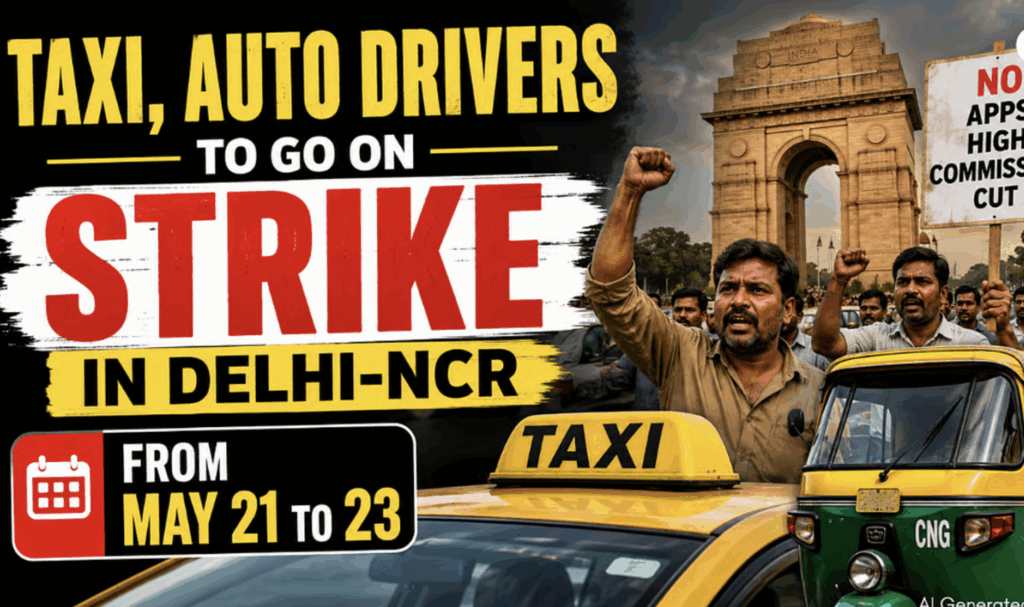
More than 68 transport unions are reportedly participating in the protest under the banners of the All India Motor Transport Congress (AIMTC) and the United Front of All Transport Associations (UFTA). The strike is expected to impact taxi services, auto-rickshaws, app-based cabs, goods carriers, and transport movement across Delhi, Noida, Gurugram, Ghaziabad, Faridabad, and nearby regions.
The protest, often referred to as a “chakka jam,” could lead to long waiting times, ride cancellations, surge pricing, and traffic congestion in several parts of the National Capital Region.
Why Drivers Are Protesting
Transport unions say rising fuel prices have made operations financially unsustainable for drivers. According to union representatives, fares for taxis and auto-rickshaws in Delhi-NCR have remained largely unchanged for nearly 15 years despite repeated increases in CNG, petrol, and diesel prices.
Drivers are demanding an immediate fare revision to match increasing operating expenses, including fuel costs, maintenance charges, insurance, permits, and daily living expenses.
Another major issue involves app-based cab aggregators such as Uber, Ola, and Rapido. Several unions allege that drivers are being forced to operate under unsustainable commission structures and pricing systems that reduce earnings significantly.
Goods Transport And Supply Chains Also Affected
The strike is not limited to passenger vehicles alone. Truck operators and goods transport unions have also raised concerns over increasing operational restrictions and additional charges imposed on commercial vehicles entering Delhi.
Among their key demands is the rollback of the Environment Compensation Charge (ECC) hike and opposition to restrictions on non-Delhi registered BS-IV commercial vehicles proposed for later this year.
Experts believe the strike could temporarily affect supply chains across Delhi-NCR. Delivery services, wholesale markets, vegetable supplies, industrial shipments, and e-commerce logistics may witness delays if transport movement remains disrupted for the full three-day period.
Commuters Prepare For Travel Challenges
Office-goers, students, airport passengers, and daily commuters are expected to face the biggest challenges during the strike. Reports suggest many commuters have already started shifting to alternatives such as the Delhi Metro, carpooling, and private vehicles.
However, transport experts warn that increased dependency on private cars may worsen congestion across major roads and highways in Delhi-NCR.
Some transport unions have reportedly not fully joined the strike, meaning services may remain partially operational in certain areas. Still, commuters are being advised to expect delays and plan travel in advance.
The Bigger Backstory Behind The Protest
The latest strike is part of a larger and growing conflict between traditional transport workers, app-based mobility platforms, and rising urban operating costs.
Over the last decade, Delhi-NCR has witnessed rapid expansion of ride-hailing services. While companies like Uber and Ola transformed urban mobility and created flexible earning opportunities, many drivers now claim shrinking incentives and increasing commissions have made the business difficult to sustain.
At the same time, fuel prices, vehicle financing costs, permit fees, and maintenance expenses have continued to rise steadily. Many drivers argue that government-approved fares have failed to keep pace with inflation and real-world operating expenses.
Environmental regulations have added another layer of pressure. Delhi’s strict pollution-control measures, vehicle restrictions, and emission-related policies have increased compliance costs for commercial vehicle owners.
This combination of rising expenses, regulatory pressure, and competition from digital aggregators has gradually intensified frustration within the transport sector, leading to repeated protests and strike calls over recent years.