India has achieved a major engineering milestone in the Himalayas as Tunnel-8 of the Rishikesh–Karnaprayag Rail Project officially became the country’s longest railway tunnel. Stretching approximately 14.57 km between Devprayag and Janasu in Uttarakhand, the tunnel is now longer than the existing rail tunnels in Jammu & Kashmir and Himachal Pradesh.
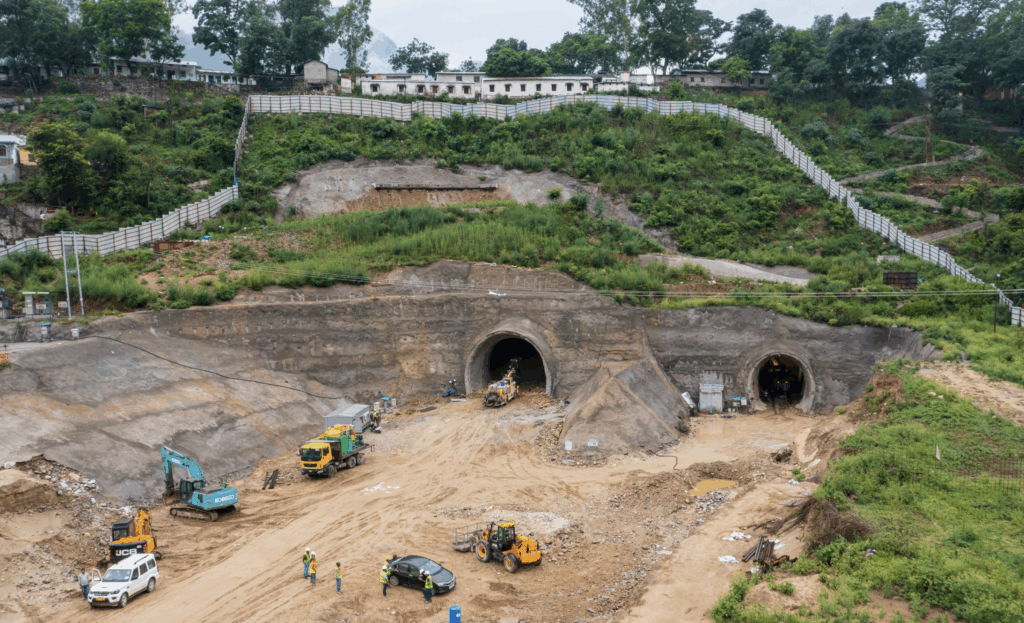
The tunnel forms a critical part of the ambitious 125-km Rishikesh–Karnaprayag Broad Gauge Railway project being developed by Rail Vikas Nigam Limited (RVNL). The railway line is expected to improve connectivity across the Garhwal Himalayan region and support future Char Dham railway expansion projects.
A Massive Engineering Achievement In The Himalayas
Constructing Tunnel-8 was particularly challenging because the project passes through the highly sensitive Himalayan terrain, which falls under seismic Zone-4. Engineers faced:
- Water seepage
- Fault zones
- Loose rock formations
- High geological pressure
- Difficult logistics and transportation conditions
Despite these obstacles, the breakthrough connecting both ends of the tunnel was completed successfully using advanced tunnelling methods and continuous geological monitoring.
The project uses:
- Tunnel Boring Machines (TBMs) for stable rock areas
- New Austrian Tunnelling Method (NATM) for fragile terrain
This is also among the first major uses of TBM technology in India’s mountainous railway infrastructure projects.
Why This Rail Project Is Important
The ₹37,000 crore Rishikesh–Karnaprayag railway is considered one of India’s most strategically important rail projects. Once operational, it will connect remote Himalayan districts with the national rail network.
The rail line is expected to:
- Reduce travel time in Uttarakhand’s hill regions
- Improve access to Char Dham pilgrimage routes
- Boost tourism and local businesses
- Improve military and strategic mobility near border regions
- Provide safer transport during landslides and disasters
The route will pass through multiple important locations including Devprayag, Srinagar, Rudraprayag, Gauchar, and Karnaprayag.
Most Of The Rail Line Runs Underground
Due to the fragile Himalayan ecosystem, nearly 83% of the entire rail route is being built underground through tunnels. Officials say this design helps reduce environmental disruption while improving long-term safety and durability.
The project includes:
- 17 main tunnels
- 35 bridges
- 12 stations
- Parallel escape tunnels for emergency safety
The escape tunnels may also later function as emergency road corridors during natural disasters.
Expected Completion By 2028
The full Rishikesh–Karnaprayag railway project is currently expected to be completed by 2028. Once operational, it will become one of India’s most technologically advanced railway corridors in mountainous terrain.
Tunnel-8’s completion is being viewed as a symbol of India’s growing tunnelling and infrastructure capabilities, especially in extremely difficult geological regions like the Himalayas.