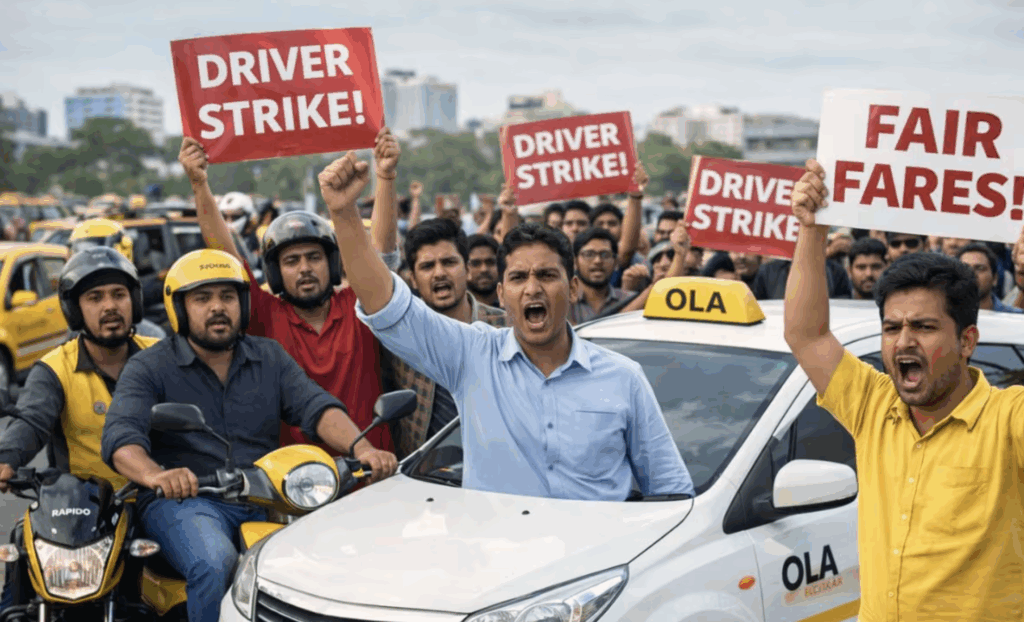
India’s app-based gig economy is witnessing growing unrest after fuel prices were increased by ₹3 per litre nationwide. Gig workers’ unions have announced a temporary nationwide shutdown of app-based services in protest against rising fuel costs and stagnant payment structures.
According to reports, the Gig & Platform Service Workers Union (GIPSWU) has appealed to:
- Delivery workers
- Cab drivers
- Logistics riders
- Platform-based workers
…to suspend app-based operations from 12 PM to 5 PM as part of the protest.
The strike could impact services linked to:
- Swiggy
- Zomato
- Blinkit
- Zepto
- Ola
- Uber
- Rapido
- Amazon Flex.
Fuel Price Hike Triggered The Protest
The protest was triggered immediately after oil marketing companies increased:
- Petrol prices by ₹3/litre
- Diesel prices by ₹3/litre.
In Delhi:
- Petrol now costs around ₹97.77/litre
- Diesel costs around ₹90.67/litre.
The hike comes amid:
- Rising global crude oil prices
- West Asia conflict disruptions
- Strait of Hormuz shipping tensions
- Supply-chain pressure in energy markets.
Gig workers say the increase directly impacts their already shrinking earnings because:
- Most depend on motorcycles or scooters
- Fuel is their biggest daily expense
- Platforms have not proportionally increased payouts.
Gig Workers Demand ₹20 Per Kilometre Minimum Rate
One of the union’s biggest demands is:
- A minimum service payout of ₹20 per kilometre for gig workers.
Workers are also demanding:
- Automatic fuel-cost-linked payment revisions
- Health insurance
- Accident insurance
- Pension and social security benefits
- Limits on excessive working hours
- Protection against arbitrary account suspensions.
Union leaders argue that:
- Workers already spend large portions of income on fuel, maintenance, mobile recharge, and EMIs
- Heatwave conditions are worsening work stress
- Earnings have not kept pace with inflation.
India’s Gig Workforce Is Massive
The protest highlights the growing importance of India’s gig economy.
According to NITI Aayog estimates cited in reports:
- India had around 77 lakh gig workers in 2020-21
- The number may cross 2.3 crore by 2029-30.
Union representatives claim:
- Around 1.2 crore gig and platform workers currently depend on app-based income nationwide.
Many workers reportedly:
- Drive 50-70 km daily
- Work 10-14 hour shifts
- Operate without formal labour protections.
Food Delivery & Cab Services Could Be Affected
The shutdown may cause temporary disruption in:
- Food delivery
- Grocery delivery
- Ride-hailing services
- Quick commerce operations.
Major cities likely to see stronger impact include:
- Delhi
- Mumbai
- Bengaluru
- Hyderabad
- Chennai
- Kolkata.
However, unions have clarified the strike will remain:
- Peaceful
- Temporary
- Awareness-focused.
Bigger Debate: Are Gig Workers Bearing All The Risk?
The strike is reigniting a larger debate around India’s platform economy.
Workers argue that:
- Fuel price increases immediately reduce take-home income
- Platforms transfer operational risk entirely onto workers
- Gig workers lack minimum wage protections and labour rights.
Meanwhile, companies face pressure from:
- Rising operational costs
- Investor profitability demands
- Competitive pricing wars in delivery and mobility sectors.
Why This Matters
The protest reflects a deeper structural issue in India’s digital economy:
Millions of workers powering app-based services remain highly vulnerable to inflation and fuel shocks.
As fuel prices rise and urban delivery dependence grows, the conflict between:
- Platform profitability
- Worker earnings
- Consumer affordability
…is becoming increasingly difficult to balance.
The bigger concern now is whether temporary protests evolve into larger nationwide labour movements demanding formal gig-worker protections and regulated minimum earnings.