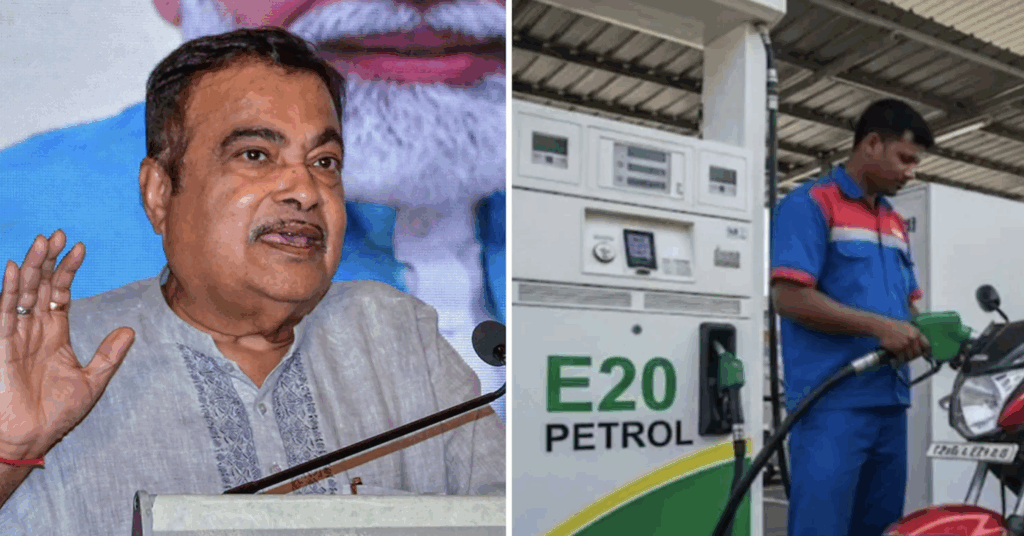
Union Road Transport and Highways Minister Nitin Gadkari has clarified that while E20 petrol is generally safe for use, some BS-III petrol vehicles manufactured between 2005 and 2016 may require minor modifications before using the fuel regularly. According to the minister, the changes are limited to replacing certain rubber components and gaskets, and there is no need for engine modifications.
The clarification comes amid growing public debate over the impact of E20 fuel on older vehicles as India continues its ethanol blending programme.
What Changes May Be Needed?
Gadkari informed Parliament that a small number of older BS-III vehicles could require replacement of specific rubber parts and sealing gaskets because ethanol has different chemical properties than conventional petrol.
These components may wear out faster when exposed to higher ethanol blends over an extended period. However, the minister stressed that these are minor replacements and do not involve any changes to the engine or major mechanical systems.
No Engine Modification Required
One of the key takeaways from Gadkari’s statement is that owners of eligible BS-III vehicles do not need to modify their engines to use E20 fuel.
According to studies conducted by government agencies and automobile manufacturers, E20 does not significantly affect engine performance or cause abnormal wear and tear when vehicles are maintained properly. The recommended changes relate only to a few material-compatible components in certain older models.
Which Vehicles Are Affected?
The advisory mainly applies to BS-III petrol vehicles introduced from April 1, 2005, and manufactured before 2016.
Most newer vehicles, especially those produced under BS6 Phase II norms, have already been designed to be fully compatible with E20 petrol. Automobile manufacturers have gradually upgraded fuel system components to handle higher ethanol blends.
Government Continues To Support E20 Fuel
India achieved its target of 20% ethanol blending in petrol ahead of schedule as part of its strategy to reduce crude oil imports, improve energy security and lower vehicle emissions.
The government maintains that E20 offers several benefits, including cleaner combustion, improved anti-knock properties, smoother engine performance and lower carbon emissions. Officials have also stated that any reduction in fuel efficiency in older vehicles is generally limited to around 3–5%, depending on driving conditions and vehicle maintenance.
Advice For Vehicle Owners
Owners of older BS-III petrol vehicles are advised to check their vehicle manuals or consult authorised service centres regarding E20 compatibility.
If recommended by the manufacturer, replacing compatible rubber hoses, seals or gaskets can help ensure smooth long-term operation with E20 fuel. For newer vehicles, particularly those manufactured in recent years, no such modifications are generally required.
Summary
Union Minister Nitin Gadkari has said that some BS-III petrol vehicles manufactured between 2005 and 2016 may need replacement of certain rubber parts and gaskets before regularly using E20 petrol. He clarified that no engine modifications are required and that studies have found no significant impact on overall vehicle performance, with newer vehicles already designed to be fully compatible with E20 fuel.