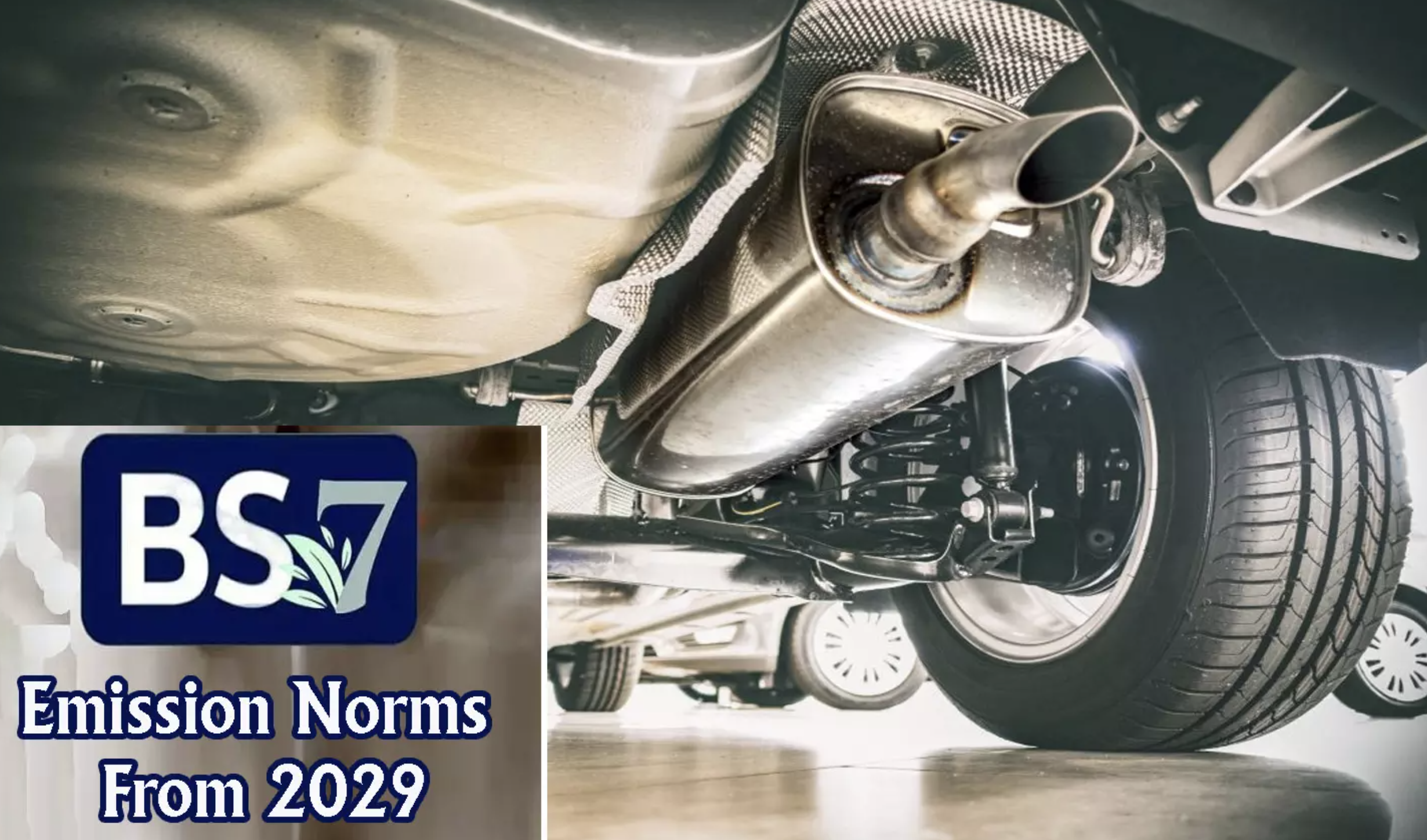





The Indian government has proposed introducing Bharat Stage VII (BS-VII) emission standards for passenger vehicles from April 1, 2029, marking a major expansion of the country’s vehicle pollution regulations. The proposed framework goes beyond exhaust emissions to include pollution from brakes and tyres, real-world emission monitoring and battery durability requirements for electric vehicles.
The Ministry of Road Transport and Highways has issued draft amendments to the Central Motor Vehicles Rules, 1989, and invited public comments before finalising the regulations.
BS-VII Rules to Be Introduced in Phases
The proposed standards will be implemented in three phases, beginning in April 2029, followed by further requirements in April 2031 and April 2035.
The first phase primarily covers M1-category passenger vehicles, including cars and SUVs with up to eight passenger seats in addition to the driver’s seat.
Unlike earlier emission transitions, the initial BS-VII proposal does not significantly lower the principal tailpipe emission limits for passenger vehicles. Instead, it focuses on stricter testing procedures, continuous monitoring and pollution generated by components beyond the exhaust system.
The government is seeking to ensure that vehicles meet prescribed emission requirements not only under laboratory conditions but also during everyday driving.
Brake and Tyre Pollution to Come Under Regulation
One of the biggest changes is the proposed regulation of particulate pollution generated by braking systems and tyre wear.
From April 1, 2031, the draft proposes a brake particulate matter limit of 3 milligrams per kilometre for pure electric vehicles and 7 milligrams per kilometre for conventional engine vehicles, hybrids and other specified powertrains.
From April 1, 2035, a uniform limit of 3 milligrams per kilometre is proposed for all vehicles in the M1 category.
Tyre abrasion emissions are also expected to be regulated from April 2031, although detailed numerical limits and testing procedures are yet to be notified.
These measures recognise that electric vehicles, despite producing no tailpipe emissions, can still generate pollution through tyre wear and conventional braking systems.
Electric Vehicle Batteries Face Durability Requirements
The proposed framework introduces battery durability requirements for electric cars and plug-in hybrid vehicles.
Under the draft, vehicles would be required to retain at least 75% of their original battery capacity after five years or 100,000 kilometres, and at least 67% after eight years or 160,000 kilometres, whichever comes first.
The requirements aim to ensure that batteries retain a minimum level of usable capacity over time. They could also encourage manufacturers to improve battery design, thermal management and long-term reliability.
For consumers, the proposed rules could provide greater transparency about battery performance and help address concerns about electric vehicle ownership costs.
Real-World Emission Testing to Become Stricter
BS-VI already requires real-driving emissions tests, but the proposed BS-VII framework would tighten the conditions under which vehicles are assessed.
For applicable type approvals from April 1, 2030, the draft proposes a conformity factor of 1.0 for nitrogen oxides and particle numbers during real-world testing. This would remove the additional emissions margin allowed under less stringent conformity factors.
The proposal also introduces enhanced onboard monitoring to record actual nitrogen oxide and particulate emissions while vehicles are in service. Under the draft, monitoring systems would need to detect emissions reaching at least 2.5 times the applicable limits.
From April 2032, the monitoring data would also need to be accessible through the vehicle’s onboard diagnostics port.
Automakers Warn of Higher Costs and Delays
Automobile manufacturers have expressed concerns about the proposed implementation schedule, arguing that the time available to redesign vehicles, conduct testing and upgrade engineering systems could be limited.
The changes may require investment in emission-control technology, software, testing infrastructure and compliance processes. Manufacturers are also concerned that resources devoted to upgrading conventional vehicles could affect the development and launch schedules of new electric models.
Industry representatives have suggested that a later transition, beginning in 2032, would provide more time to prepare.
Summary
India has proposed introducing BS-VII emission standards for passenger vehicles from April 2029, with further requirements scheduled for 2031 and 2035. The draft expands pollution controls to brake and tyre emissions, introduces electric vehicle battery durability requirements and strengthens real-world emission monitoring. Automakers have raised concerns about implementation costs and tight timelines. The rules remain at the draft stage and arhttps://www.deccanchronicle.com/amp/nation/govt-to-roll-out-bs-vii-norms-in-3-phases-for-new-cars-suvs-from-april-2029-1995791e open to public consultation.