India has achieved a major milestone by building a 1,000-kilometre quantum communication network in under two years through the National Quantum Mission, moving far faster than the original plan of 2,000 km over eight years.
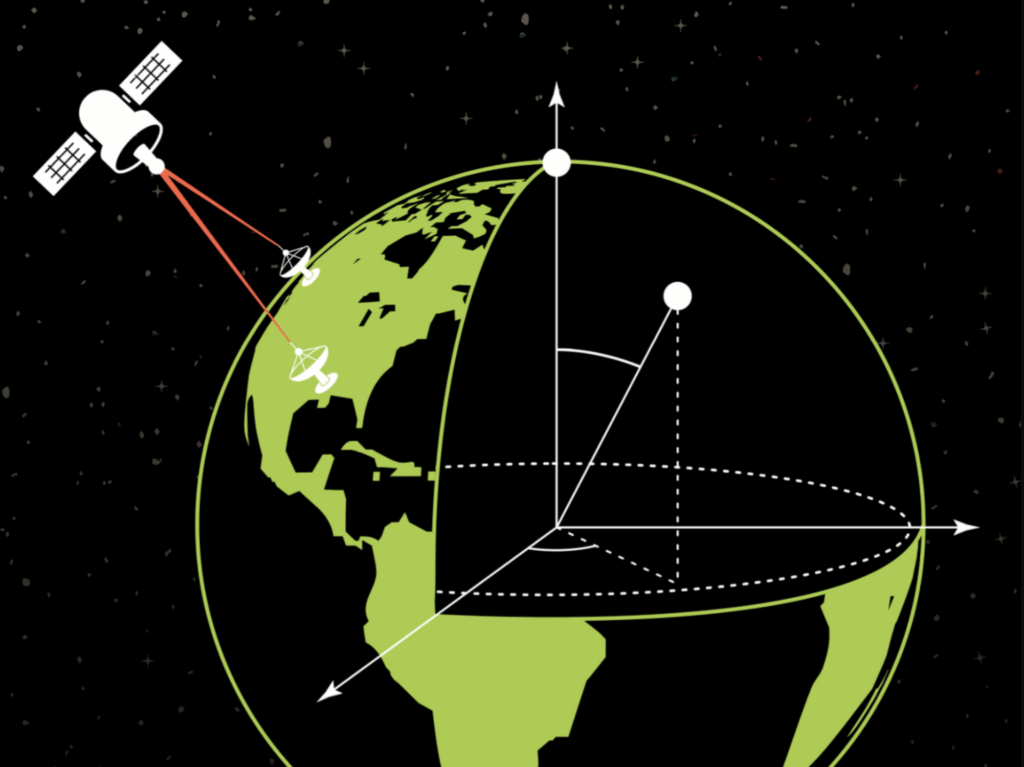
This system, created using homegrown technology from QNu Labs, represents one of the longest quantum key distribution networks globally and enhances the country’s secure communication framework.
India Accelerates Quantum Leap with 1,000 km Secure Communication Breakthrough
Moreover, Department of Science and Technology Secretary Dr. Abhay Karandikar called the accomplishment a “landmark advancement,” emphasizing that it exceeds initial expectations and accelerates progress toward the 2,000-km goal.
In addition, the network is expected to improve secure data transmission across sectors such as defence, finance, and other critical infrastructure.
The technology is also adaptable, as it can function in difficult environments like underwater and underground systems, widening both civilian and strategic use cases.
Following this success, the government has increased its support for innovation by adding nine more startups under the mission, raising the total number to 17.
These newly supported startups are exploring diverse areas, including quantum biosensors for disease detection, photon sensing, quantum positioning systems, atomic memory, and precision electronic technologies.
Quantum Communication: Redefining Secure Data Protection Across Critical Sectors
Looking at the advantages, quantum communication offers extremely secure encryption, making it useful for safeguarding sensitive data in sectors such as defence, finance, and telecommunications.
It also plays a key role in protecting communications related to national security.
Another benefit is that free-space quantum key distribution reduces the need for optical fibre infrastructure, making deployment more cost-effective.
Similarly, the system can be implemented in complex terrains and densely populated urban regions without major limitations.
Notably, this progress builds on earlier work by DRDO scientists, who demonstrated quantum entanglement-based free-space secure communication over distances exceeding one kilometre using an optical link.
That experiment achieved a secure key rate of 240 bits per second with minimal error, proving its effectiveness.
Importantly, the test was conducted under real-world conditions rather than simulations, confirming that quantum communication can operate alongside conventional data systems.
This initiative traces back to April 2023, when the government approved the National Quantum Mission with a budget of ₹6,003.65 crore for 2023–2031 to drive economic growth and build a strong quantum technology ecosystem in India.