Vande Bharat Is More Than Just A Premium Train
Vande Bharat Express has emerged as one of the most important symbols of India’s modern railway network.
Launched in 2019 as India’s first semi-high-speed, self-propelled trainset, it was designed to offer faster journeys, modern passenger facilities and a more comfortable travel experience.
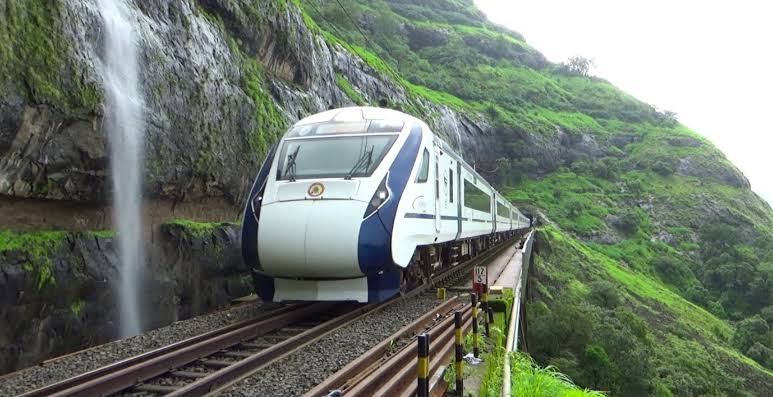
But its success is no longer limited to speed and passenger comfort.
Vande Bharat has also emerged as a major revenue generator for Indian Railways, with several services recording exceptionally strong occupancy and earnings.
Why Vande Bharat Earns So Much
The biggest advantage for Indian Railways is the premium pricing of Vande Bharat tickets.
Unlike conventional express services, Vande Bharat primarily operates with AC Chair Car and Executive Chair Car seating.
This allows the railway to charge significantly higher fares than ordinary passenger services.
At the same time, the trains are often running on routes where there is strong demand from business travellers, professionals, tourists and passengers looking for a faster alternative to conventional trains.
High fares combined with high occupancy create a powerful revenue model.
High Occupancy Is The Secret
A train can have premium fares but still struggle financially if seats remain empty.
Vande Bharat has largely avoided that problem.
Several routes have consistently reported strong demand, particularly during weekends, holidays and festival periods.
The trains are marketed as premium day-travel alternatives between major cities, making them attractive to passengers who value time and comfort.
The result is a combination that Indian Railways rarely gets from conventional services: relatively high fares with consistently strong demand.
The Trainset Is Designed Differently
Vande Bharat is not simply a conventional locomotive-hauled train with upgraded coaches.
It is a self-propelled electric multiple-unit trainset.
Power is distributed across the train rather than concentrated entirely in a locomotive.
This gives Vande Bharat strong acceleration and allows it to reach operating speeds more quickly than many conventional trains.
The train was developed and manufactured in India by the Integral Coach Factory in Chennai.
Faster Acceleration Saves Time
One of Vande Bharat’s major technological advantages is acceleration.
Because traction equipment is distributed across the trainset, Vande Bharat can accelerate faster after leaving stations and recover speed more efficiently.
This becomes particularly valuable on routes with frequent stops.
Instead of simply increasing the maximum permissible speed, improving acceleration can reduce overall journey time without requiring every section of track to support extremely high speeds.
Premium Passengers Are Willing To Pay
Vande Bharat has also tapped into a segment of railway passengers who might otherwise choose flights, private cars or buses.
For journeys of several hundred kilometres, a comfortable daytime train can be an attractive alternative to flying.
Passengers can avoid airport security procedures, lengthy check-in times and travel to airports located far from city centres.
At the same time, they receive a relatively premium travel experience at a price that can still be considerably lower than a last-minute flight.
Indian Railways Gets More Than Ticket Revenue
The financial impact of Vande Bharat goes beyond the basic fare.
Premium passengers also generate additional revenue through onboard catering and other services.
Advertising, commercial opportunities and better utilisation of railway infrastructure can further increase the economic value of the services.
High passenger volumes also make these trains strategically important for Indian Railways’ broader move towards premium intercity services.
The Network Is Expanding Rapidly
The Vande Bharat network has expanded dramatically since the first service between New Delhi and Varanasi.
More trainsets have been introduced on routes connecting major cities across the country.
The introduction of different configurations, including shorter eight-car versions and larger 16- and 20-car trainsets, allows Indian Railways to match capacity with demand on different routes.
The Vande Bharat Sleeper is also expanding the concept into long-distance overnight travel.
Vande Bharat Sleeper Could Open A Bigger Market
The sleeper version could become even more important from a commercial perspective.
Chair-car Vande Bharat services are primarily aimed at daytime intercity travel.
Sleeper services can target much longer journeys where passengers traditionally choose Rajdhani, Duronto or other premium overnight trains.
If demand remains strong, the sleeper version could create another significant premium segment for Indian Railways.
But Profitability Is Not The Same As Revenue
One important distinction needs to be made.
A train generating very high ticket revenue does not automatically mean that every rupee collected represents profit.
Railway operations involve substantial costs, including electricity, staff, maintenance, track infrastructure, station facilities, catering and rolling-stock expenses.
Indian Railways also operates a massive network where profitable services can effectively support less profitable passenger operations.
Therefore, claims about Vande Bharat being the “biggest profit generator” should be understood in the context of individual train services, routes and revenue performance rather than assuming that every Vande Bharat service independently produces the highest net profit across the entire railway system.
Why Indian Railways Wants More Premium Trains
The commercial success of Vande Bharat supports Indian Railways’ strategy of introducing more premium services.
For decades, Indian Railways has had to balance affordability with financial sustainability.
Premium services provide an opportunity to serve passengers willing to pay more while generating stronger revenue from existing railway infrastructure.
This can help the railway system improve passenger facilities without relying entirely on low-fare services.
Vande Bharat Is Also A Manufacturing Success
The story is not only about railway revenue.
Vande Bharat has become an important example of India’s growing ability to design and manufacture sophisticated trainsets domestically.
The original trainset was developed at Integral Coach Factory, with increasing localisation across subsequent generations.
The trains incorporate modern propulsion systems, automatic doors, improved passenger information systems and other features that were previously associated primarily with premium international rail services.
The Bigger Business Model
Vande Bharat demonstrates a relatively simple principle.
If Indian Railways can combine:
High demand
Premium pricing
High occupancy
Faster journeys
Modern passenger experience
and efficient train utilisation,
it can generate substantially more revenue from individual services than traditional passenger trains.
That is why Vande Bharat has become much more than a new train.
It represents an attempt to create a commercially stronger premium segment within one of the world’s largest railway networks.
What Vande Bharat Means For The Future
The success of Vande Bharat could influence how Indian Railways approaches passenger services over the next decade.
Instead of treating every train as primarily a low-cost public transport service, the railway network can increasingly offer different tiers of travel.
Affordable conventional trains can continue serving the mass market, while premium services such as Vande Bharat cater to passengers willing to pay more for speed and comfort.
The expansion of sleeper services could take that strategy even further.
The Billion-Rupee Railway Engine
Vande Bharat’s biggest achievement may therefore not be its top speed.
It is the demonstration that passengers are willing to pay a premium for a faster, cleaner and more comfortable railway journey when the service delivers the right combination of convenience and reliability.
With the network continuing to expand and new versions entering service, Vande Bharat could become an increasingly important source of high-value passenger revenue for Indian Railways.
For India’s national railway system, the train is proving that modernisation can potentially become a business opportunity as well as an infrastructure upgrade.
Summary
Vande Bharat Express has emerged as one of Indian Railways’ most commercially important premium passenger services. Its combination of higher fares, strong occupancy, faster journeys and modern facilities allows individual services to generate substantially higher revenue than many conventional trains. The self-propelled trainsets were developed and manufactured in India and the network is expanding rapidly. With Vande Bharat Sleeper services now adding long-distance overnight travel to the portfolio, the model could become an even larger part of Indian Railways’ premium passenger strategy.