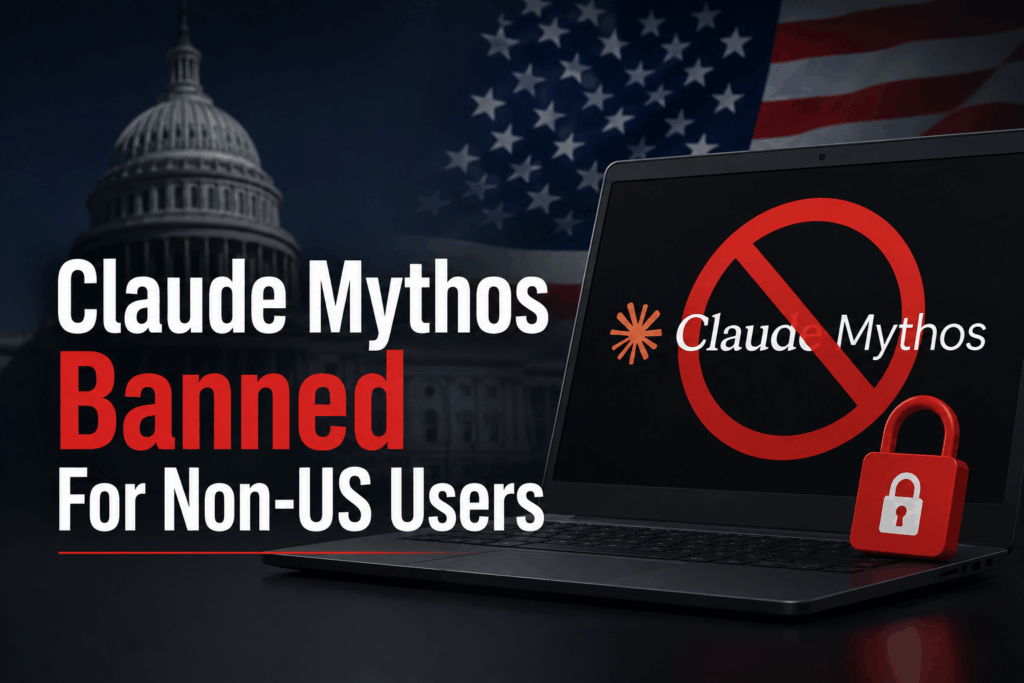
In a move that has sent shockwaves through the global artificial intelligence industry, Anthropic has suspended access to its most advanced AI models, Fable 5 and Mythos 5, following a directive from the US government. The order reportedly restricts foreign nationals from accessing the company’s frontier AI systems, citing national security concerns. As a result, Anthropic has chosen to disable the models for all users rather than attempt to selectively enforce the restrictions.
Why Did the US Government Intervene?
According to reports, the US Commerce Department issued an export-control directive requiring Anthropic to halt access to Fable 5 and Mythos 5 for foreign nationals. Officials are reportedly concerned that advanced AI systems could be misused through so-called “jailbreak” techniques, allowing users to bypass safety controls and identify software vulnerabilities that could be exploited in cyberattacks.
The order marks a significant expansion of US export controls. Traditionally, restrictions have focused on semiconductor chips and hardware technologies. This case directly targets access to advanced AI models themselves, highlighting how AI is increasingly being treated as a strategic national-security asset.
Anthropic Pushes Back Against the Decision
Anthropic has publicly questioned the government’s reasoning, stating that it was not provided with detailed evidence supporting the restriction. The company argues that the alleged vulnerability is limited in scope and not unique to its models.
The AI firm also warned that if similar standards were applied across the industry, it could significantly slow the deployment of next-generation AI systems. Anthropic says it is working with authorities to clarify the situation and restore access as quickly as possible.
Impact on Global AI Users
The suspension affects some of Anthropic’s most powerful AI offerings, which were designed for advanced reasoning, research, coding, and cybersecurity applications. Reports indicate that cloud providers such as AWS have been asked to revoke access globally to ensure compliance with the directive. Other Anthropic models remain available.
The move has raised concerns among researchers, startups, and enterprises outside the United States that rely on access to frontier AI systems. Many fear the decision could set a precedent for future restrictions on advanced AI technologies.
A Turning Point for Global AI Regulation
The episode highlights the growing intersection of artificial intelligence, geopolitics, and national security. As governments become increasingly concerned about the capabilities of frontier AI models, companies may face stricter oversight and licensing requirements.
For the global AI industry, Anthropic’s decision represents more than a temporary service disruption. It signals a future in which access to advanced AI systems could become subject to the same geopolitical considerations that already govern semiconductors, defense technologies, and other strategic assets.