A Toyota Innova Hycross Hybrid owner has sparked debate around India’s E20 fuel rollout after claiming that his vehicle developed serious engine-related issues despite being officially certified for E20 petrol. The incident, which has gone viral on social media, has raised questions about fuel quality, vehicle compatibility and accountability when fuel-related problems occur.
Owner Reports Vibration and Knocking Issues
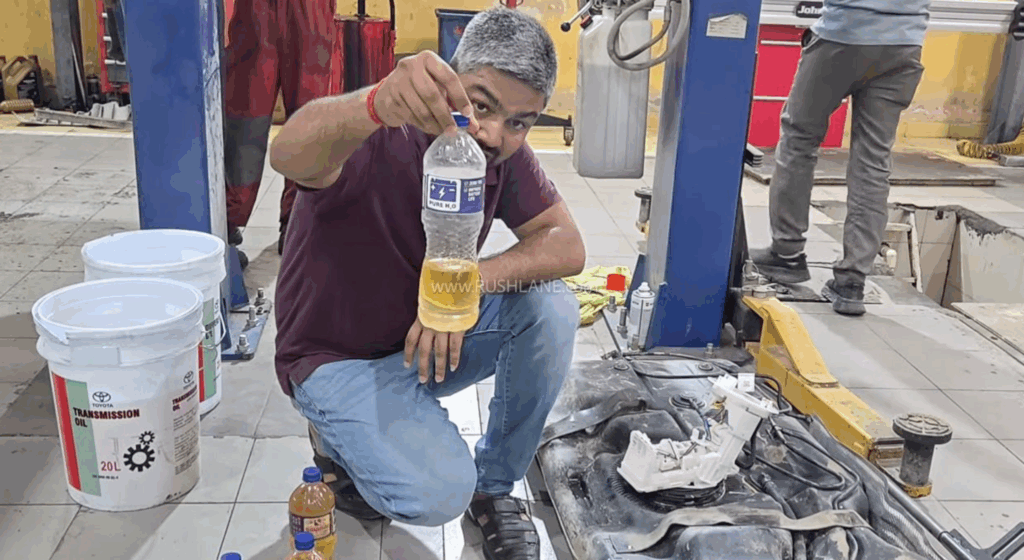
The vehicle owner, identified as Bihar-based content creator Manish Kashyap, shared videos showing his Toyota Innova Hycross Hybrid undergoing inspection at a Toyota service centre. According to his claims, the vehicle had covered only around 12,000 km when it started exhibiting symptoms such as engine vibration, knocking noises and breakdown-like behaviour.
In the videos, Kashyap alleges that fuel samples collected from the vehicle revealed unusually high ethanol content and contamination. He questioned whether the issue stemmed from the fuel supplied at petrol pumps, the vehicle itself or broader fuel policies being implemented across the country.
Fuel Tank Removed for Investigation
As part of the inspection process, technicians reportedly removed the vehicle’s fuel tank and fuel pump assembly. The owner showcased multiple fuel samples allegedly taken from different sections of the fuel system.
According to him, some samples appeared contaminated and contained visible impurities. He argued that consumers should not face such problems in a modern hybrid vehicle that is marketed as being compatible with E20 fuel.
Debate Around E20 Fuel Intensifies
The Innova Hycross carries an E20 compatibility label, indicating that it can operate on petrol blended with up to 20% ethanol. The government’s ethanol blending programme has been promoted as a way to reduce oil imports, support farmers and lower carbon emissions.
However, the incident has reignited concerns among some motorists regarding fuel efficiency, engine performance and long-term reliability when using higher ethanol blends. While E20-compatible vehicles are specifically designed to handle such fuel, discussions around fuel quality and maintenance continue to surface on social media and automotive forums.
Warranty Questions Emerge
Another major concern raised by the owner relates to warranty coverage. He questioned who would bear the cost if the issue is ultimately traced to contaminated fuel rather than a manufacturing defect.
According to the report, service centre representatives indicated that warranty claims may become complicated if fuel contamination is determined to be the root cause. This has highlighted a broader challenge faced by vehicle owners when attempting to establish responsibility in fuel-related disputes.
Need for Greater Clarity
The incident has drawn attention to the need for transparent fuel testing procedures and clear accountability mechanisms. Experts note that determining whether a problem originates from the vehicle, fuel quality or another component can be difficult without independent testing and detailed technical analysis.
As India continues expanding E20 fuel availability nationwide, cases such as this are likely to attract attention from both consumers and industry stakeholders, particularly if more motorists report similar experiences.
Summary
A Toyota Innova Hycross Hybrid owner has alleged that his E20-compatible vehicle developed engine vibration, knocking and fuel-system issues within 15,000 km of use. The owner claims contaminated or abnormal fuel may be responsible, while raising concerns about warranty coverage and accountability. The incident has reignited discussions around E20 fuel quality, vehicle compatibility and consumer protection as India expands ethanol-blended fuel adoption.