India’s rail travel is set for another major upgrade. The upcoming Vande Bharat Sleeper train connecting Mumbai and Bengaluru—via Pune—is expected to reduce travel time between Bengaluru and Pune to just 13 hours, a significant improvement over current journey durations.
This development is part of Indian Railways’ broader push to modernize long-distance travel with faster, more comfortable, and technology-driven trains.
A Huge Cut from Current Travel Time
Currently, trains between Bengaluru and Pune take around 17 to 19 hours, depending on the service.
The Vande Bharat Sleeper is expected to cut this by nearly 4–6 hours, making overnight rail travel far more efficient.
For frequent travelers—especially professionals commuting between these two major tech hubs—this is a game-changing improvement.
Route and Connectivity Boost
The new train will run on the Mumbai–Pune–Solapur–Wadi–Bengaluru corridor, directly benefiting passengers from Pune.
Since Pune is a key transit hub on this route, travelers won’t need separate connectivity—making journeys smoother and more direct.
The train is expected to operate overnight, with departures around 9 PM and morning arrivals, aligning perfectly with work and business schedules.
What Makes Vande Bharat Sleeper Special
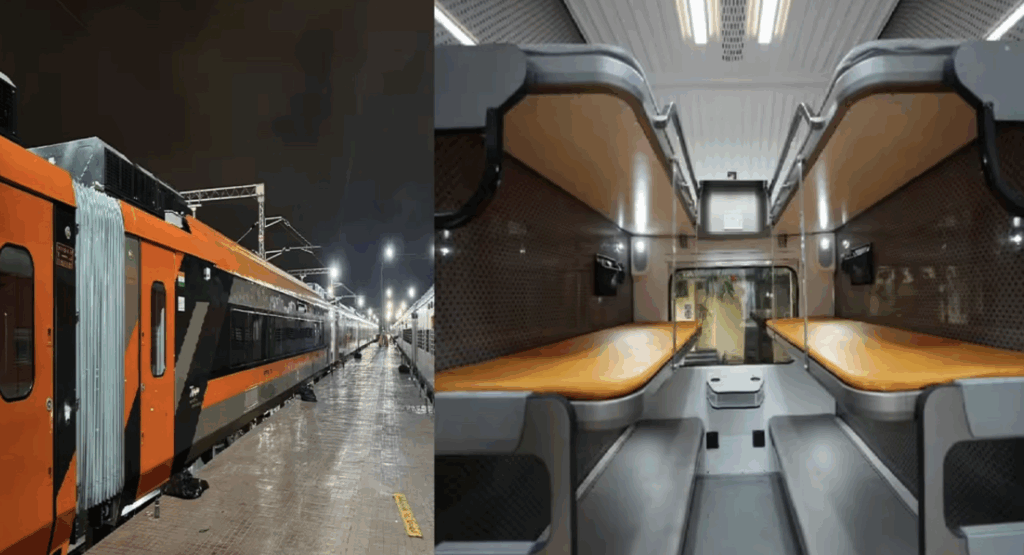
Unlike the existing chair car Vande Bharat trains, the sleeper version is designed for long-distance comfort.
Key features include:
- Fully air-conditioned sleeper coaches
- Ergonomic berths for better sleep
- Modern interiors and improved hygiene
- Advanced safety systems like Kavach
- Semi-high-speed capability up to 160 km/h
With around 16 coaches and over 800 berths, the train is built to handle high demand on busy routes.
Fares and Travel Experience
The expected ticket pricing is:
- ₹2,500 (AC 3-tier)
- ₹3,000–₹3,200 (AC 2-tier)
- ₹3,600–₹3,900 (First AC)
Meals are likely to be included, and the focus will be on delivering a premium yet accessible travel experience—somewhere between traditional trains and flights.
Why This Matters for Indian Travel
This new service reflects a larger shift in India’s transportation ecosystem:
- Railways competing with airlines for time-sensitive travelers
- Faster inter-city connectivity boosting business travel
- Reduced reliance on tiring overnight buses
- More sustainable travel compared to flights
The Bengaluru–Pune route, connecting two major IT and education hubs, stands to benefit immensely.
The Bigger Picture
The Vande Bharat Sleeper is not just a train—it represents the future of Indian Railways.
By combining speed, comfort, and efficiency, it is redefining what long-distance train travel can look like in India.
And for Pune travelers, this could mean one simple but powerful change:
Sleep in one city, wake up in another—faster than ever before.