UAE Adds a New Layer of Protection
The United Arab Emirates has installed large metal structures around oil and fuel storage tanks in Abu Dhabi, in a move aimed at protecting critical energy infrastructure from drone attacks.
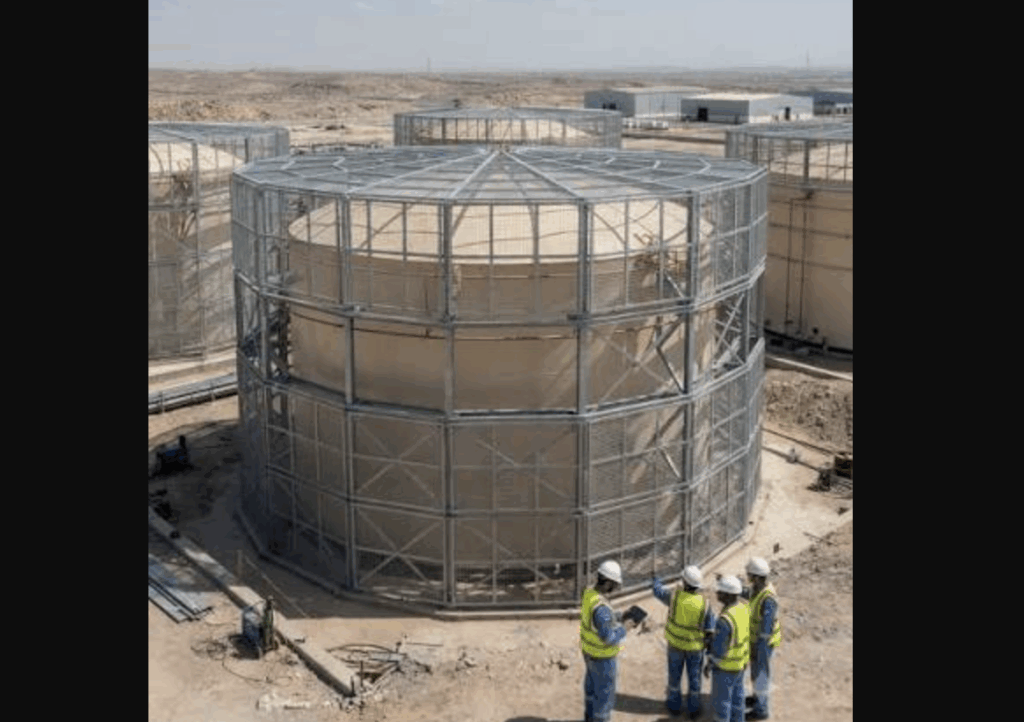
The structures, often referred to as “cope cages”, consist of steel frameworks and mesh positioned around or above vulnerable facilities. Similar protective structures have been used in conflict zones, particularly around oil infrastructure in Russia, to reduce the impact of incoming drones.
Designed to Counter Drone Attacks
The cages are primarily intended to provide an additional layer of defence against relatively small, slow-moving explosive drones.
Unlike sophisticated missile-defence systems, these structures do not attempt to intercept a drone electronically or destroy it in the air. Instead, the physical barrier is designed to interfere with an incoming drone before it reaches the fuel tank.
Depending on the design and angle of attack, the mesh and steel framework can potentially catch, deflect or trigger a premature detonation, reducing the force of an explosion reaching the tank itself.
Why Are Oil Tanks Such Important Targets?
Oil and fuel storage facilities are particularly sensitive pieces of infrastructure.
Large storage tanks contain highly flammable materials, meaning even a relatively small explosive device can potentially cause a fire, damage surrounding equipment and disrupt fuel supplies.
The UAE is a major energy producer and exporter, making the protection of its oil and gas infrastructure an important national-security priority.
The country’s energy infrastructure has also faced heightened security concerns amid the wider regional conflict and attacks involving drones and missiles.
Iranian Drone Threat Has Increased Concerns
The new protective structures come against the backdrop of attacks involving Iranian drones and missiles in the region.
Reports indicate that the UAE has faced repeated attacks targeting strategic infrastructure, including facilities around Fujairah and the Habshan natural-gas area. One fuel tank near Dubai International Airport was also reportedly struck by an explosive-laden Iranian drone in March, temporarily affecting airport operations.
The attacks have demonstrated that relatively inexpensive drones can threaten infrastructure that costs billions of dollars to build and operate.
A Low-Cost Defence Against Cheap Weapons
One of the biggest advantages of these cages is their relatively simple design.
Modern air-defence systems can be extremely expensive, while drones can be manufactured and deployed at comparatively low costs. Defending every individual target with sophisticated missiles may therefore be economically difficult.
Physical barriers offer another option.
They cannot replace advanced air-defence systems, but they can act as a last line of defence, particularly when multiple drones are launched simultaneously and conventional systems could become overwhelmed.
Similar Tactics Have Been Used by Russia
The UAE is not the first country to use this approach.
Russia has installed metal cages, nets and other physical barriers around oil storage facilities and military assets in response to Ukrainian drone attacks. The objective is broadly similar: create physical obstacles that make it harder for explosive drones to reach their intended targets directly.
The approach has attracted attention because of its simplicity compared with expensive electronic or missile-based defence systems.
But the Cages Are Not Missile-Proof
The structures have clear limitations.
They are primarily intended to mitigate drone attacks and cannot provide comprehensive protection against ballistic or cruise missiles. A determined attacker could also potentially modify drones or their flight paths to overcome physical barriers.
That means the cages should be viewed as one component of a broader defensive strategy rather than a replacement for sophisticated air-defence systems.
Construction Has Expanded Beyond Abu Dhabi
The protective structures have reportedly been installed around fuel-storage facilities in Abu Dhabi, with similar structures appearing near Dubai International Airport.
Reports indicate that construction began around May and took several months, with newer imagery showing the installations largely completed at key sites.
The rapid deployment demonstrates how regional security concerns are influencing the physical design and protection of critical infrastructure.
The Bigger Message for Energy Security
The cages are a visible reminder that the threat to energy infrastructure is changing.
Oil facilities were traditionally protected through conventional military security, perimeter systems and air-defence networks. The increasing use of inexpensive drones has created a new challenge: attackers can potentially threaten expensive strategic infrastructure using weapons that are comparatively cheap and difficult to eliminate completely.
For the UAE, adding simple physical barriers around oil tanks provides another layer of protection without depending entirely on advanced weapons systems.
Summary
The UAE has installed large metal “cope cages” around oil and fuel storage tanks in Abu Dhabi to provide additional protection against explosive drones. The low-cost structures can potentially deflect or trigger premature detonation of incoming drones, reducing damage to vulnerable tanks. Similar barriers have been used by Russia. However, they cannot protect against every threat, particularly ballistic or cruise missiles.