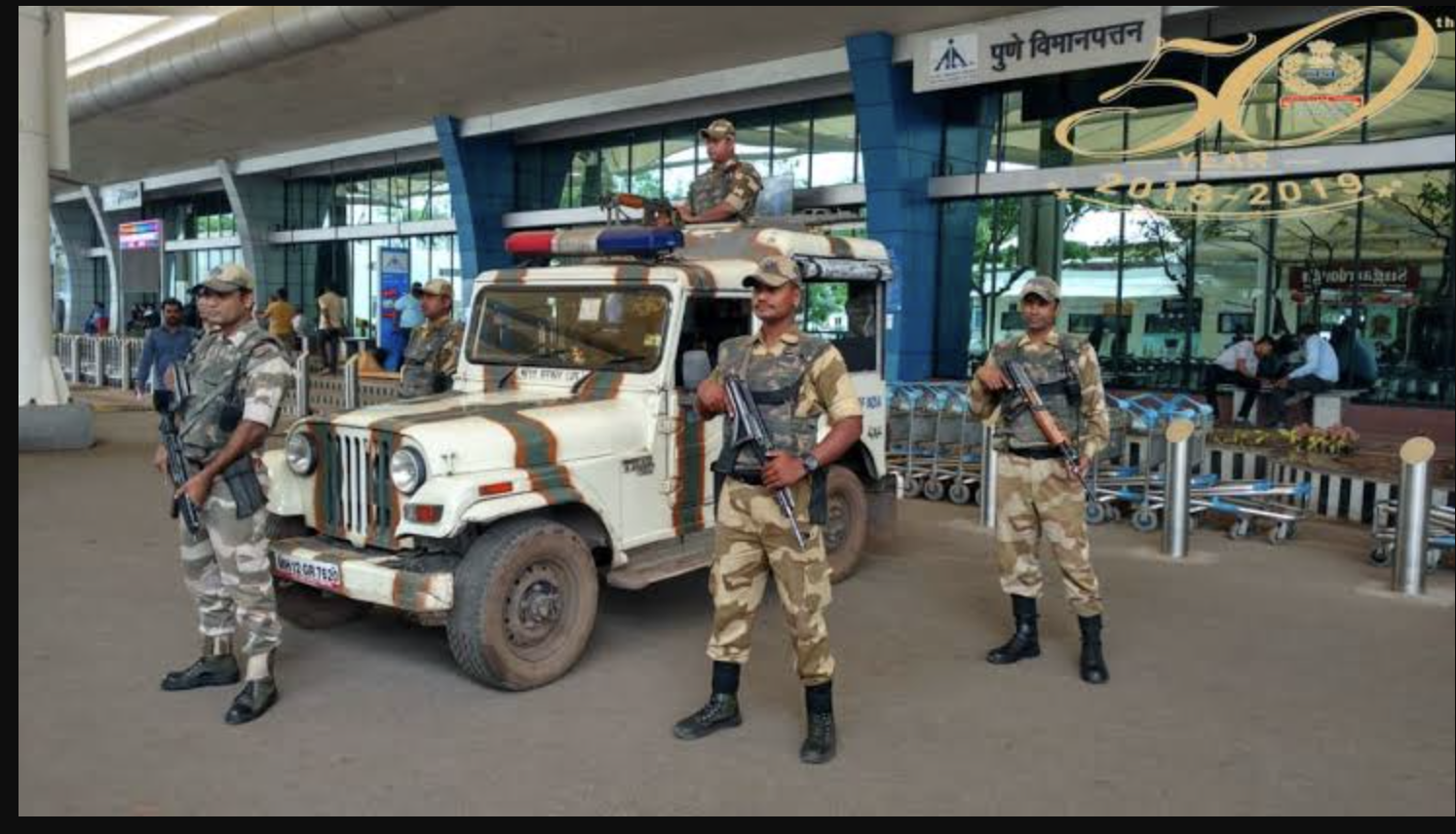


The Central Industrial Security Force (CISF) is likely to reduce its personnel deployment at Indian airports as the government prepares to transfer selected non-armed security responsibilities to private security agencies.
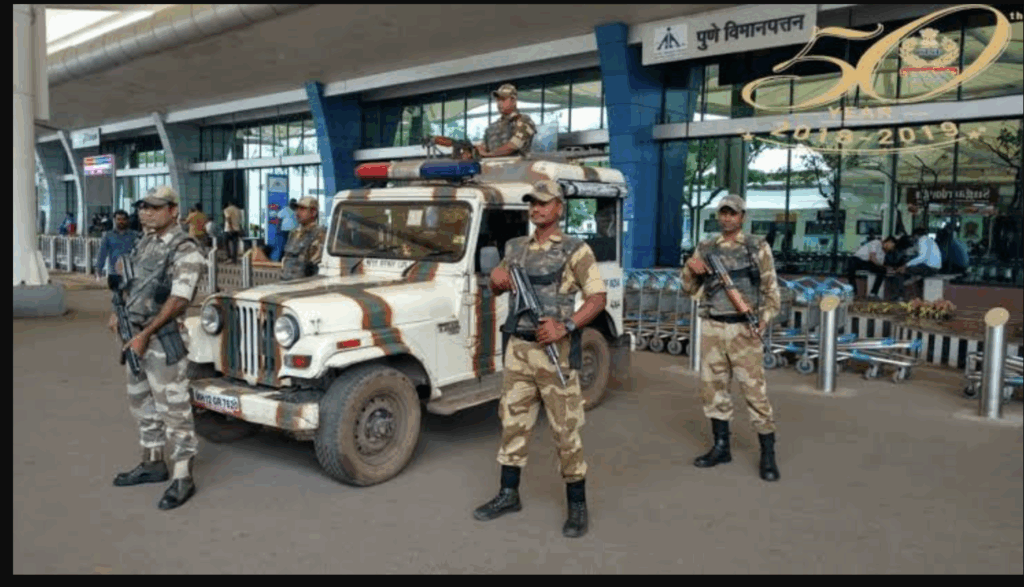
The proposed change follows revised airport security guidelines issued by the Bureau of Civil Aviation Security (BCAS). The new framework aims to rationalise security manpower while ensuring that critical airport security operations remain under the control of the CISF.
According to officials, the reduction will be implemented in phases. Private security personnel will gradually take over routine duties that do not require armed guards.
CISF to Retain Critical Airport Security Responsibilities
Despite the proposed reduction, the CISF will continue to handle the most sensitive security functions at airports.
These responsibilities include armed protection, airport perimeter security, mobile patrolling, surveillance, intelligence operations and quick response teams. Security at other sensitive airport installations will also remain under the force.
Private security agencies will primarily handle non-core functions where armed personnel are not required.
Currently, the CISF provides security at 74 of India’s 119 airports. State police personnel are responsible for security at the remaining 45 airports.
Why Is the Government Reducing CISF Deployment?
The revised framework is aimed partly at controlling airport security expenditure.
The cost of CISF deployment is recovered through the Passenger Service Fee (PSF) paid by air travellers. Reducing the requirement for central security personnel could help prevent additional security costs from being passed on to passengers.
The review also considers passenger traffic, flight operations, terminal infrastructure and the security requirements of individual airports.
The revised plan was developed following consultations involving airport operators, the Intelligence Bureau, CISF and the Ministries of Home Affairs and Civil Aviation.
The Ministry of Civil Aviation has approved the framework, which was circulated to stakeholders through a BCAS order dated October 27, 2026. The final deployment figures are subject to further approval from the Ministry of Home Affairs.
Airports to Be Classified Into Three Categories
Under the revised framework, airports will be divided into three categories based on passenger traffic and flight operations.
- Small airports: Those handling fewer than one lakh passengers per month.
- Medium airports: Those handling between one lakh and 10 lakh passengers per month.
- Major airports: Those handling more than 10 lakh passengers per month.
The guidelines also prescribe staffing requirements for different airport functions, including terminal security, passenger screening, departure and arrival gates, vehicle access points and cargo facilities.
For DigiYatra lanes, the norms specify one passenger service assistant for each lane, with an assistant sub-inspector supervising every six lanes.
Airport-specific manpower surveys will determine the actual staffing requirements. The reduction could be around 10% or more at some locations, although the final numbers will vary depending on individual airport requirements.
Private Security Guards Will Receive Training
Airport operators will gradually engage private security agencies to handle the designated non-armed duties.
The revised framework provides for training and supervision of these personnel. According to officials, private security staff deployed for airport roles will work under the CISF’s Chief Airport Security Officer.
The arrangement is intended to maintain coordination between private security agencies and the central force while transferring selected routine responsibilities.
What Happens to CISF Personnel Removed From Airports?
The proposed reduction does not mean CISF personnel will lose their jobs.
Personnel withdrawn from airport assignments will be redeployed to other units of the force where additional manpower is required. The exercise is essentially a redistribution of existing personnel rather than a reduction in the overall strength of the CISF.
Summary
The government plans to reduce CISF deployment at Indian airports and gradually assign selected non-armed duties to trained private security personnel. The CISF will retain responsibility for critical security operations, including armed protection, surveillance and perimeter security. The phased restructuring aims to rationalise manpower requirements and control airport security costs.