Massive Penalty Over Automated Decisions
Uber has been hit with a massive €825 million penalty, equivalent to around ₹9,000 crore, by the Dutch Data Protection Authority over the way its automated systems were used to suspend or deactivate drivers.
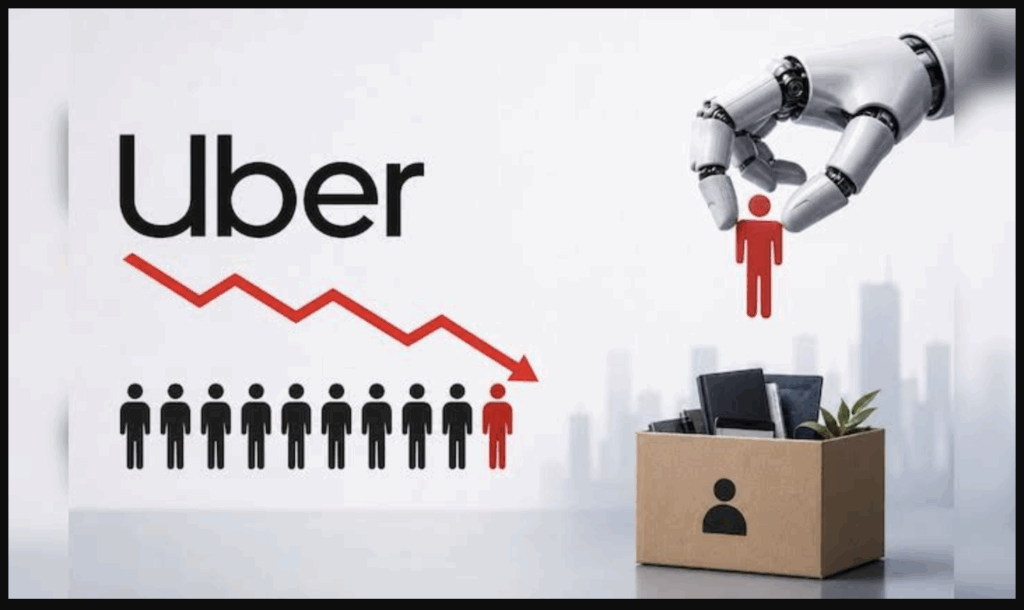
The regulator found that Uber had relied on automated decision-making in cases where drivers could lose access to the platform and, consequently, their source of income. The investigation focused on whether the company provided sufficient human oversight and gave affected drivers an opportunity to challenge decisions.
Why Uber’s AI System Came Under Scrutiny
The case relates to automated systems Uber used between 2018 and 2022 to identify potentially fraudulent or problematic driver behaviour.
The technology was used to flag activities such as allegedly taking unnecessary detours to increase fares or accepting rides without intending to complete them. Some drivers were temporarily suspended based on these automated assessments.
Regulators, however, raised concerns about situations in which automated systems could have a significant impact on a person’s livelihood without meaningful human intervention.
GDPR Rules Protect People From Automated Decisions
At the heart of the dispute are provisions under Europe’s General Data Protection Regulation (GDPR) governing automated decision-making.
The rules restrict companies from making decisions based solely on automated processing when those decisions have significant effects on individuals. People are generally entitled to meaningful human intervention and an opportunity to challenge decisions affecting them.
The Dutch regulator argued that Uber’s approach did not adequately meet those requirements in the cases covered by its investigation.
Drivers Could Suddenly Lose Their Income
The issue is particularly significant because Uber drivers depend on access to the platform to earn money.
A decision to suspend or deactivate an account can therefore have an immediate financial impact. Regulators argued that such consequential decisions should not simply be left to an algorithm operating without appropriate human oversight.
The case highlights a growing concern around the use of AI in employment and gig-economy platforms: algorithms can process enormous amounts of information quickly, but mistakes or opaque decisions can have serious consequences for workers.
Uber Disputes the Findings
Uber has strongly rejected the regulator’s conclusions and described the penalty as disproportionate.
The company says its policies include human reviews and opportunities for drivers to challenge suspensions. Uber has also maintained that most fraud-related suspensions were temporary and that permanent deactivations involved human review.
The company plans to appeal the decision, meaning the dispute could continue through the European legal and regulatory system.
How Many Drivers Were Affected?
The regulator’s investigation covered automated decisions involving drivers across Europe.
Uber has argued that the number of drivers permanently affected was relatively limited. According to the company, 126 drivers across Europe were deactivated in 2021 because of low customer ratings, while it disputes the regulator’s characterization of its automated systems as being responsible for permanent deactivations.
The disagreement over exactly how the automated systems were used is therefore likely to remain an important part of Uber’s appeal.
A Warning for Companies Using AI
The case could have implications far beyond Uber.
Companies are increasingly using AI and automated systems to screen job applicants, monitor workers, detect fraud, evaluate performance and make account-management decisions. Regulators are now paying closer attention to whether such systems can make high-impact decisions without adequate human involvement.
The Uber case sends a clear message: using AI to make decisions may improve efficiency, but companies cannot necessarily avoid responsibility for the consequences of those decisions.
The Bigger Debate Around AI and Human Oversight
The dispute also raises a broader question about how much authority companies should give algorithms.
AI can identify patterns and flag suspicious behaviour far faster than human teams. But when the result can determine whether someone can work, earn money or access an essential service, regulators increasingly expect humans to remain involved.
For Uber, the financial penalty is substantial. For the wider technology industry, however, the case could prove even more important as companies increasingly automate decisions that directly affect people’s lives.
Summary
Uber faces an €825 million, or roughly ₹9,000 crore, penalty from the Dutch Data Protection Authority over automated systems used to suspend or deactivate drivers in Europe. Regulators said significant decisions affecting drivers’ livelihoods lacked sufficient human oversight. Uber disputes the findings, says permanent bans involve human review and plans to appeal the decision.