India is considering increasing ethanol blending in petrol from the current E20 level (20% ethanol) to E25, meaning petrol could soon contain up to 25% ethanol. The proposal is reportedly being discussed as part of India’s broader strategy to reduce dependence on imported crude oil and strengthen energy security amid rising geopolitical tensions in West Asia.
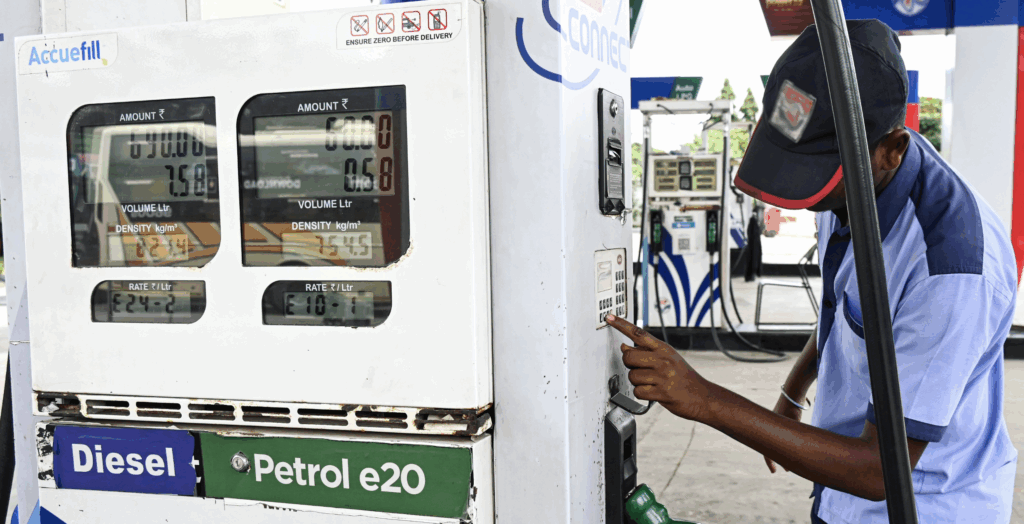
The move would mark another major step in India’s aggressive biofuel transition after the country already achieved its E20 blending target ahead of schedule.
Why India Wants Higher Ethanol Blending
India imports a massive amount of crude oil every year, making the economy vulnerable to:
- Global oil price spikes
- Supply disruptions
- Geopolitical conflicts
- Currency fluctuations
Higher ethanol blending helps reduce this dependence because ethanol is produced domestically using:
- Sugarcane
- Maize
- Rice
- Molasses
- Agricultural feedstock
The government also sees ethanol as a way to:
- Support farmers
- Reduce fuel imports
- Lower emissions
- Strengthen renewable energy adoption
India Already Uses E20 Petrol Nationwide
India officially rolled out E20 petrol nationwide from April 1, 2026. E20 fuel contains:
- 20% ethanol
- 80% petrol
The government achieved this target nearly five years ahead of its original 2030 roadmap.
Now discussions are reportedly shifting toward:
- E21
- E25
- E30
- Even E85 and E100 fuels for specially designed vehicles
Will Existing Vehicles Support E25 Petrol?
This remains one of the biggest concerns.
According to reports:
- Most vehicles manufactured after April 2023 are designed to support E20 fuel
- Many newer engines may tolerate slightly higher blends up to around E25–E30
- Older vehicles may face long-term wear issues if ethanol levels rise sharply
Potential concerns include:
- Reduced fuel efficiency
- Rubber and plastic component wear
- Fuel line corrosion
- Engine calibration issues in older vehicles
Because of this, officials say any shift to E25 would likely happen in a “calibrated manner.”
Will Mileage Drop?
Ethanol generally contains lower energy content compared to petrol.
This means:
- Higher ethanol blends can slightly reduce mileage
- Fuel consumption may increase marginally in some vehicles
However, the government has previously stated that the impact on mileage with E20 petrol is relatively small and manageable for most modern vehicles.
Some experts also argue ethanol offers:
- Better combustion
- Cleaner burning
- Improved acceleration in certain engine setups
Automakers Want Gradual Transition
Automobile manufacturers are reportedly cautious about rapid ethanol expansion.
Industry concerns include:
- Engine durability
- Fuel system compatibility
- Emission compliance
- Need for vehicle redesigns
Many automakers are now developing:
- Flex-fuel engines
- Ethanol-compatible fuel systems
- Future E85-ready vehicles
The government has already issued draft rules allowing higher ethanol fuel blends including E85 and E100 for compatible vehicles.
Sugar And Agriculture Sector Could Benefit
Higher ethanol blending could significantly benefit India’s sugar and agricultural industries.
Increased ethanol demand may:
- Boost sugar mill revenues
- Increase maize demand
- Improve farmer income
- Expand ethanol production capacity
India’s ethanol production infrastructure has already expanded rapidly over the last few years.
India Is Moving Toward Flexible Fuel Future
Experts increasingly believe India is preparing for a broader flexible-fuel ecosystem where vehicles may eventually support:
- E20
- E25
- E85
- E100 fuels depending on engine type
This would mirror countries like:
- Brazil
- United States
…where high-ethanol fuels are already common.
What Consumers Should Watch For
If India moves toward E25 petrol, consumers may need to pay attention to:
- Vehicle compatibility
- Manufacturer guidance
- Fuel efficiency changes
- Service recommendations
- Long-term engine maintenance
For now, officials suggest the transition would likely be gradual rather than immediate nationwide implementation.