Mumbai’s suburban railway network—often called the city’s lifeline—is set to undergo a major transformation with the introduction of its first non-AC local train equipped with automatic doors. Traditionally, only AC locals featured closed-door systems, but this new development brings that safety feature to affordable, non-AC trains for the first time.
Why This Change Matters
The move comes in response to long-standing safety concerns. Thousands of commuters travel daily on overcrowded trains, often standing near open doors—a major cause of fatal accidents. A tragic 2025 incident near Mumbra, where passengers fell from a moving train, accelerated the push for safer, closed-door systems.
How the New Train Works
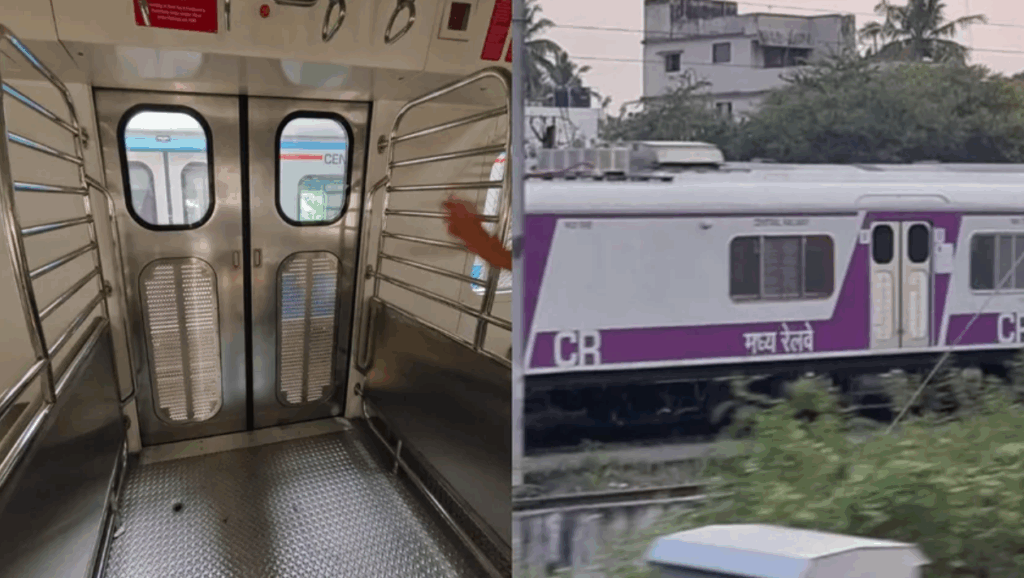
The new 12-coach Electric Multiple Unit (EMU), built by the Integral Coach Factory in Chennai, features an Automatic Door Closure System. The train will not move unless all doors are securely shut, significantly reducing the risk of accidents. It also includes modern safety features like emergency communication systems, anti-drag mechanisms, and passenger information displays.
Designed for Safety Without Compromising Comfort
One of the biggest challenges was ensuring proper ventilation in a non-AC train with closed doors. To address this, the new design incorporates louvred doors, larger windows, and roof-mounted ventilators to maintain airflow. Vestibule connections between coaches will also help distribute passengers more evenly, easing overcrowding in specific compartments.
Trials Before Public Rollout
The train has already arrived at the Kurla car shed and will undergo rigorous testing and certification before being introduced for public use. Officials estimate that it could take around three months for the train to become operational for commuters.
A Step Towards Safer Urban Mobility
Mumbai’s suburban railway handles over 60 lakh passengers daily, making it one of the busiest networks in the world. Introducing automatic doors in non-AC trains is a crucial step toward improving commuter safety while keeping travel affordable. If successful, this model could be replicated across the network in the coming years.