Maruti Suzuki is currently dealing with a large order backlog of nearly 2,00,000 vehicles as of April 2026, highlighting a situation where demand is strong but supply remains limited.
As a result, the company is not struggling to attract buyers; instead, it is unable to produce vehicles quickly enough, which has reduced dealer stock levels to roughly one week—far below the typical 30-day benchmark.
Maruti Suzuki Faces Supply Crunch Amid Strong Demand and Low Inventory
To address this gap, the automaker has begun executing a phased production expansion strategy aimed at significantly boosting output capacity.
In the first step, its facility in Kharkhoda will add a second assembly line starting April 2026, increasing annual production by 2,50,000 units.
Similarly, at its Gujarat operations, the Hansalpur plant will introduce a fourth production line by the second quarter of FY27 (around July 2026), contributing another 2,50,000 units per year.
Together, these expansions are expected to raise total capacity substantially in the near term.
Looking further ahead, the company plans to scale its annual output to nearly 40 lakh units, supported by a proposed fifth manufacturing site at Khoraj Industrial Estate in Sanand.
Meanwhile, the surge in pending orders is largely being driven by continued demand for compact passenger cars as well as the rising popularity of utility vehicles.
GST Cut Drives Small Car Boom as Maruti’s Top Models Cross Production Milestones
One major factor behind this trend is the reduction in GST on small cars—from 28% to 18%—which has made them more affordable and pushed their share to nearly 70% of total sales.
In addition, several high-demand models such as the Maruti Suzuki Swift, Maruti Suzuki Baleno, Maruti Suzuki Ertiga, and Maruti Suzuki Dzire have each surpassed 2,00,000 units in production during FY26.
However, increased demand has also led to longer waiting periods for customers.
For instance, some entry-level cars had waiting times of about one month earlier in 2026, but this has stretched further for certain segments.
In particular, popular SUVs like the new Victoris have seen delivery timelines extend up to 10 weeks due to overwhelming demand.
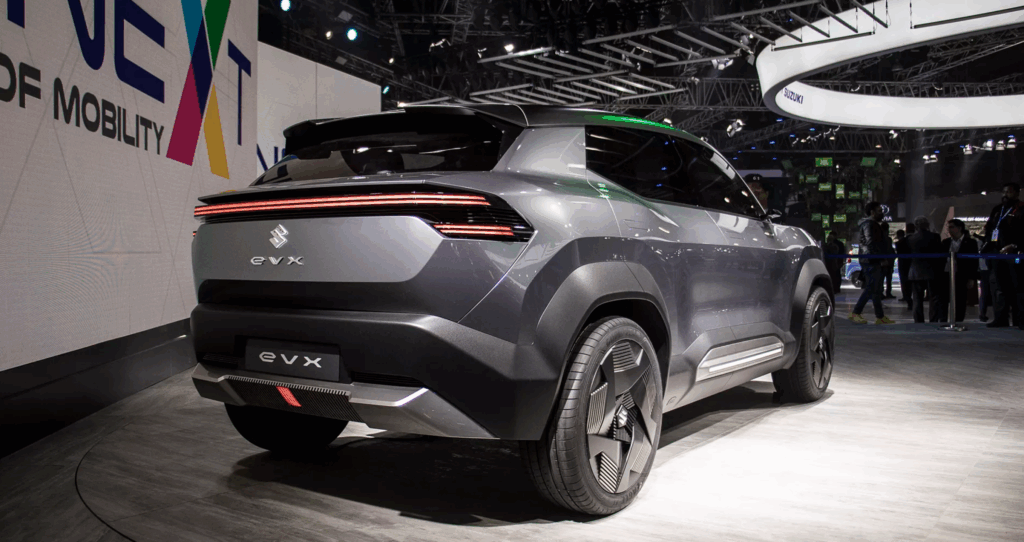
At the same time, the company is advancing its transition toward electric mobility with the upcoming e-Vitara.
However, this shift is not without challenges, as more than half of the vehicle’s battery components are imported, which affects eligibility for government incentive schemes tied to domestic sourcing.