Cybersecurity researchers have uncovered a sophisticated phishing campaign targeting Indian taxpayers, chartered accountants and corporate finance teams during the income tax filing season. The attackers are impersonating the Income Tax Department by sending official-looking emails and documents that trick victims into downloading malware capable of taking complete control of their computers.
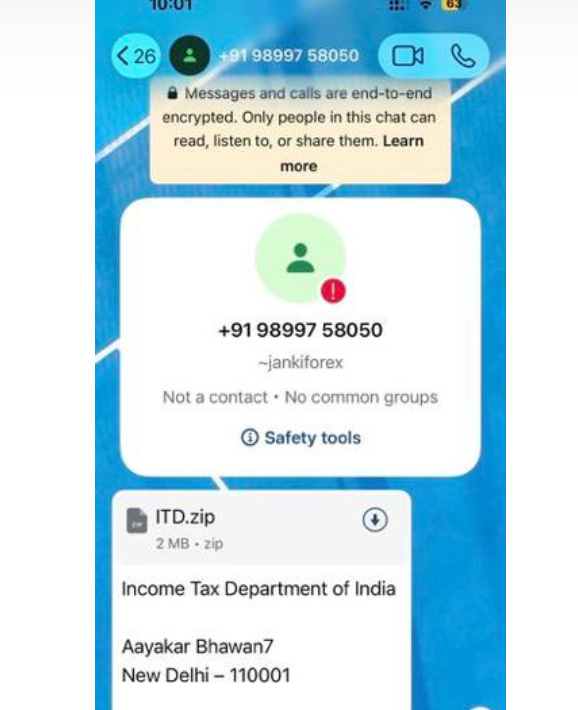
The campaign highlights how cybercriminals are exploiting the urgency of tax compliance to steal sensitive financial and personal information.
How The Scam Works
Victims receive emails that closely resemble official communication from the Income Tax Department.
The messages often contain tax notices, compliance warnings or penalty-related documents and create a sense of urgency by asking recipients to respond within a limited time. Clicking the attachment or embedded link redirects users to a fake website that downloads a malicious ZIP or executable file disguised as a tax document.
Once opened, the malware silently installs itself without obvious signs of infection.
Malware Gives Hackers Remote Access
According to researchers from CloudSEK, the malware deployed in the campaign is a Remote Access Trojan (RAT).
After infecting a system, attackers can:
- Steal passwords and login credentials
- Access financial and tax documents
- Record keystrokes
- Capture screenshots
- Monitor user activity
- Upload or download files
- Maintain long-term remote access to the infected computer
The malware uses sophisticated techniques such as DLL hijacking and legitimate software components to avoid detection by security tools.
Who Is Being Targeted?
The campaign primarily targets:
- Individual taxpayers
- Chartered accountants
- Tax consultants
- Corporate finance departments
- Businesses handling tax compliance
Researchers believe the attackers are taking advantage of the tax filing season, when recipients are more likely to trust emails related to income tax notices or compliance requirements.
How To Stay Safe
Cybersecurity experts recommend several precautions:
- Never open tax-related attachments received through unsolicited emails.
- Verify any notice directly through the official Income Tax portal instead of clicking email links.
- Check the sender’s email address carefully before responding.
- Keep antivirus software enabled and updated.
- Avoid downloading files from unknown websites.
- Ensure Windows and other software are updated with the latest security patches.
Any suspicious tax-related communication should be independently verified before taking action.
Growing Trend In Tax-Themed Cyber Attacks
Tax filing seasons have increasingly become attractive opportunities for cybercriminals because they combine urgency, financial information and official government branding.
Researchers say attackers are using increasingly sophisticated phishing techniques, making fake emails and websites appear almost identical to genuine government communications. This makes user awareness one of the most effective defences against such attacks.
Summary
CloudSEK has warned of a sophisticated phishing campaign targeting Indian taxpayers through fake Income Tax Department emails and websites. The attackers use tax notices to trick victims into downloading remote access malware capable of stealing credentials, financial documents and sensitive data. Cybersecurity experts advise taxpayers to verify all tax communications through official channels and avoid opening unsolicited attachments or links.