In a move that sounds almost futuristic, India has officially sunk a retired Indian Navy warship into the Arabian Sea to create the country’s first underwater naval museum.
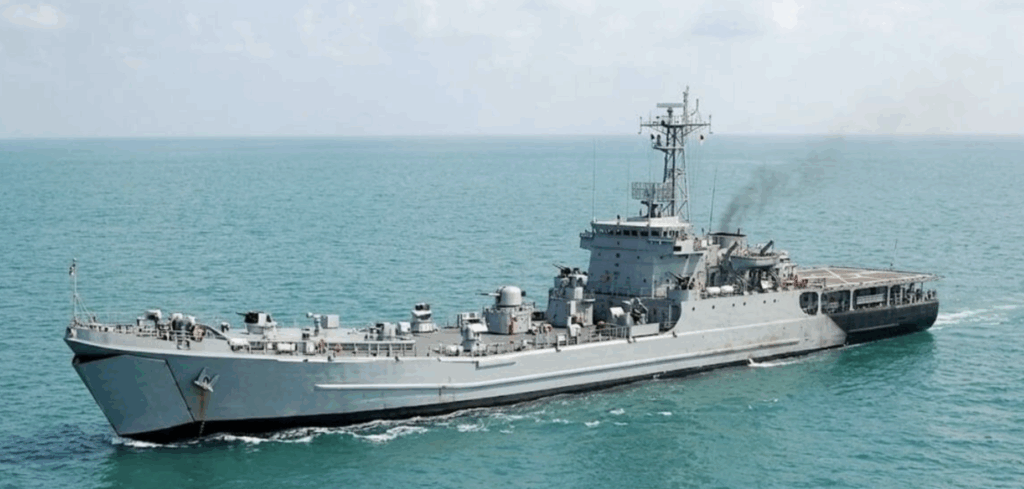
The decommissioned vessel, INS Guldar, was submerged near the Sindhudurg coast in Maharashtra as part of a major marine tourism and artificial reef project.
Instead of scrapping the old warship for metal, authorities decided to transform it into an underwater tourism experience that combines naval heritage, scuba diving, marine conservation, and submarine tourism.
The project is being developed by the Maharashtra Tourism Development Corporation (MTDC) and is expected to become operational over the next year or two.
What Exactly Is INS Guldar?
INS Guldar was a Kumbhir-class landing ship that served the Indian Navy for nearly four decades before being decommissioned in January 2024.
In 2025, the Navy transferred the ship to Maharashtra authorities specifically for conversion into an underwater museum and marine ecosystem project.
Before sinking the ship, officials reportedly:
- Removed hazardous materials
- Cleaned fuel and pollutants
- Prepared the structure for marine life growth
The vessel now rests roughly 20–22 metres below sea level near the Nivati Rock formations off Sindhudurg.
Tourists Will Be Able To Explore The Ship Underwater
This is where the project becomes truly unusual.
Visitors may soon be able to:
- Dive near the submerged warship
- Explore underwater sections with guides
- Ride in a glass-view tourist submarine
- Watch coral and marine ecosystems grow around the ship
A special 24-seater transparent submarine called Triton Deep View 24 is reportedly being built in the US for this project.
The submarine will reportedly take tourists underwater to view:
- The sunken warship
- Artificial coral reefs
- Marine biodiversity
- Underwater structures
India has never attempted something like this at this scale before.
Why Sink A Ship Instead Of Scrapping It?
It may sound strange, but deliberately sinking retired ships is actually a globally used tourism and marine conservation strategy.
Countries including:
- United States
- Australia
- Jordan
- Turkey
have created famous underwater museums and artificial reefs using old ships.
Over time, marine organisms, coral, algae, and fish begin colonizing the structure, turning the wreck into a thriving underwater ecosystem.
Experts say artificial reefs can:
- Support marine biodiversity
- Reduce pressure on natural reefs
- Boost eco-tourism
- Create diving destinations
India is now trying to enter that space.
Social Media Users Calling It ‘India’s Atlantis Project’
The news quickly went viral online because many users found the idea fascinating.
On Reddit and social media, users described it as:
- “India’s Atlantis project”
- “Real-life underwater battlefield tourism”
- “The coolest tourism idea India has launched recently”
Some users also joked that India had turned a warship into “India’s underwater Goa attraction.”
Others praised the project for creatively combining tourism, naval history, and environmental conservation.
Maharashtra Betting Big On Marine Tourism
The Sindhudurg-Konkan belt is already famous for:
- Beaches
- Scuba diving
- Forts
- Coastal tourism
- Water sports
The underwater museum could become another major attraction capable of bringing both Indian and international tourists to the region.
Reports suggest the project has received:
- Central government funding
- Maharashtra government support
- Tourism infrastructure investment
Experts believe it may generate long-term employment in:
- Hospitality
- Boat operations
- Diving services
- Photography
- Coastal tourism businesses
India’s Naval Museums Are Evolving
India already has famous retired naval museums like:
- INS Kursura — submarine museum in Visakhapatnam
- INS Chapal — warship museum in Karwar
But INS Guldar could become India’s first fully underwater naval museum experience.
And unlike traditional museums, this one may actually become more alive over time — as coral reefs and marine ecosystems slowly grow around the submerged ship.
For India’s tourism sector, the project represents something rare:
A mix of military history, science, marine ecology, and adventure tourism — all underwater.