

The United States has raised concerns over India’s heavy dependence on China for pharmaceutical raw materials, highlighting potential vulnerabilities in the global supply chain for essential medicines.
According to the 2026 annual report of the US-China Economic and Security Review Commission (USCC), China accounts for 87% of India’s imported antibiotic ingredients and approximately 74% of imported active pharmaceutical ingredients (APIs).
The findings assume significance because India is among the world’s largest manufacturers and exporters of generic medicines.
India Supplies 20% Of Global Generic Medicines
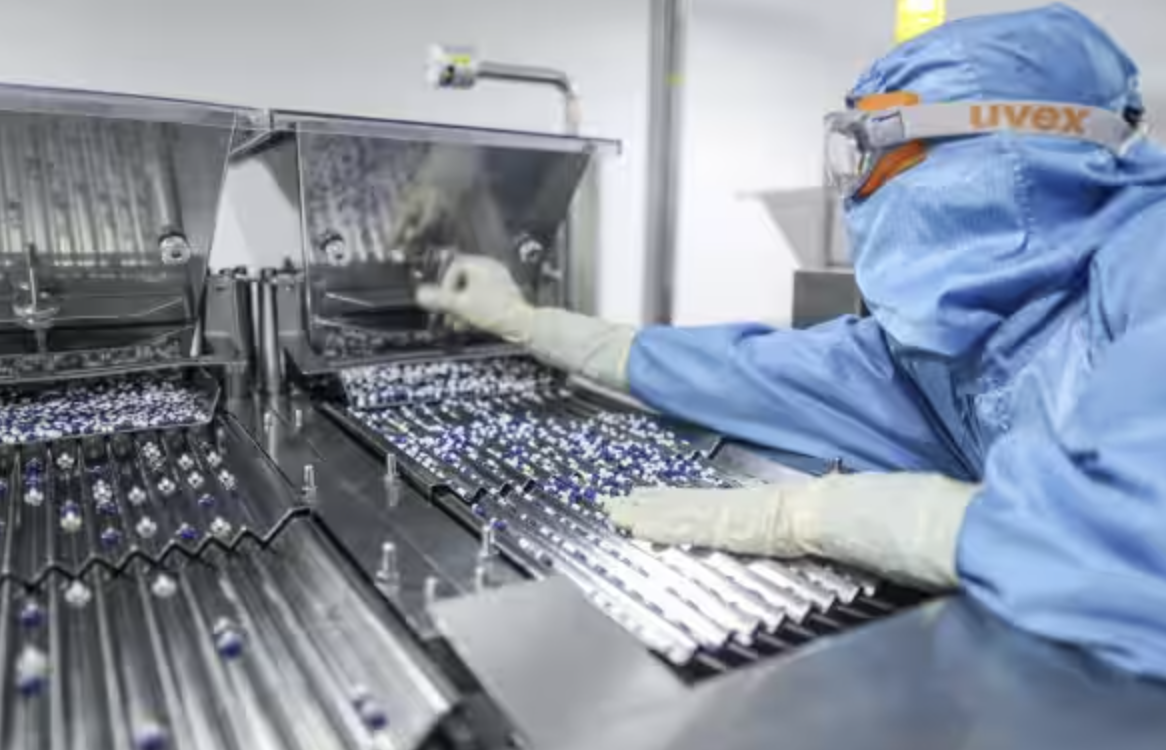
India accounts for approximately 20% of global generic medicine production by volume and 60% of vaccines used worldwide.
In 2024, India supplied 61% of generic medicines in pill form and 21% of generic injectable medicines used in the United States.
However, Indian pharmaceutical manufacturers remain heavily dependent on Chinese suppliers for several critical raw materials.
The commission noted that approximately 90% of the active pharmaceutical ingredients used to manufacture amoxicillin in India are sourced from China.
Any major disruption in these supplies could affect medicine manufacturing in India and the availability of essential drugs in international markets.
India Imported $3.2 Billion Worth Of Pharmaceutical Ingredients From China
According to Indian government data, India imported approximately $4.35 billion worth of bulk drugs, APIs and pharmaceutical intermediates during FY2024-25.
China accounted for $3.2 billion, representing 73.71% of these imports, followed by the European Union at 13.64%.
India’s import dependence extends across several therapeutic categories, including antibiotics, antifungal medicines, diabetes treatments, cardiovascular drugs and cancer medications.
India’s Dependence On China Extends Beyond Pharmaceuticals
The US commission also highlighted India’s dependence on Chinese imports across several strategic industries.
China accounts for the following shares of India’s imports in selected categories:
- Silicon wafers: 97%
- Lithium-ion batteries: 93%
- Antibiotic ingredients: 87%
- Solar cells: 74%
- Active pharmaceutical ingredients: 74%
- Electric inverters: 62%
- Memory chips: 46%
- Industrial machinery: 45%
The report identified excessive supplier concentration as a potential economic and supply chain risk.
India Pushes For Domestic Pharmaceutical Manufacturing
The Indian government has introduced Production Linked Incentive (PLI) schemes to encourage domestic manufacturing of essential pharmaceutical ingredients.
However, the US commission argued that competitive pricing by Chinese manufacturers, limited economies of scale and difficulties in establishing alternative supply networks have slowed India’s efforts to reduce import dependence.
Diversifying pharmaceutical supply chains could improve medicine security in both India and the United States.
The findings also underline the distinction between manufacturing finished medicines domestically and achieving self-reliance in producing their essential raw materials.
Summary
A US congressional commission has highlighted India’s dependence on China for 87% of imported antibiotic ingredients and 74% of imported active pharmaceutical ingredients. India imported pharmaceutical raw materials worth $3.2 billion from China in FY2024-25. Despite India’s prominence in global generic medicine manufacturing, concentrated raw material sourcing poses potential supply chain risks for both India and international markets.