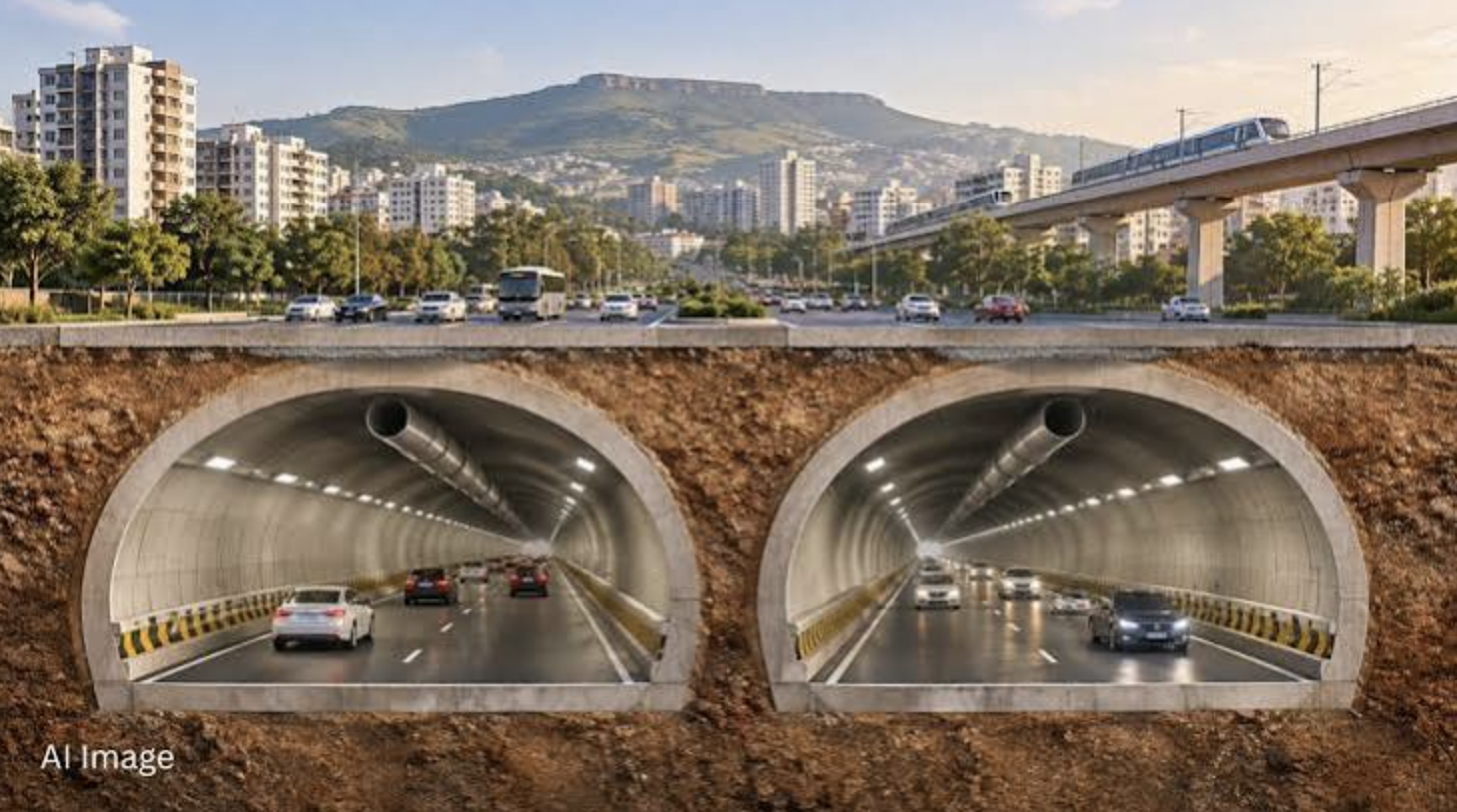


Maharashtra Chief Minister Devendra Fadnavis has granted in-principle approval to an ambitious underground road network worth Rs 53,928.2 crore in Mumbai. Popularly referred to as ‘Pataal Lok’, the infrastructure project aims to reduce traffic congestion by connecting major commercial districts, residential areas, highways and Mumbai airport through underground tunnels.
Proposed by the Mumbai Metropolitan Region Development Authority (MMRDA), the project will cover approximately 30.87 kilometres in each direction, taking the combined tunnel construction length to 61.74 kilometres.
Underground Roads To Connect Mumbai’s Major Locations
The project will be developed in two phases, creating an alternative transportation network beneath some of Mumbai’s busiest localities.
The central section will run underneath the Mithi River between Bandra-Kurla Complex (BKC) and Dharavi.
Multiple underground corridors will provide connectivity to key destinations, including:
- Bandra-Worli Sea Link and Coastal Road
- Bandra-Kurla Complex
- Upcoming Mumbai-Ahmedabad bullet train station
- Dharavi
- Mumbai International Airport Terminal 2
- Western Express Highway
- Eastern Express Highway
The northbound corridor will pass beneath Bandra East, Vakola and Vile Parle, running parallel to the Western Express Highway.
The second phase will expand connectivity towards Andheri East, Asalpha and Sakinaka before reaching Ghatkopar and the Eastern Express Highway.
Vehicles Can Travel At Speeds Of Up To 80 Kmph
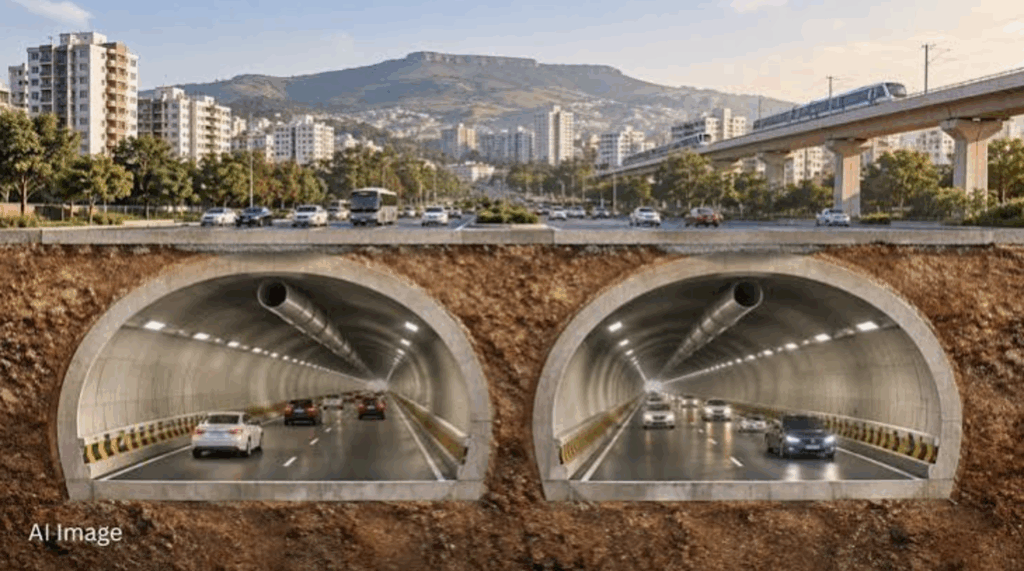
The proposed tunnels will measure approximately 14 metres in diameter and accommodate three traffic lanes, each measuring 3.5 metres in width.
The underground network will be designed for vehicular speeds of up to 80 kilometres per hour, compared with average speeds of just 15-20 kilometres per hour on several congested surface roads in Mumbai.
Nine access locations are envisaged across the proposed network.
Emergency cross passages will be constructed at intervals of 300 metres to facilitate evacuation and rescue operations.
The project will utilise tunnel boring machines alongside conventional excavation and cut-and-cover construction techniques.
Funding And Environmental Clearances Remain Major Challenges
Despite receiving preliminary approval, the project must secure approximately 20 no-objection certificates before execution.
MMRDA will also need to finalise financing arrangements, appoint consultants and construction contractors, and obtain statutory and environmental permissions.
International borrowing is among the financing options being explored.
Construction beneath the Mithi River and near mangrove areas will require additional environmental assessments. Engineers must also account for Mumbai’s existing underground utilities and Metro infrastructure.
Can Underground Roads Solve Mumbai’s Traffic Problems?
The proposed network could reduce dependence on congested surface roads and improve connectivity between Mumbai’s eastern and western suburbs.
Faster airport access and improved connectivity between commercial districts could particularly benefit daily commuters and businesses.
However, actual travel-time savings will depend on traffic volumes, entry and exit arrangements, and connectivity with existing roads.
No official construction commencement or completion date has been announced. The project remains subject to funding, regulatory approvals and technical preparations.
Summary
Maharashtra has granted in-principle approval to Mumbai’s Rs 53,928 crore underground road network, featuring 61.74 kilometres of tunnels across both directions. The three-lane corridors will support speeds of up to 80 kmph and connect BKC, Dharavi, Mumbai airport and major highways. Construction timelines remain dependent on funding, environmental permissions and statutory clearances.