On April 18, the Bombay High Court on Friday ordered a suburban Malad based housing society to grant membership to a man, who was denied the same citing the existence of multiple legal heirs of his parents.
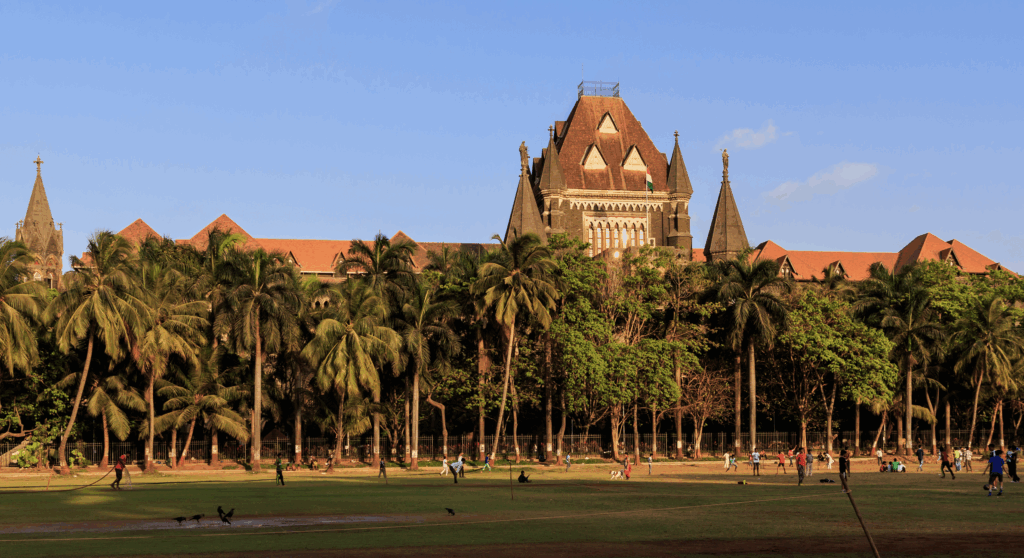
Bombay Highcourt Orders – Housing Society Cannot Decide Title
They have reached to this conclusion observing that a co-operative housing society is not a forum constituted for adjudicating title disputes.
It appears that the single-judge Justice Amit Borkar upheld the order which was earlier passed on November 13, 2014 by a Divisional Joint Registrar who has directed the Malad Cooperative Housing Society Limited to grant membership to Radheshyam Dhanuka.
Lets go through the facts of the case where Ramlal Dhanuka had bought three different flats in the said society and all of these flats were given to his three sons – Deokinandan, Radheshyam and one more son.
Moving ahead, Mr. Ramlal and his wife Bhagirathi lived with Radheshyam in the suite flat.
After the death of the parents in 1989, Deokinandan’s wife filed a suit claiming exclusive rights on the flat in which Radheshyam lived with his parents, in 2007.
She appears to have sought a declaration that Radheshyam had no claim or interest in the said flat.
But she died in 2008 and lateron her legal heirs comprising of two daughters and three sons, unconditionally withdrew the suit.
Misunderstanding Of the Role Assigned to Co-operative Housing Society
This has resulted in the withdrawal and abandonment of all claims pertaining to title, possession, membership rights, nomination, maintenance and all allegations made against Radheshyam, concerning the said flat.
It seems the cloud cast over the title stood removed, when Radheshyam approached the society to grant him membership. Although, it was denied which prompted him to approach the Divisional Joint Registrar of Co-operative Societies Tribunal, who passed the impugned order.
The society challenged the Divisional Joint Registrar’s order before Justice Borkar while making several arguments. One of which was that Radheshyam did not furnish proper application backed with all relevant documents, and also that since the other legal heirs of Ramlal Dhanuka were still there, Radheshyam could not be given membership of the suit flat.
Basically, they attempted to project the controversy before the society which was as if the society was required to determine who amongst the family members was the owner of the flat before considering the question of membership.
Moving further, Justice Borkar held, “Such an approach proceeds upon a misunderstanding of the role assigned to a co-operative housing society under the scheme of the Maharashtra Co-operative Societies Act. A co-operative housing society is not a forum constituted for adjudicating title disputes, succession claims, partition matters or proprietary entitlements between legal heirs. It is not vested with powers akin to a civil court. The society’s function is confined to management of its affairs, regulation of membership, maintenance of internal records and recognition of persons for purposes connected with administration of the premises and collection of dues.”
The judge said that the society was required to examine was not the question of who is the owner of the flat, but who could be recognised for the purpose of being entered in the society’s records as member and for transacting with the society concerning the flat.
Moreover, the bench observed, “This distinction between adjudication of title and recognition for society purposes is of importance. The recognition granted by the society neither creates title nor extinguishes title. It enables the society to function and maintain administration in relation to the property. If any question of beneficial ownership or succession survives amongst the heirs, such a question must be adjudicated by a civil court in appropriate proceedings instituted for that purpose. The society cannot convert itself into a tribunal of title and cannot refuse to discharge its statutory function merely because multiple heirs may exist. Mere existence of more than one legal heir is not sufficient to indefinitely postpone recognition of any claimant.”
They have referred to various provisions of the Maharashtra Co-operative Societies Act, particularly section 30, which stipulates that upon the death of a member of a co-operative society, the society shall transfer the share or interest of such deceased member, in the first instance, to the nominee if any nomination has validly been made in accordance with the Rules.
In case of the absence of such nomination, the statute further mandates that the transfer shall be effected in favour of such person as may appear to the committee to be the heir or legal representative of the deceased member.
The just held, “The wording employed does not provide that the society must transfer the share only after conclusively determining who is the owner. Nor does it direct the society to undertake adjudication of succession. Instead, the legislature has employed the phrase ‘such a person as may appear to the committee to be the heir or legal representative.’ The committee is required to form an opinion as to who appears to be the heir or legal representative. The statute thus contemplates prima facie satisfaction. It does not contemplate a conclusive declaration.”
Justice Borkar further noted that soon after the impugned order passed by the Divisional Joint Registrar, Deokinandan, who retired as a HC judge in 1996, had on December 8, 2014 addressed a letter to the society in question and conveyed that he was not desirous of preferring any appeal or initiating any litigation against Radheshyam and had further requested the society to give effect to and implement the impugned order in his detailed order.
The judge opined “Though the said letter may not be treated as extinguishing any proprietary entitlement of any person in the flat, nevertheless the same cannot be brushed aside as irrelevant. When such person, after passing of the impugned order, communicates that he does not intend to challenge the said order and does not desire litigation against Radheshyam, that fact assumes relevance while appreciating whether opposition in fact existed to his claim.”
The court dismissed the housing society’s revision plea while giving these observations.
The Senior Advocate SU Kamdar assisted by Advocate Jeet Gandhi appeared for the Society and Assistant Sulbha Chipade represented the State.
On the other side, Advocates Shrikrishna Ganbavale, Nikhil Sonar and Ashok Saraogi represented Radheshyam Case Title: The Malad Cooperative Housing Society Limited vs State of Maharashtra (Writ Petition 1927 of 2015) Case Title: 2026 LiveLaw (Bom) 200.