Travelling between Delhi-NCR and Chandigarh could soon become significantly faster, thanks to the near-completion of the ambitious Delhi-Amritsar-Katra Expressway network. Once fully operational, the expressway is expected to reduce travel time between Delhi-NCR and Chandigarh from the current five to six hours to approximately two hours, transforming connectivity across North India. The project is among the country’s largest highway infrastructure initiatives and is expected to boost tourism, trade, logistics, and regional economic growth.
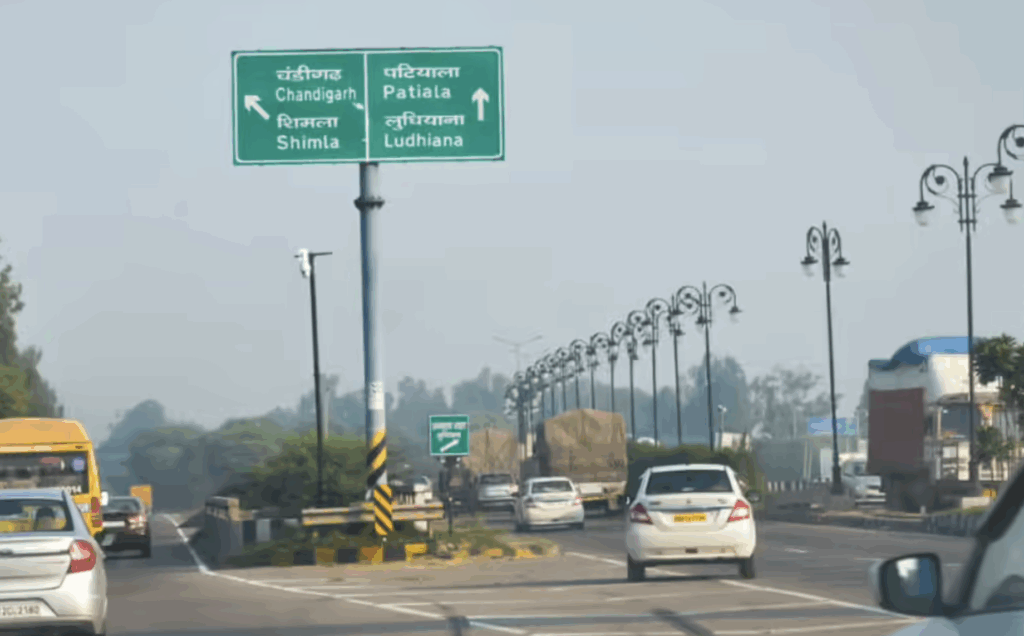
A Major Infrastructure Milestone
The Delhi-Amritsar-Katra Expressway is a high-speed access-controlled corridor being developed at an estimated cost of nearly ₹39,000 crore. Designed for vehicle speeds of up to 120 kmph, the expressway will connect Delhi with major destinations across Haryana, Punjab, and Jammu & Kashmir. While some sections have faced delays due to land acquisition issues and flooding in certain regions, construction has gained momentum, and most major stretches are expected to be operational by March 2027.
The project forms part of India’s broader push to modernise its highway infrastructure and improve connectivity between major economic and cultural centres.
How the Travel Time Will Be Reduced
The dramatic reduction in travel time will be made possible through an integrated network of expressways. Travellers from Delhi-NCR heading towards Chandigarh will use the Dwarka Expressway, Urban Extension Road, Kundli-Manesar-Palwal Expressway, the Delhi-Amritsar-Katra Expressway, and the Trans-Haryana Expressway before reaching Chandigarh. This high-speed corridor will bypass many of the congestion-prone stretches currently encountered on National Highway 44.
The result is expected to be a smoother, faster, and more predictable journey for commuters, tourists, and commercial transport operators.
Benefits Beyond Faster Travel
The impact of the expressway extends far beyond reduced travel times. Improved connectivity is expected to stimulate economic activity across multiple states by enhancing freight movement and reducing logistics costs. Industrial hubs, warehousing facilities, and logistics parks located near interchanges are likely to witness increased investment and development.
The tourism sector could also benefit significantly. Easier road access to Chandigarh, Amritsar, and Katra is expected to increase tourist traffic, supporting local businesses, hospitality providers, and regional economies.
Improved Access to Amritsar and Katra
The expressway is not only designed to improve connectivity to Chandigarh. Once completed, travel time between Delhi and Amritsar is expected to reduce to around four hours, while Delhi-to-Katra journeys could be cut from nearly fourteen hours to approximately six hours. The overall distance between Delhi and Katra will also be reduced substantially.
These improvements are expected to strengthen religious tourism, business travel, and regional integration across North India.
A New Era of Road Connectivity
The Delhi-Amritsar-Katra Expressway represents one of India’s most ambitious road infrastructure projects. As construction moves towards completion, it promises to redefine travel across North India by making journeys faster, safer, and more efficient. For millions of commuters and travellers, the prospect of reaching Chandigarh from Delhi-NCR in just two hours is quickly moving from aspiration to reality.
Summary
The Delhi-Amritsar-Katra Expressway is nearing completion and is expected to cut Delhi-NCR to Chandigarh travel time from five to six hours to around two hours. Designed for speeds of up to 120 kmph, the project will enhance connectivity across Haryana, Punjab, and Jammu & Kashmir while boosting tourism, logistics, trade, and economic development throughout North India.