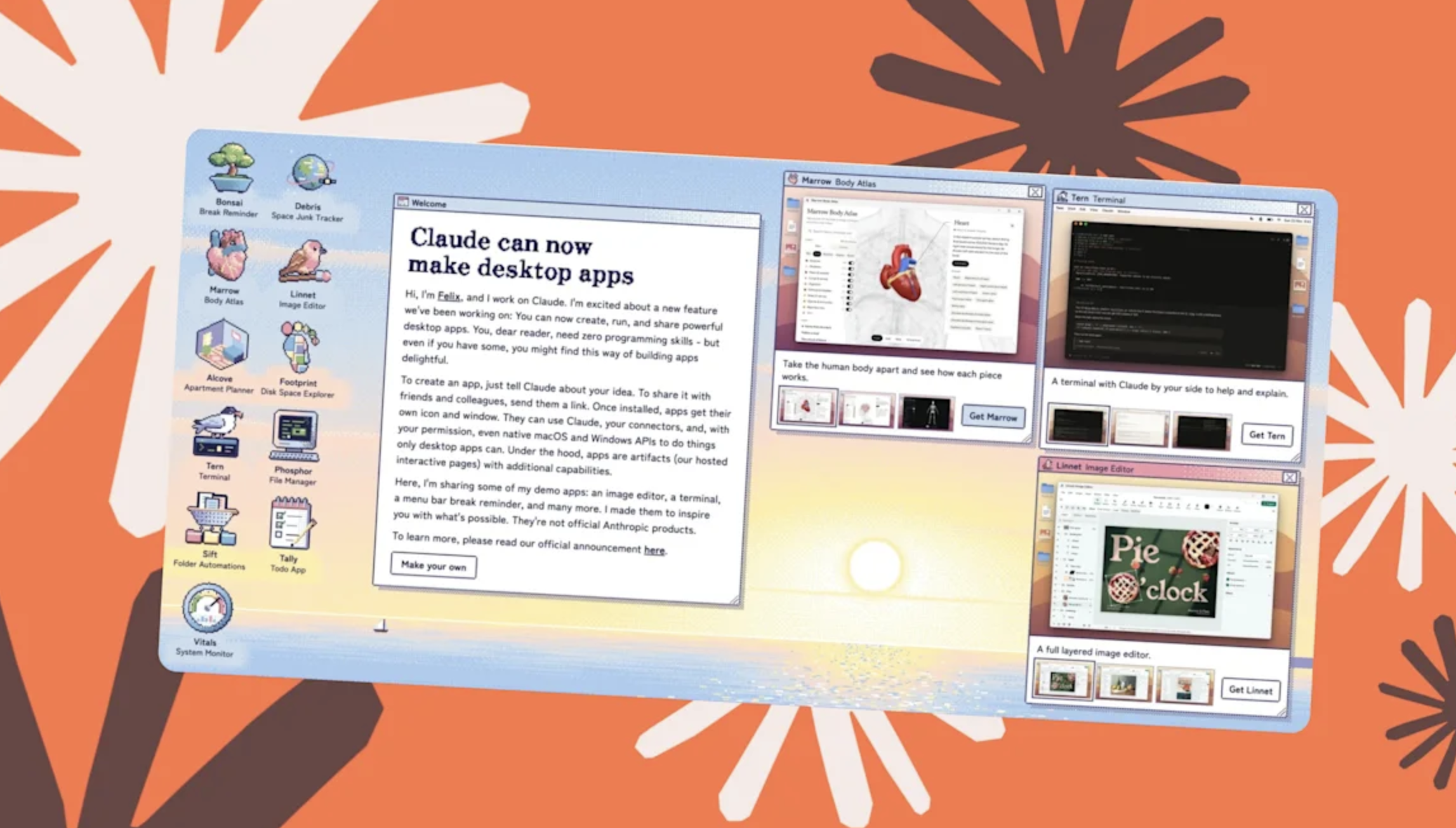


Anthropic has launched a new feature that allows users to convert AI-generated Claude Artifacts into standalone desktop applications for Windows and macOS.
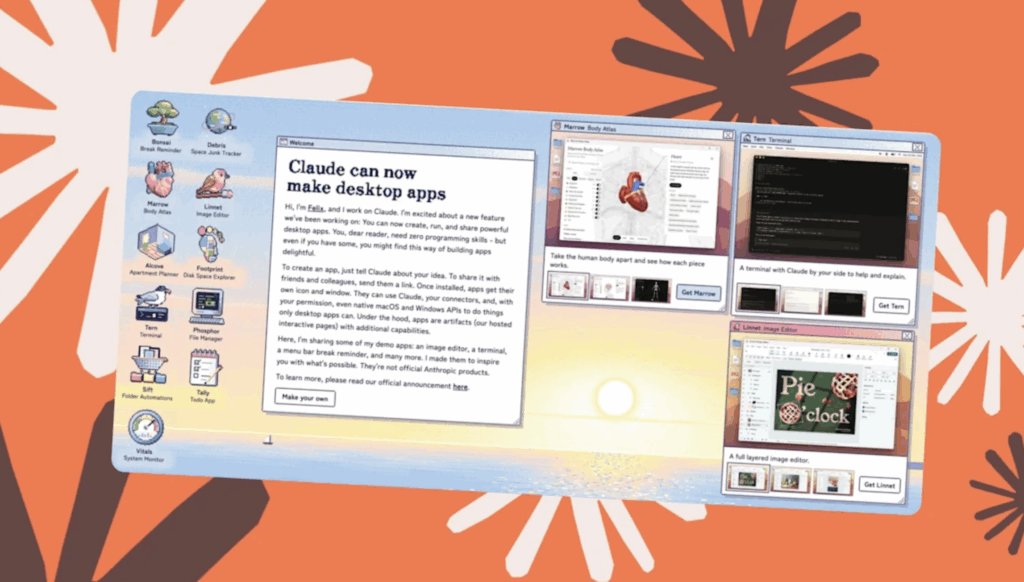
Introduced on November 24, 2026, the feature, called “Install as app,” is currently available in beta across Claude’s free and paid subscription plans, subject to certain organisational restrictions.
The development could make personalised software development more accessible to individuals without extensive programming knowledge.
Create Desktop Applications Using Simple AI Prompts
Previously, Claude Artifacts allowed users to generate interactive dashboards, calculators, websites and customised tools within the chatbot interface.
Users can now install eligible Artifacts as desktop applications featuring independent windows and dedicated icons.
These applications can also be shared with other users and automatically updated whenever the original Artifact is modified.
Potential applications include productivity tools, expense trackers, image editors, file organisers, business dashboards and personalised reminder systems.
Users simply need to describe their requirements to Claude, test the generated Artifact and select the installation option from the Share menu.
AI-Generated Apps Can Access Computer Files And Send Notifications
Anthropic has introduced three permission levels to enable users to control how these applications interact with their computers.
The default setting restricts applications to browser-like functionality. Additional permissions enable desktop notifications, keyboard shortcuts and integration with the computer’s menu bar or system tray.
Users can also grant eligible applications full computer access, allowing them to execute programs and modify local files.
However, Anthropic does not independently review applications before installation, making permission management and application trust particularly important.
Free Users Can Also Create Desktop Applications
The feature supports Claude’s Free, Pro, Max, Ultra, Team and Enterprise subscription plans.
However, users must have Claude Desktop version 6.28899.0 or later, an active internet connection and a signed-in Claude account.
AI requests generated through installed applications will count towards users’ existing subscription usage limits.
The feature is currently unavailable on Linux, mobile devices and web browsers. Certain Artifacts, including Claude Docs, Slides and Sheets, cannot be installed as applications.
Anthropic Also Launches Claude Ship For Software Developers
Separately, Anthropic introduced Claude Ship in beta on November 23, 2026, targeting software development teams.
Available to Team and Enterprise customers, the feature uses AI agents to review proposed code changes, suggest revisions and assist with GitHub pull request approvals.
Claude Ship follows a usage-based pricing model, with administrators able to establish spending limits for certain automated processes.
Together, these developments reflect Anthropic’s efforts to expand beyond conversational AI into personalised software creation and automated software development workflows.
Summary
Anthropic has introduced a beta feature allowing Claude users to convert AI-generated Artifacts into standalone Windows and Mac applications. Users can create customised software through natural language prompts, enable desktop notifications and grant computer access permissions. Available across free and paid plans, the feature requires an internet connection and could make personalised application development accessible to non-programmers.