Sam Altman Doesn’t Expect AI To Shorten The Work Week
OpenAI CEO Sam Altman says artificial intelligence is unlikely to automatically lead to a four-day or four-hour work week, even as AI continues to make people significantly more productive.
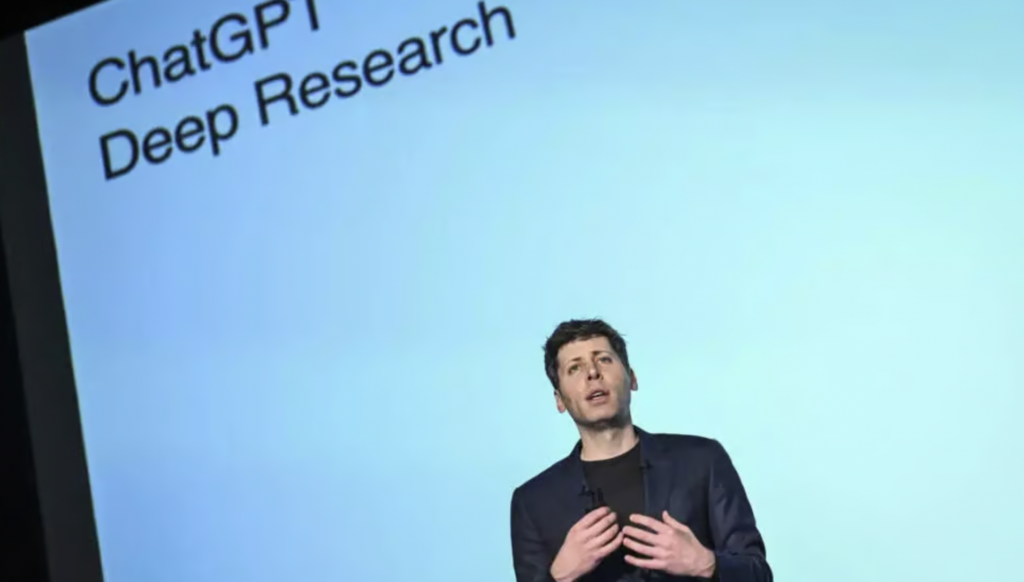
Altman argued that technology has repeatedly promised to reduce the amount of work people need to do, but those promises have rarely materialised. Instead, when people become more productive, they often use the additional capacity to pursue bigger ambitions and take on more work.
Humans May Simply Find More Work To Do
According to Altman, people are “secretly happy” to stay busy.
His argument is that productivity gains do not necessarily translate into more leisure time. When technology makes existing tasks faster, people tend to fill the newly available time with additional goals, projects and responsibilities.
As a result, even if AI dramatically improves individual productivity, society may not simply decide to work fewer hours.
AI Could Make People More Ambitious
Altman’s view is that AI will fundamentally change what people are capable of accomplishing.
Instead of using AI only to reduce workloads, individuals and businesses could use the technology to pursue projects that previously required much larger teams or significantly more time.
This could mean that productivity gains are absorbed by higher expectations and greater ambition rather than converted directly into shorter working hours.
The Four-Hour Work Week Has Been Promised Before
Altman pointed to a broader historical pattern in which technological advances were expected to give people more free time.
From computers and the internet to modern automation, many technologies have made individual workers more productive. Yet the traditional working week has remained largely intact.
The AI revolution could follow a similar pattern, with workers potentially producing far more while continuing to work for roughly the same amount of time.
AI Is Already Changing How People Work
The debate comes as companies increasingly integrate AI into everyday work.
Generative AI can automate repetitive tasks, assist with research, generate content, write and analyse code, summarise information and support decision-making.
These capabilities can allow individual employees to accomplish tasks that previously required considerably more time or resources.
However, the productivity gains can also raise expectations. If a worker can complete a task twice as quickly with AI, an employer may expect that employee to complete more tasks rather than simply work fewer hours.
AI May Change Work Rather Than Eliminate It
Altman’s comments add another perspective to the ongoing debate about AI and employment.
Instead of viewing AI purely as a technology that will eliminate jobs or dramatically reduce working hours, his argument suggests that people may use increased productivity to expand what they attempt to accomplish.
The result could be a workplace where AI handles more routine tasks while humans spend their time on higher-value activities, new projects and increasingly ambitious goals.
For workers, that could mean AI makes work easier in some ways while simultaneously raising expectations about how much can be achieved.
Summary
Sam Altman says AI is unlikely to automatically create a four-day or four-hour work week. He argues that humans tend to remain busy even when technology makes them more productive, using the extra capacity to pursue bigger goals and more work. According to Altman, AI may therefore increase productivity and ambition rather than simply reducing the number of hours people spend working.