




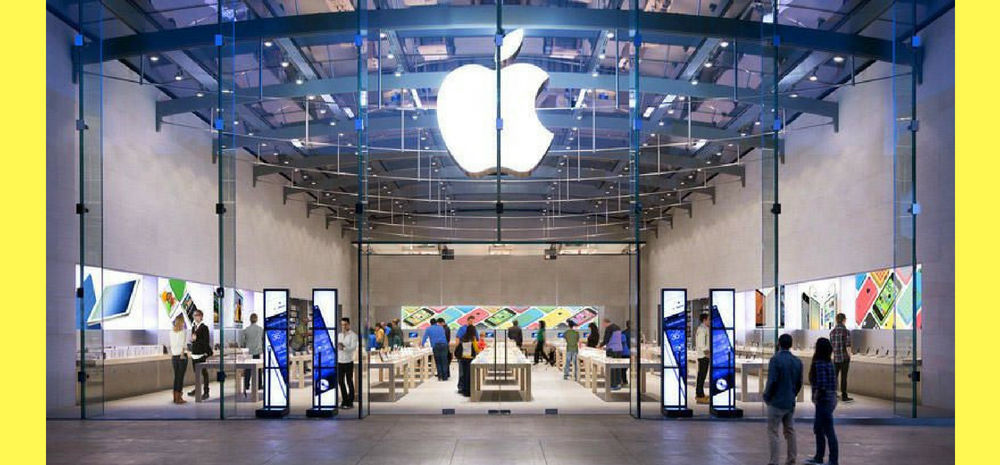
Apple has crossed a major financial milestone, closing with a market capitalisation of approximately $5.005 trillion and becoming the second company after Nvidia to finish a trading session above the $5 trillion mark. The achievement highlights investors’ continued confidence in Apple’s iPhone business, even as rising component costs, intensifying artificial intelligence (AI) competition and concerns about slower growth create new challenges.
The milestone also marks a significant moment in Apple’s leadership transition, with John Ternus taking over as chief executive from Tim Cook in September 2026.
Investors Continue to Trust the iPhone
The iPhone remains central to Apple’s financial strength. Its combination of premium hardware, software, services and a loyal customer base allows the company to maintain pricing power even when manufacturing costs increase.
Investors appear confident that many customers will continue buying Apple devices despite higher prices. This matters because memory and storage chips have become more expensive amid growing demand from AI data centres, putting pressure on the costs of smartphones, computers and other electronics.
Apple has responded with price increases across parts of its product lineup. Rather than assuming that higher prices will automatically reduce demand, investors are betting that the company’s brand strength and tightly integrated ecosystem will help protect its revenue and profitability.
How Apple Reached the $5 Trillion Milestone
Apple’s market value expanded dramatically during Tim Cook’s 15-year tenure. During that period, the company’s market capitalisation increased roughly thirteenfold, supported by iPhone growth, the expansion of services and the success of products such as the Apple Watch and AirPods.
The services business has become an increasingly important source of recurring revenue, complementing hardware sales through subscriptions, digital services and other offerings.
Apple’s approach to capital expenditure has also differentiated it from technology companies spending enormous sums on AI infrastructure. Instead of building data centres on the scale of major AI and cloud providers, Apple has focused on its devices and software ecosystem while relying on external technology partners for some AI capabilities.
AI Is Apple’s Biggest Challenge
Despite its financial strength, Apple faces mounting pressure to deliver more compelling AI experiences. Rivals have moved aggressively to integrate generative AI into smartphones, search, productivity tools and digital assistants.
Apple has been working to strengthen its AI capabilities, including a redesigned Siri developed with assistance from Google’s technology. Bringing advanced AI directly into the iPhone could create new reasons for customers to upgrade their devices.
However, the company must demonstrate that its AI features offer practical benefits rather than simply matching competitors. The success of its AI strategy could influence future iPhone sales and determine whether Apple can sustain its growth.
Rising Costs Test Apple’s Pricing Power
Higher memory and storage prices pose another challenge. Increasing device prices can help offset component costs, but it also risks encouraging customers to postpone upgrades or choose less expensive alternatives.
Apple’s premium positioning gives it an advantage, although investors will be watching whether customers continue accepting price increases without a significant slowdown in demand.
The company’s ability to balance pricing, profitability and customer loyalty will be particularly important as it enters its next phase under Ternus.
What the $5 Trillion Valuation Means for Apple
Apple’s valuation reflects more than its latest share price. It represents investors’ expectations that the company can continue generating substantial profits from its hardware ecosystem, services and customer relationships.
However, a market capitalisation milestone does not guarantee future growth. Apple must navigate rising manufacturing costs, evolving consumer expectations and competition from companies developing AI-powered devices and services.
For its new leadership, the challenge is to preserve the strengths that made Apple one of the world’s most valuable companies while establishing a convincing strategy for the AI era.
Summary
Apple closed above a $5 trillion market capitalisation for the first time, joining Nvidia in the exclusive club. Investors continue to back the iPhone’s premium pricing, customer loyalty and services ecosystem despite rising component costs. Under new CEO John Ternus, Apple’s next challenge is to strengthen its AI capabilities, sustain demand and protect profitability amid intensifying competition.