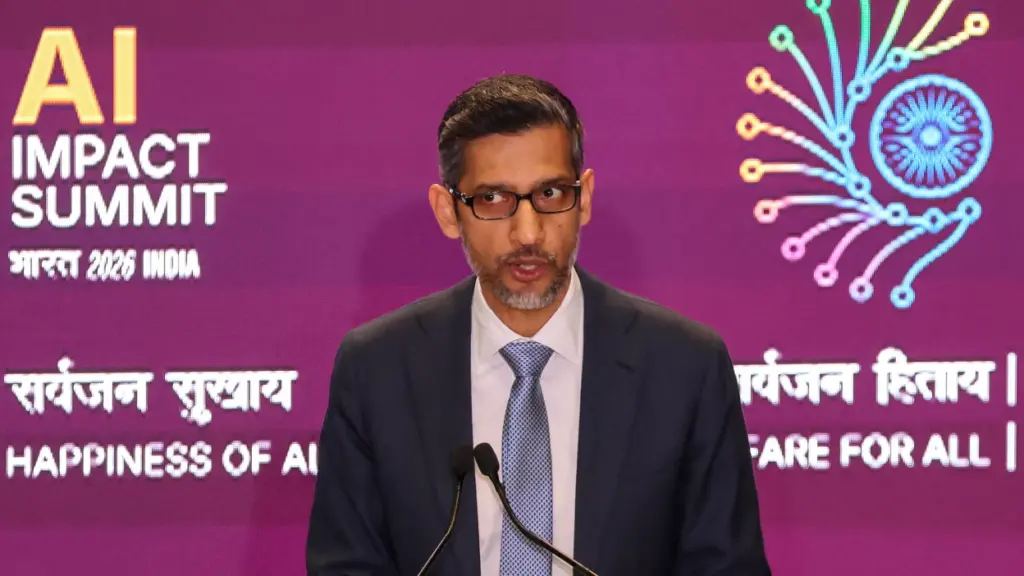
In a landmark moment for the tech industry, Google has revealed that 75% of its new code is now generated by artificial intelligence—a dramatic shift in how software is built. The announcement, shared by CEO Sundar Pichai, signals that AI is no longer just assisting developers—it is actively writing the majority of code inside one of the world’s largest tech companies.
Just a year ago, AI-generated code at Google stood at around 25%. By late 2025, it had reached 50%, and now it has surged to 75%, highlighting the rapid acceleration of AI adoption in software engineering.
How AI Is Writing Code at Scale
Google is leveraging its advanced AI models, particularly its Gemini ecosystem, to generate code across multiple projects. However, this doesn’t mean developers are out of the loop.
Human engineers still review, validate, and approve all AI-generated code before it is deployed.
This creates a new workflow:
- AI generates code
- Engineers review and refine it
- Final output is approved for production
The result is a hybrid model where AI handles speed and scale, while humans ensure quality and reliability.
The Rise of “Agentic” Software Development
A key concept behind this shift is what Google calls “agentic workflows.”
Instead of just suggesting snippets, AI systems can now act like autonomous agents—handling complex, multi-step programming tasks with minimal human input.
In one case, a large internal code migration project was completed six times faster using AI agents compared to traditional methods.
This marks the transition from AI as a tool to AI as a collaborator—or even a co-developer.
A Trend Spreading Across Big Tech
Google is not alone in this transformation. Other tech giants are rapidly increasing their reliance on AI for coding:
- Microsoft: ~20–30% of code AI-generated
- Meta: targeting up to 75% in some teams
- Snap: around 65% AI-generated code
This suggests a broader industry shift where AI-driven development is becoming the new standard.
What This Means for Developers
While AI is boosting productivity, it is also reshaping the role of software engineers.
Developers are evolving from writing every line of code to:
- Designing system architecture
- Reviewing and validating AI outputs
- Managing AI agents
In short, the job is shifting from “coder” to “orchestrator.”
The Bigger Picture: Speed vs Responsibility
Despite the benefits, challenges remain. AI-generated code can introduce errors, security risks, or inefficiencies if not properly reviewed.
That’s why human oversight remains critical—even as AI takes on a larger share of the workload.
The Future of Coding Is Already Here
Google’s 75% milestone is more than a statistic—it’s a signal of what’s coming next.
Software development is entering a new era where humans and AI build together. And as AI tools continue to evolve, the question is no longer whether AI will write code—but how much of it will be left for humans to write.