Parked Vehicles Worsen Bengaluru’s Traffic Crisis
Bengaluru is losing nearly 60% of its available road space to parked vehicles, according to Greater Bengaluru Development Minister Krishna Byre Gowda. The minister said vehicles parked on both sides of roads, including narrow stretches, are significantly reducing the space available for moving traffic and worsening congestion across the city.
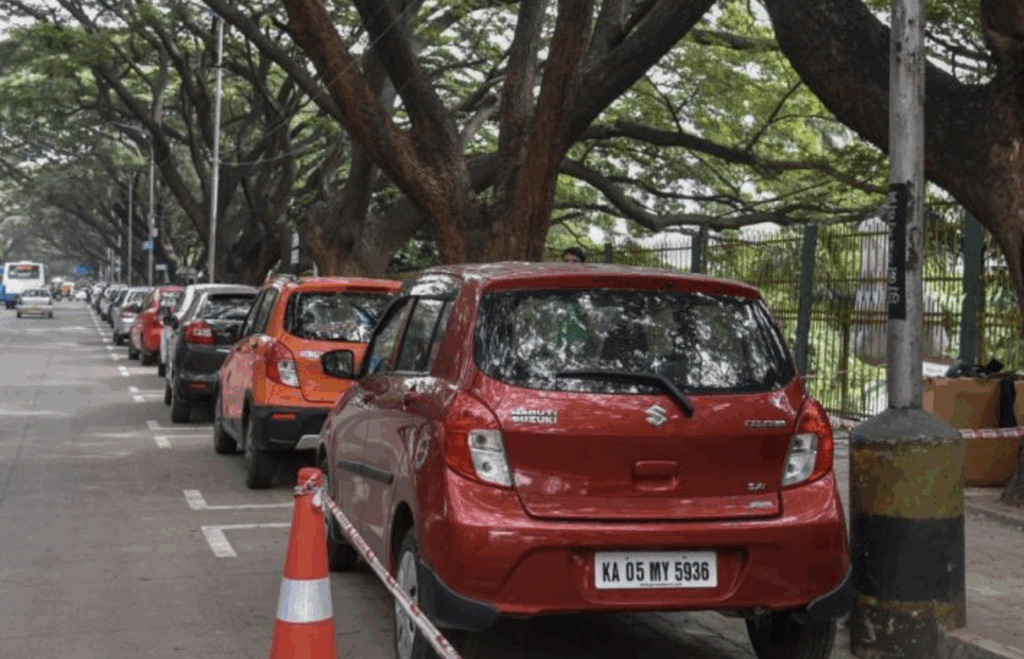
Gowda argued that simply expanding Bengaluru’s road network will not solve the traffic problem. Instead, the city needs stricter parking enforcement, better use of existing road space and greater public discipline.
Government Considers Dedicated Parking Enforcement Agency
The Karnataka government is considering setting up a dedicated agency to regulate and enforce parking rules across Bengaluru.
Gowda said the existing civic administration and police forces do not have sufficient manpower to enforce parking regulations across the rapidly expanding city.
A specialised enforcement mechanism could allow authorities to focus specifically on illegal parking, improve traffic movement and make better use of the road infrastructure already available.
Minister Calls for Greater Public Discipline
Gowda also placed responsibility on citizens, saying enforcement alone would not be enough without greater public cooperation.
He pointed to the widespread practice of parking vehicles along both sides of roads and other violations of civic regulations. According to him, people frequently ignore rules relating to parking and building construction, contributing to the city’s infrastructure problems.
The minister stressed that stricter implementation of existing laws would be essential to address Bengaluru’s long-standing traffic and civic challenges.
Micromobility Needs Better Footpaths
The government is also looking at greater use of micromobility for short-distance journeys of up to two kilometres.
Walking, cycling and other forms of short-distance mobility could reduce pressure on Bengaluru’s roads, but Gowda said this would require proper footpaths and effective parking regulation.
The city has already begun efforts to clear and restore footpaths. However, without preventing vehicles from occupying pedestrian spaces, encouraging people to walk or use other forms of micromobility will remain difficult.
Construction Waste Vehicles to Get GPS Tracking
Gowda also highlighted steps being taken to improve construction and demolition waste management.
Vehicles transporting construction and demolition waste are now required to be registered and GPS-tracked, with waste directed only to designated disposal facilities.
Five locations have been identified for disposal, with the system intended to prevent illegal dumping of construction debris around the city.
Former Mayors Push for Civic Improvements
A meeting with former Bengaluru mayors also produced several recommendations for improving the city’s infrastructure and civic administration.
The former mayors called for more scientific and durable methods of repairing potholes, better garbage management and faster implementation of the ₹2,000-crore stormwater drain development project.
They also sought better maintenance of flyovers, streetlights, public toilets, cremation and burial grounds and other civic facilities.
More Focus on Roads and Drainage
The former mayors also recommended greater attention to buffer roads and traffic-bearing roads that could help improve traffic movement.
They suggested creating a dedicated asphalt plant for the civic administration, which could reduce its dependence on private contractors for road-related work.
Better coordination between government departments was also recommended to prevent unauthorised road cutting and improve the maintenance of roads and other public infrastructure.
Garbage and Plastic Waste Remain Concerns
The meeting also highlighted Bengaluru’s continuing waste-management challenges.
Recommendations included stronger action against roadside dumping, better garbage management and a complete ban on single-use plastic.
The former mayors also called for improved maintenance of sewage-treatment plants and better coordination with the Bengaluru Water Supply and Sewerage Board.
Bengaluru Needs Better Use of Existing Infrastructure
The latest comments underline a key challenge facing Bengaluru: the city’s traffic problem is not simply about the number of roads.
Even existing road space is being significantly reduced by parked vehicles and other encroachments. This means that building additional roads may have limited impact unless the city simultaneously improves parking management and enforcement.
Better utilisation of existing infrastructure could therefore become an important part of Bengaluru’s strategy to tackle congestion.
A Bigger Focus on Enforcement
The proposed parking enforcement agency could become a major component of the city’s traffic-management strategy if implemented.
For Bengaluru residents, effective enforcement could mean clearer parking rules, fewer vehicles occupying traffic lanes and improved pedestrian access.
However, the success of such a system would ultimately depend on consistent enforcement and public compliance.
Summary
Nearly 60% of Bengaluru’s available road space is being occupied by parked vehicles, according to Greater Bengaluru Development Minister Krishna Byre Gowda. The Karnataka government is considering a dedicated parking enforcement agency to improve traffic movement. The minister also called for better footpaths, greater micromobility use and stricter enforcement, while former mayors proposed wider civic and infrastructure reforms.