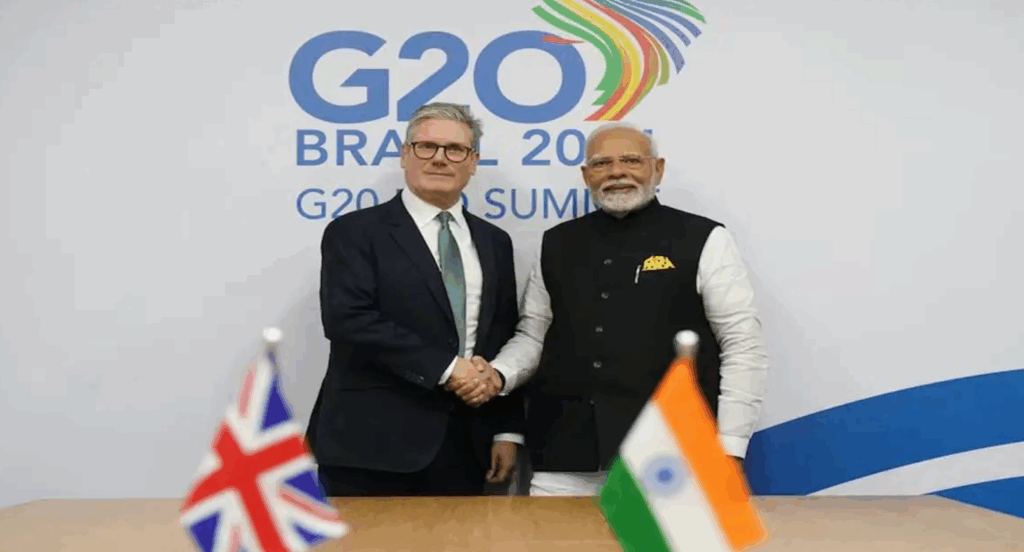
India and the United Kingdom will officially implement their landmark Free Trade Agreement (FTA) from July 15, marking a major milestone in bilateral economic relations. The agreement, formally known as the Comprehensive Economic and Trade Agreement (CETA), is expected to boost trade, reduce tariffs, and create new opportunities for businesses in both countries. The deal is India’s first bilateral trade agreement with a major European nation and is projected to significantly expand commercial ties between the two economies.
What Will Become Cheaper In India?
One of the most visible impacts of the FTA will be lower import duties on several British products entering India. Tariffs on British whisky will gradually fall from around 150 percent to 40 percent, making premium Scotch and other UK spirits more affordable for Indian consumers. The agreement also introduces a quota under which British automobiles can be imported at a significantly reduced tariff of 10 percent compared to the current 100 percent rate.
Other products expected to benefit from tariff reductions include cosmetics, medical devices, and various manufactured goods from the UK. These changes are expected to increase consumer choice while strengthening trade between the two countries.
Massive Opportunity For Indian Exporters
The biggest winners could be Indian exporters. Under the agreement, nearly 99 percent of Indian exports will receive tariff-free access to the UK market, covering almost the entire value of bilateral merchandise trade.
Several sectors are expected to gain significantly, including textiles, apparel, leather products, footwear, engineering goods, auto components, marine products, chemicals, pharmaceuticals, gems and jewellery, and processed food products. Tariffs that previously ranged from 8 percent to as high as 70 percent on some categories will be reduced to zero.
Industry groups believe the agreement will improve India’s competitiveness against countries such as Bangladesh, Vietnam, Pakistan, and Turkey in the UK market. Textile and apparel exporters, in particular, are optimistic about substantial growth in market share over the coming years.
Relief For Indian Professionals And Companies
The agreement also includes a social security arrangement known as the Double Contribution Convention. Under this provision, Indian professionals temporarily working in the UK through Indian employers will be exempt from paying social security contributions in both countries simultaneously.
Government estimates suggest this could save Indian companies around Rs 4,000 crore while benefiting a large majority of Indian professionals working on temporary assignments in the UK.
Economic Impact Expected To Be Significant
According to official estimates, the FTA could increase bilateral trade by more than £25 billion annually in the long term. The agreement is also expected to contribute billions of pounds to the GDP of both countries while creating new opportunities for manufacturers, exporters, MSMEs, farmers, and service providers.
As the agreement comes into force on July 15, businesses on both sides are preparing to take advantage of reduced tariffs, easier market access, and stronger economic cooperation.
Summary:
The India-UK Free Trade Agreement will come into effect on July 15, providing tariff-free access to nearly 99 percent of Indian exports entering the UK. Sectors such as textiles, leather, engineering goods, pharmaceuticals, and gems and jewellery are expected to benefit significantly. Meanwhile, British whisky, automobiles, and other products will become cheaper in India due to reduced import duties.