Trump completed one year of his second term in January 2025. The period saw a series of executive actions that drew ridicule for their perceived absurdity while still producing measurable domestic and global consequences in trade, immigration, regulation, talent mobility, and foreign relations.
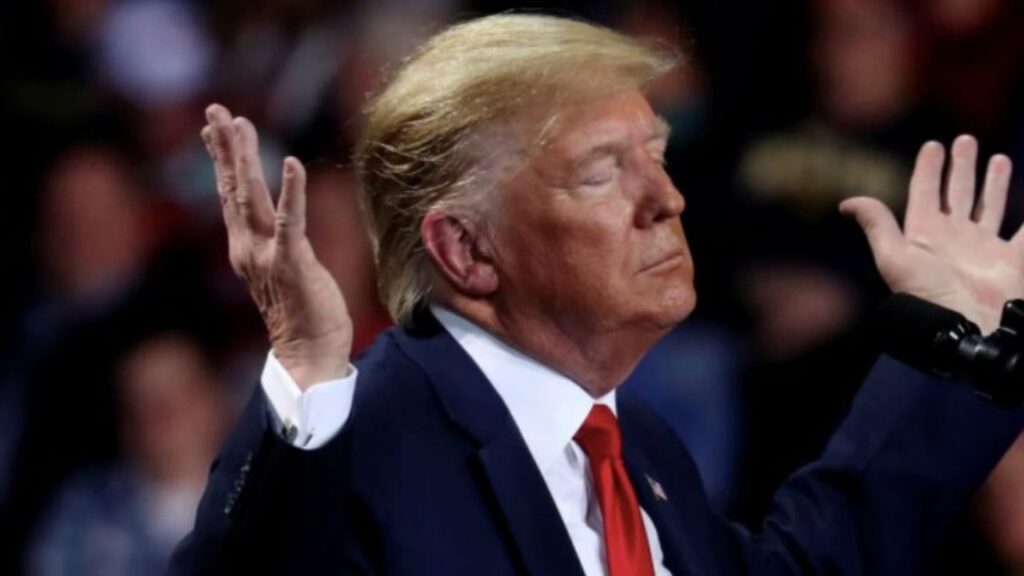
Volatile Tariffs on Canada, Mexico, and China
Beginning February 2025, Trump imposed tariffs fluctuating between 25 percent and 50 percent on Canada, Mexico, and China. Rates were revised multiple times within short windows, creating uncertainty for importers and exporters. Retaliatory tariffs followed. US manufacturers faced higher input costs for steel, components, and energy. Consumers experienced price increases on appliances, automobiles, and electronics. Allied governments cited breach of negotiated commitments, further weakening trade cooperation.
Attempt to End Birthright Citizenship
In early 2025, Trump ordered the suspension of birthright citizenship for children born to non-citizen parents. The action challenged established interpretation of the Fourteenth Amendment. Courts issued temporary injunctions, triggering nationwide litigation. The order caused administrative confusion in hospitals, passport offices, and immigration agencies. It divided families, created documentation limbo for newborns, and amplified debate about constitutional protections and executive authority.
H-1B Visa Fee Set at $100,000
In September 2025, Trump set an application fee of $100,000 for H-1B visas. The measure targeted skilled foreign workers frequently employed in technology, research, and advanced engineering. US companies launched emergency hiring cycles overseas, rushed transfers, and filed lawsuits. Universities, biotech labs, and software firms warned of reduced innovation output. Economic groups estimated material GDP impacts tied to talent shortages and delayed product development.
Deregulation of “Unlawful” Federal Rules
In April 2025, Trump ordered federal agencies to repeal existing rules deemed “unlawful” based on selected recent court decisions. Critics argued the executive branch cannot retroactively void regulations without statutory and judicial processes. Environmental, workplace safety, and consumer protection rules entered uncertainty. Agencies struggled to identify enforceable standards, raising compliance risks for industry and undermining regulatory continuity.
Mandating “Patriotic Time Zones”
On his first week back in office, Trump issued an executive order directing federal agencies to rename US time zones with “patriotic labels,” such as “Freedom Time” (Eastern), “Liberty Time” (Central), “Patriot Time” (Mountain), and “Victory Time” (Pacific). Federal departments scrambled to update timetables, scheduling systems, and aviation data. Airlines, logistics firms, railways, and financial markets protested due to misaligned data feeds and international timestamp confusion. International partners refused to adopt the labels, forcing dual-time operations across aviation, trade, and cybersecurity networks.
Conclusion
Trump’s first year of his second term demonstrated that even actions perceived as absurd could still alter policy landscapes. The five decisions above triggered litigation, diplomatic friction, economic disruption, and administrative uncertainty across multiple sectors.