China has reached a major milestone in its energy transition, with solar power overtaking coal as the country’s largest source of installed power capacity for the first time.
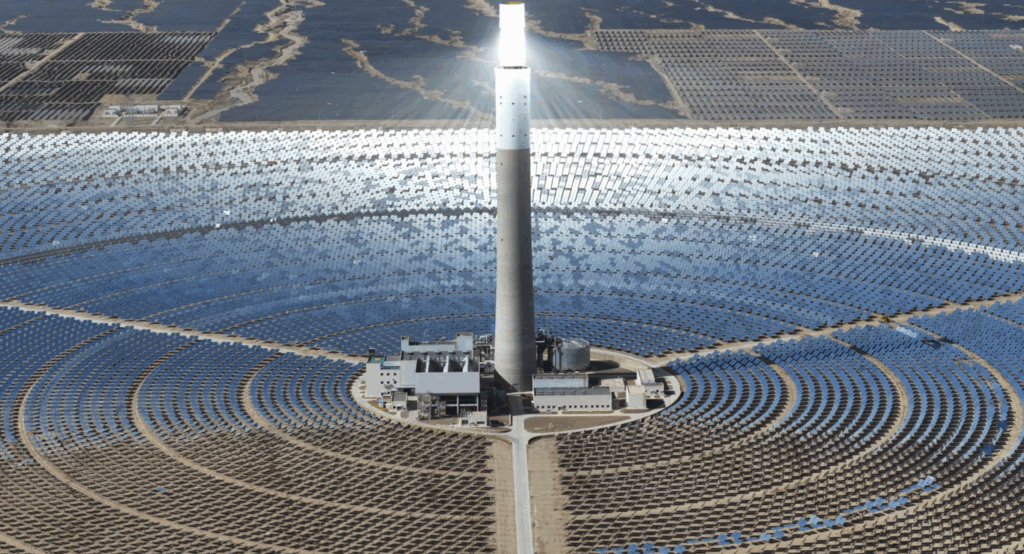
The shift happened in July 2026, according to data from China’s National Energy Administration and state media reports. By the end of July, China’s installed solar capacity had reached roughly 1,288 gigawatts (GW), narrowly exceeding the approximately 1,285 GW of coal-fired capacity.
However, the milestone comes with an important distinction: installed capacity is not the same as electricity actually generated. Coal continues to produce substantially more electricity because coal plants can operate for much longer periods, while solar generation depends on sunlight.
Solar Capacity Crosses 1.2 Terawatts
China’s solar expansion has been extraordinary. The country has continued adding enormous amounts of photovoltaic capacity, making it the world’s dominant solar market as well as a major manufacturer of panels and related equipment.
Solar now accounts for more than 30% of China’s total installed power-generation capacity.
The growth has been supported by large-scale investment in renewable energy, extensive manufacturing capacity and China’s push to strengthen domestic energy security.
Coal Still Dominates Electricity Generation
Despite losing its position in installed capacity, coal remains central to China’s power system.
During the first half of 2026, coal accounted for 49.7% of China’s electricity generation, while wind and solar together accounted for around 24.6%.
That gap illustrates why the solar milestone should not be interpreted as China having already replaced coal.
A solar plant’s output varies during the day and disappears at night, whereas coal plants can provide continuous generation. China’s challenge is therefore increasingly about making its huge renewable capacity usable through better transmission networks, energy storage and grid flexibility.
A Significant Change in China’s Energy Mix
The milestone nevertheless marks a major structural change. China has been adding renewable capacity at such a rapid pace that solar has now moved ahead of coal even while the country continues to maintain a large fossil-fuel generation fleet.
The country’s renewable expansion is also increasingly reshaping global energy markets because Chinese companies dominate large parts of the solar manufacturing supply chain.
The Next Challenge Is Using the Capacity
China’s energy transition is entering a different phase. Building solar farms at scale is no longer the only challenge.
The country must increasingly integrate intermittent renewable power into its electricity system, expand storage, strengthen transmission infrastructure and create market mechanisms that encourage flexible electricity consumption.
The fact that solar capacity has overtaken coal is therefore a powerful indicator of where China’s energy system is heading — even though coal remains the country’s biggest source of actual electricity generation.
Summary
Solar power has overtaken coal in installed power capacity in China, reaching about 1,288 GW by July 2026 versus roughly 1,285 GW of coal capacity. The milestone highlights China’s extraordinary renewable-energy expansion, but coal still generates much more electricity. The next challenge will be integrating China’s rapidly growing solar capacity through stronger grids, storage and greater system flexibility.