Raghuram Rajan Suggests A New AI Tax
Former Reserve Bank of India governor Raghuram Rajan has proposed a new way for governments to deal with the potential employment impact of artificial intelligence: taxing the AI tokens used by companies.
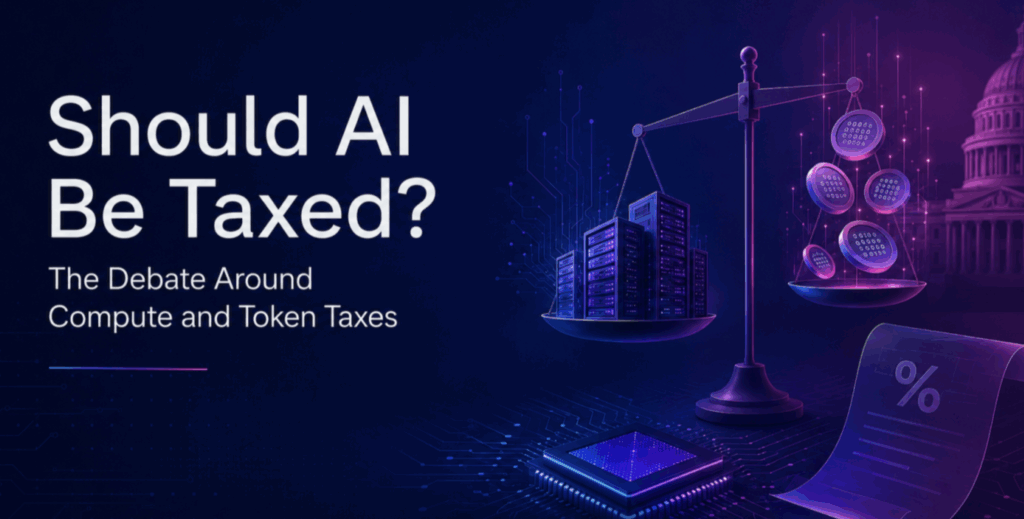
Rajan argues that current tax systems can unintentionally make AI-powered automation financially more attractive than human labour.
His proposal is aimed at creating a more level playing field while generating resources that could be used to support workers affected by technological disruption.
What Is An AI Token Tax?
AI tokens are small units of text or data processed by artificial intelligence models. They are commonly used by AI companies to measure usage and calculate costs.
Rajan’s idea is to impose a relatively low levy on the tokens consumed by businesses using AI.
He suggested that governments could initially keep the tax low and gradually increase it as they gain more information about AI adoption and its impact on employment.
Importantly, this is a policy proposal from Rajan, not an announced government tax.
Why Does Rajan Want AI To Be Taxed?
Rajan’s argument is based on the way existing tax systems treat workers and machines differently.
Companies employing people typically pay various employment-related contributions and taxes.
However, when a company replaces part of that human labour with AI, there may be no equivalent charge associated with the automation itself.
This can make AI financially attractive even when replacing workers creates wider social and economic costs.
Rajan believes governments should examine this imbalance.
AI Job Losses Could Become A Bigger Problem
Rajan says AI-related job displacement is coming, although its speed, scale and impact remain uncertain.
The effect will depend heavily on how quickly companies integrate AI into their existing operations.
At present, many businesses are still experimenting with AI through pilot projects.
Companies are also trying to understand the costs involved in deploying AI at scale and how effectively it can be integrated into existing workflows.
The AI Revolution May Not Happen Overnight
Despite concerns about widespread job losses, Rajan cautions against assuming that AI will immediately eliminate huge numbers of jobs.
Businesses still face significant challenges when integrating AI into their operations.
Existing data systems need to work with AI tools, workflows often have to be redesigned and employees need to understand how to use the technology.
These challenges could give workers and businesses some time to adapt.
Competition Could Accelerate AI Adoption
The situation could change as companies begin seeing competitors gain productivity advantages from AI.
Once businesses realise that rivals can produce goods or services more cheaply or quickly using AI, competitive pressure could force faster adoption.
That could eventually increase the pace of workforce transformation.
Companies that initially hesitate to automate may find themselves under pressure to adopt AI simply to remain competitive.
Rajan Wants Companies To Retrain Workers
The AI tax is only one part of Rajan’s proposal.
He also wants governments to provide tax credits to companies that retrain and retain employees whose roles are affected by AI.
The idea is to encourage businesses to invest in their existing workforce instead of simply replacing workers when technology changes the nature of their jobs.
This could create a financial incentive for companies to prepare employees for new responsibilities.
Retraining Could Become A Recurring Process
Rajan argues that worker training should not happen just once.
As AI continues to evolve, employees may need to learn new skills repeatedly.
His proposed system could therefore reward companies for keeping workers employed after retraining them.
Under one model, a company could receive a portion of the training credit for each year the retrained employee remains in employment.
The incentive could potentially continue even if the worker later moves to another company.
AI Could Also Create New Jobs
Rajan’s argument is not that artificial intelligence will only destroy employment.
He points out that previous technological advances eliminated certain jobs while creating new occupations and increasing productivity in others.
AI could similarly create demand for workers who implement, supervise and manage AI systems.
New businesses could also emerge because AI reduces the cost of performing functions such as programming, accounting and administrative work.
AI Could Make Workers More Productive
Another possibility is that AI could help existing workers perform more complex tasks.
A moderately skilled professional could potentially use AI tools to handle responsibilities that previously required significantly more expertise.
Rajan points to healthcare as an example, where AI could help medical professionals expand their ability to diagnose and treat patients.
In such cases, AI does not necessarily replace the worker.
Instead, it increases what that worker can accomplish.
India’s IT Sector Faces A Major Question
The debate is particularly relevant for India because the country’s technology and business-process industries employ millions of workers whose tasks could increasingly be assisted or automated by AI.
Software development, customer support, back-office operations and other knowledge-based services could experience significant changes.
However, India’s IT sector also has an opportunity to move towards higher-value AI-related services.
The transition could therefore involve both job displacement and the creation of new opportunities.
Why Taxing AI Could Be Difficult
Implementing an AI token tax would not be straightforward.
Governments would need to determine how much companies should pay and ensure that the tax does not discourage useful AI adoption.
Domestic AI providers could potentially provide usage information relatively easily.
Foreign AI companies and cloud providers could present more complicated enforcement challenges.
Governments would also have to distinguish between AI usage that replaces workers and AI usage that makes existing employees more productive.
The Tax Should Not Stop AI Innovation
Rajan has suggested that the levy should begin at a low level.
The reason is simple: an excessively high tax could discourage companies from adopting technology that ultimately increases productivity and creates new economic activity.
The objective would therefore not be to prevent AI adoption.
Instead, the proposed tax would attempt to account for some of the broader costs associated with workforce disruption.
AI Could Eventually Increase Employment Too
There is another economic argument behind Rajan’s position.
If AI reduces production costs, companies could potentially lower prices.
Lower prices can increase demand, encouraging businesses to produce and sell more.
That additional demand could create employment elsewhere in the economy.
AI could also make it cheaper for entrepreneurs to start businesses because they may not need to hire specialists for every function at the beginning.
The Bigger Issue Is Managing The Transition
For Rajan, the central challenge is not simply whether AI will destroy jobs.
It is how governments and businesses manage the transition.
Workers whose jobs disappear may not automatically have the skills needed for newly created positions.
Without retraining and support, technological progress could therefore create significant economic inequality.
Businesses that actively prepare employees for new roles could help reduce that disruption.
Companies May Need To Take More Responsibility
Rajan believes companies are in a particularly strong position to support workers because they understand their own operations and know which roles are likely to change.
Instead of waiting until jobs disappear, companies could identify employees whose work is vulnerable and begin retraining them early.
This could make workforce transformation less disruptive and help businesses retain valuable institutional knowledge.
The AI Tax Debate Is Just Beginning
Rajan’s proposal is likely to fuel a wider debate about how governments should respond to artificial intelligence.
An AI tax could generate revenue and potentially reduce the financial advantage of replacing workers with machines.
But governments would have to balance that against the risk of slowing technological innovation.
Retraining incentives may therefore become an equally important part of any future AI policy.
A New Social Contract For The AI Era?
The rapid development of artificial intelligence is forcing governments to rethink traditional ideas about taxation, employment and productivity.
Rajan’s proposal represents one possible approach: tax AI usage at a modest level while rewarding companies that invest in their workers.
Whether such a system would work in practice remains uncertain.
But the underlying question is becoming increasingly important: if companies benefit enormously from AI-driven productivity while workers bear the disruption, who should pay for the transition?
Rajan’s Message To Businesses
Rajan’s proposal ultimately asks companies to look beyond the immediate cost savings offered by automation.
Replacing workers may reduce expenses in the short term, but widespread job displacement can create broader economic and social consequences.
Retraining employees could allow companies to capture AI’s productivity benefits while retaining experienced workers.
The future of work, therefore, may depend less on stopping AI and more on ensuring people can adapt alongside it.
Summary
Former RBI governor Raghuram Rajan has proposed a low tax on AI tokens used by companies to address potential job displacement and balance the financial advantage of automation. He also supports tax credits for businesses that retrain and retain workers. Rajan says AI could eliminate some jobs but also create new roles, increase productivity, lower costs and enable new businesses. His proposal is a policy idea, not an announced government measure.