India’s highways are entering a new era of “barrier-less” toll collection — but missing a payment could now become far more expensive. Under the National Highways Authority of India’s (NHAI) new Multi-Lane Free Flow (MLFF) tolling system, motorists who fail to clear toll dues within 72 hours may be charged double the toll amount as penalty.
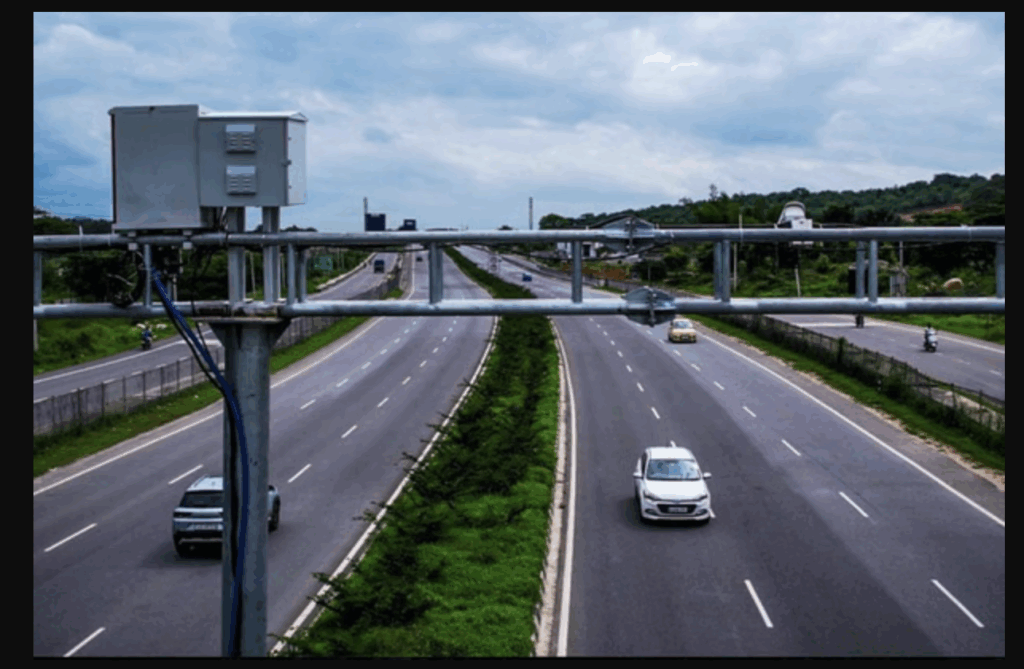
The move is part of India’s ambitious plan to remove traditional toll booths and create uninterrupted highway travel using FASTag and AI-powered camera systems.
How The New Barrier-Less Toll System Works
Unlike conventional toll plazas where vehicles stop at barriers, the MLFF system allows vehicles to drive through at normal highway speeds.
The system uses:
- FASTag-based electronic toll collection
- Automatic Number Plate Recognition (ANPR) cameras
- AI-enabled vehicle detection systems
- Overhead gantries instead of physical booths
As vehicles pass through, cameras identify the registration number while FASTag scanners automatically deduct toll charges.
India has already started deploying the system at select locations including:
- Surat-Bharuch stretch on NH-48 in Gujarat
- Delhi-NCR’s Urban Extension Road-II corridor
What Happens If FASTag Payment Fails?
If the FASTag account has insufficient balance, is inactive, or payment fails for any reason, the system generates an electronic notice (e-notice) to the vehicle owner.
Motorists then get a 72-hour window to clear the toll dues.
If payment is not completed within that period:
- Double toll charges may apply
- FASTag services can be suspended
- Repeated violations may trigger stricter penalties
According to reports, authorities may even link violations with the VAHAN vehicle database for enforcement actions.
Govt Says MLFF Can Save Thousands Of Crores
The government believes the barrier-less tolling model can dramatically improve highway efficiency.
Union Road Transport Minister Nitin Gadkari reportedly said the new system could help:
- Save nearly ₹7,000 crore annually
- Reduce fuel wastage worth ₹285 crore
- Cut congestion at toll plazas
- Lower carbon emissions significantly
At the Surat MLFF corridor alone, around 41,500 vehicles reportedly crossed on the first operational day without stopping at toll barriers.
Why This Changes Highway Travel In India
India currently has over 1,300 toll plazas across national highways. Long queues, fuel wastage, and traffic bottlenecks at toll booths have been a major problem for years.
The MLFF system aims to:
- Eliminate stopping at toll plazas
- Reduce travel time
- Improve logistics efficiency
- Digitize toll collection completely
However, the new model also shifts greater responsibility to motorists to ensure:
- FASTag remains active
- Sufficient wallet balance is maintained
- Toll notices are checked regularly
Because once the 72-hour deadline passes, the penalty can quickly become expensive.