The petrol and diesel prices may look stable in India presently but behind the scene it’s a totally different story as the oil companies are absorbing heavy losses reportedly.
Oil Companies Keeping Stable Prices Since 2022
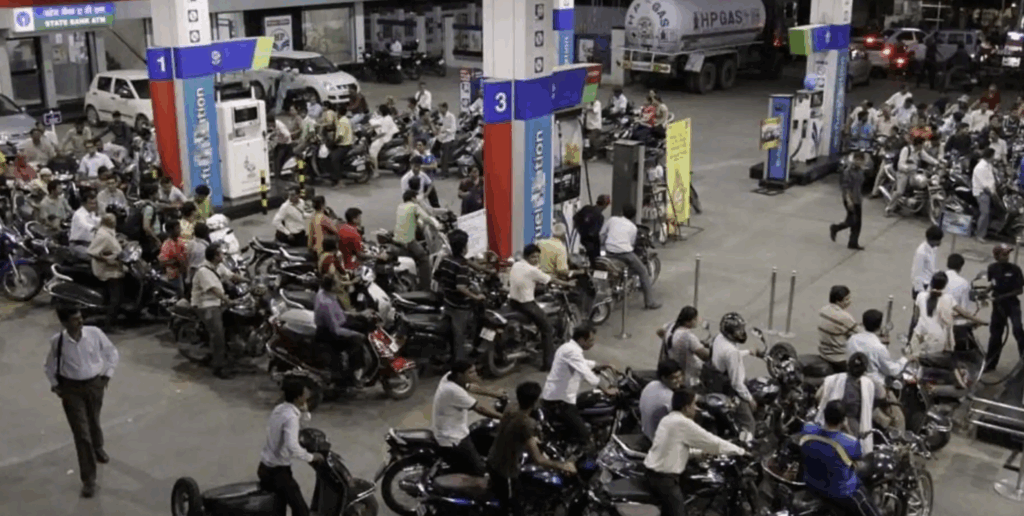
It appears that the state-run firms have kept fuel rates unchanged for a long stretch despite the rising global costs which is putting a lot of pressure on their finances.
If we consider the present prices, major public sector companies such as Indian Oil Corporation, Bharat Petroleum, and Hindustan Petroleum have not revised petrol and diesel prices since April 2022.
The development comes at a time when global crude oil markets have seen sharp ups and downs.
To be precise, the prices surged past $100 per barrel after the Russia-Ukraine War and later on saw a cool down to around $70, and again recently climbed to nearly $120 per barrel.
While all that fluctuations were going on, the retail fuel prices in the country have remained steady throughout.
Oil Companies Bearing Heavy Losses
But keeping these prices steady has come at a cost as the reports suggest that the oil companies are currently losing about ₹18 per litre on petrol and up to ₹35 per litre on diesel.
The losses have reached to the extent that daily losses touched nearly ₹2,400 crore at one point. It’s not that the government has not given any relief but after applying that too the losses are still estimated at around ₹1,600 crore per day, far from sustainable.
Government Offered Excise Duty Cut Providing Limited Relief
The government has reduced excise duty on petrol and diesel by ₹10 per litre during March but these benefits were not passed on to consumers.
As it helped the oil companies to recover a portion of their losses which offered some breathing room but it hasn’t fully solved the problem.
When it comes to India, it imports nearly 88% of its crude oil requirements, this way it is highly sensitive to global price movements.
Indian sources oil from the regions including the Middle East, Russia, and the United States.
So, whenever there is an increase in international prices, India’s import bill increases sharply, further adding strain on both the economy and oil companies.
Considering the present situation, the pressure on oil companies is unlikely to ease soon as the global crude prices remain volatile.
It seems that the gap between retail prices and actual costs may continue to widen unless there’s a shift in pricing strategy or further government intervention.